 by
by If you have ever seen photographs of towering cliffs dropping straight into deep blue water, waterfalls falling from impossible heights, or tiny villages sitting quietly between mountains and sea, you have probably seen a fjord, even if you did not realize it at the time.
Fjords are among the most dramatic and awe-inspiring landscapes on Earth. They feel ancient, powerful, and almost unreal. Yet for many travelers, fjords are also a mystery. People often wonder what they actually are, how they are formed, whether they are oceans or lakes, and whether they are difficult or dangerous to visit.
This guide is written specifically for first-time travelers. By the end, you will understand:
- What a fjord really is
- How fjords are formed
- Where you can find fjords in the world
- What makes them different from other coastal landscapes
- What it is actually like to visit one
- And whether a fjord trip makes sense for you
This article is designed to give you a complete, practical, and honest foundation before you start planning anything.
What Is a Fjord? (A Simple and Clear Definition)
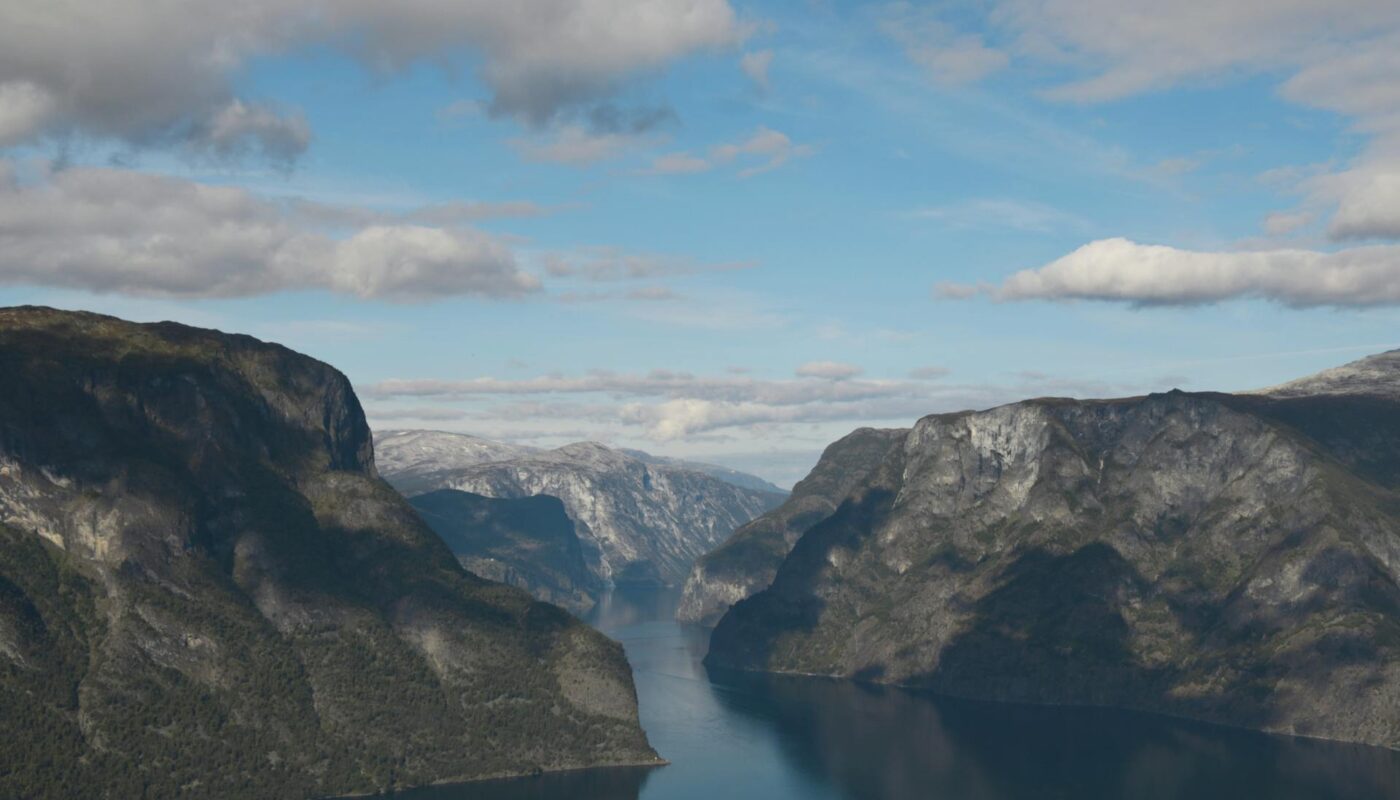
A fjord is a long, narrow, and deep inlet of the sea that is surrounded by steep cliffs or mountains.
In simple terms:
A fjord is a place where the ocean has flooded a deep valley that was carved by a glacier.
This is what gives fjords their unique and dramatic appearance. Unlike normal coastlines, bays, or inlets, fjords are usually:
- Very deep, often deeper than the sea outside them
- Very narrow compared to their length
- Bordered by steep, almost vertical rock walls
- Extending far inland from the coast
This combination creates the feeling that you are standing inside the mountains rather than simply next to the sea.
Are Fjords Saltwater or Freshwater?
Fjords are saltwater because they are connected to the ocean.
However, many fjords receive large amounts of freshwater from rivers, rain, and melting snow. Because of this, a fjord often has a thin layer of freshwater on the surface and saltwater underneath.
So even if the water sometimes looks calm and lake-like, a fjord is still part of the sea and influenced by tides.
Are Fjords Rivers, Lakes, or Part of the Ocean?
Fjords are not rivers and not lakes.
They are arms of the sea that extend deep into the land.
They are connected to the ocean, affected by tides, and often deep enough for large ships and cruise vessels. This is why many fjords are major shipping routes and popular cruise destinations.
How Are Fjords Formed?
Fjords are formed by glaciers over extremely long periods of time.
The Role of Ice Ages
During past ice ages, huge glaciers covered large parts of northern and southern regions of the Earth. These glaciers were:
- Extremely heavy
- Several hundreds or even thousands of meters thick
- Moving slowly but with enormous force
As they moved from mountains toward the sea, they carved deep valleys into the bedrock.
Why Glaciers Carve So Deep
Glaciers are much more powerful than rivers. While rivers carve V-shaped valleys, glaciers carve wide, deep U-shaped valleys. They grind and scrape the rock beneath them, slowly but relentlessly deepening and widening the landscape.
What Happens When the Ice Melts
When the climate warmed and the ice ages ended, the glaciers melted and retreated. The sea then flooded these deep valleys.
What remained was:
A long, narrow, deep sea inlet with steep sides, which we now call a fjord.
Why Fjords Are So Deep
Because glaciers carve much deeper than rivers, many fjords are incredibly deep. Some are hundreds of meters deep, and some reach depths of more than a thousand meters. In many cases, a fjord is deeper than the ocean just outside its entrance.
Why Is Norway So Famous for Fjords?
Norway is the most famous fjord country in the world for three main reasons:
- It had enormous glaciers during the ice ages
- It has a very long, rugged coastline
- Its mountains meet the sea in a perfect way for fjord formation
As a result, Norway has more than a thousand fjords, including some of the deepest, longest, and most dramatic anywhere on Earth.
This is why when people think of fjords, they almost always think of Norway first.
Are There Fjords Outside Norway?
Yes. Fjords exist in several other parts of the world, including:
- New Zealand (Milford Sound, Doubtful Sound)
- Canada (Saguenay Fjord and parts of British Columbia)
- Chile (the fjords of Patagonia)
- Greenland (Ilulissat Icefjord and Scoresby Sund)
- Alaska (Kenai Fjords and Glacier Bay)
- Parts of Scotland and Iceland also have landscapes that technically qualify as fjords
However, Norway remains the easiest and most famous place to experience classic fjord landscapes.
What Makes Fjords Different from Normal Coastlines?
Fjords stand out because of:
- Their extreme depth
- Their steep, almost vertical cliffs
- Their narrow and dramatic shape
- Waterfalls that fall directly into the sea
- Glaciers often nearby
- A feeling of being surrounded by mountains on all sides
Normal bays or inlets usually have:
- Gentler slopes
- Wider openings
- Shallower waters
This is why fjords feel more dramatic, more powerful, and more overwhelming than most coastal landscapes.
Are Fjords Dangerous?
For normal sightseeing, viewpoints, cruises, and standard travel, fjords are generally very safe.
However, they are serious natural landscapes and should be respected.
Real risks include:
- Rapidly changing weather
- Slippery rocks and trails
- Very cold water
- Long and demanding hikes
- High, exposed cliff edges
Most accidents happen when people underestimate the environment or ignore weather warnings. With basic preparation and common sense, fjord travel is not dangerous.
Can You Swim in Fjords?
Technically yes, but in practice most people do not.
Fjord water is cold all year. Even in summer, temperatures are often around 10 to 15 degrees Celsius, and in many places it is colder.
Short swims are possible, but fjords are not swimming destinations in the traditional sense.
What Is It Like to Visit a Fjord for the First Time?
Most first-time visitors describe similar feelings:
- The landscape looks unreal
- Photos do not show the true scale
- Everything feels quiet and massive at the same time
- The experience feels calming and overwhelming at once
Fjords are not about cities, shopping, or nightlife. They are about space, silence, and nature.
Do You Need a Cruise to See Fjords?
No. Cruises are popular, but they are not the only way.
You can experience fjords by:
- Driving along scenic mountain roads
- Taking panoramic trains such as the Flåm Railway
- Using ferries or local boats
- Hiking to viewpoints
- Kayaking in calm sections of the fjords
Cruises are comfortable and scenic, but they are only one of many ways to explore.
Are Fjords Expensive to Visit?
This depends on the country and your travel style.
Norway, in particular, is expensive for food and accommodation. However, nature itself is free. Viewpoints, hiking, and many scenic areas cost nothing to access.
You can experience fjords on:
- A budget trip
- A mid-range trip
- Or a luxury journey
When Is the Best Time to Visit Fjords?
Each season offers a different experience:
- Late spring and early summer bring strong waterfalls and fresh green landscapes
- Mid-summer offers the best weather but also the largest crowds
- Early autumn is quieter and often very beautiful
- Winter brings snow, silence, and in some places the northern lights
There is no single perfect time. It depends on what kind of experience you want.
Are Fjords Overrated?
If you love nature, space, and dramatic landscapes, fjords are not overrated.
If you prefer warm beaches, nightlife, shopping, or fast-paced travel, fjords may not be your ideal destination.
Who Are Fjords Best For?
Fjords are ideal for:
- Nature lovers
- Photographers
- Couples
- Slow travelers
- Hikers
- People who enjoy quiet, scenic places
They are less suitable for travelers who want entertainment, nightlife, or city experiences.
Why Do Fjords Feel So Emotional?
Many travelers are surprised by how emotional fjords feel.
The scale is overwhelming. The silence is powerful. The landscapes make you feel small. The environment feels ancient and timeless.
It is not just a place you see. It is a place you experience deeply.
The Difference Between Fjords, Sounds, and Inlets
Not every narrow sea inlet is technically a fjord.
True fjords are carved by glaciers. Some places called “sounds” or “inlets” look like fjords but were formed differently. Milford Sound in New Zealand, for example, is technically a fjord even though it is called a sound.
The name does not always match the geology, but the experience can be very similar.
The Hidden Life Inside Fjords
Fjords are not just empty water and rock.
They often contain:
- Rich marine life
- Fish, seals, and sometimes whales
- Unique ecosystems influenced by both freshwater and saltwater
Because many fjords are deep and protected from open ocean storms, they can be surprisingly rich in life.
How Fjords Influence Local Life and Culture
For centuries, fjords have shaped:
- Where people live
- How they travel
- How they fish and farm
- How communities are connected
In many fjord regions, boats were historically more important than roads, and even today, fjords remain central to daily life.
So, What Is a Fjord, Really?
A fjord is where glaciers, mountains, water, and time come together to create one of the most dramatic landscapes on Earth.
For travelers, a fjord is also a reminder of how large the world is and how small we are within it.
Final Thoughts: Should You Visit a Fjord?
If you have never seen one before, you should experience a fjord at least once in your life.
It is one of those places that changes how you see nature, space, and scale.

Hi, this is a comment.
To get started with moderating, editing, and deleting comments, please visit the Comments screen in the dashboard.
Commenter avatars come from Gravatar.