 by
by Few landscapes on Earth inspire as much awe as fjords. Their towering cliffs, mirror-like waters, cascading waterfalls, snow-capped peaks, and emerald forests often appear so perfect that they seem almost unreal. Travelers frequently describe standing beside a fjord as feeling like they’ve stepped into a painting or entered another world. Whether it’s the dramatic coastlines of Norway, the glacier-carved inlets of New Zealand, the icy waters of Greenland, or the remote channels of Chilean Patagonia, fjords possess a beauty unlike any other landform.
But what makes fjords look so extraordinary? Their breathtaking appearance is not the result of a single geological event. Instead, it is the product of millions of years of mountain building, repeated ice ages, massive glaciers, erosion, rising sea levels, and ongoing natural processes that continue shaping the landscape today.
This article explores the fascinating geography behind fjords, explaining how these incredible landforms were created, why they appear so dramatic, and why they remain some of the most beautiful natural environments on Earth.
What Is a Fjord?
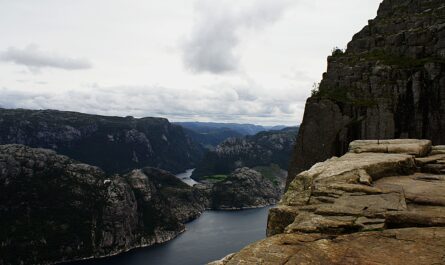
A fjord is a long, narrow sea inlet surrounded by steep cliffs or mountains that was carved by a glacier and later filled with seawater.
Unlike ordinary river valleys, fjords are:
- Exceptionally deep
- Extremely steep-sided
- Connected to the ocean
- Formed primarily by glacial erosion
Some fjords extend more than 100 miles (160 kilometers) inland while reaching depths of over 4,000 feet (1,200 meters).
Their combination of immense depth and towering cliffs creates their iconic appearance.
The Story Begins with Mountains
Long before glaciers existed, mountain ranges were already forming through tectonic activity.
Earth’s crust consists of massive moving plates that slowly collide, separate, and slide past one another.
When plates collide:
- Rocks fold.
- Mountains rise.
- Valleys develop.
- Landscapes become rugged.
These ancient mountain ranges eventually provided the foundation upon which glaciers would later sculpt the fjords.
Without mountains, fjords could never have formed.
The Ice Ages Changed Everything
The most important chapter in fjord formation occurred during the Ice Ages.
Over the past 2.6 million years, Earth experienced repeated periods of cooler global temperatures known as glacial periods.
During these times:
- Snow accumulated year after year.
- Thick ice sheets expanded.
- Mountain glaciers grew larger.
- Ice flowed downhill through valleys.
Some glaciers reached thicknesses exceeding one kilometer, exerting tremendous pressure on the landscape beneath them.
Glaciers as Powerful Sculptors
Although glaciers move slowly, they possess enormous erosive power.
Unlike rivers, which mainly cut narrow channels, glaciers reshape entire valleys.
As glaciers advance, they:
- Grind bedrock
- Break loose massive rocks
- Carry sediment
- Deepen valleys
- Widen mountain gaps
The distinctive feature of the fjord scenery is the wide U-shaped valleys that glaciers created over thousands of years from narrow V-shaped river valleys.
Why Fjords Have U-Shaped Valleys
One of the easiest ways to recognize a fjord is by its distinctive U-shaped cross-section.
River valleys typically have:
- Narrow bottoms
- Sloping sides
- V-shaped profiles
Glaciers behave differently.
Because ice fills the entire valley, it erodes:
- Valley floor
- Side walls
- Rock outcrops
This creates:
- Flat valley bottoms
- Nearly vertical cliffs
- Wide valley walls
The result is the classic U-shaped fjord profile visible today.
Extraordinary Depth
One reason fjords appear so dramatic is their remarkable depth.
Many fjords are deeper than nearby ocean waters.
This occurs because glaciers eroded valleys below present-day sea level.
After the Ice Ages ended:
- Glaciers melted.
- Sea levels rose.
- Ocean water flooded the valleys.
The deep underwater valleys became modern fjords.
Some fjords contain underwater basins extending hundreds of meters below sea level.
Why the Cliffs Are So Steep
The towering cliffs surrounding fjords often appear almost vertical.
Several geological processes contribute to this appearance.
Glacial Erosion
Glaciers scrape against valley walls, removing rock and steepening slopes.
Freeze-Thaw Weathering
Water enters cracks in the rock.
When temperatures fall below freezing:
- Water expands.
- Cracks widen.
- Rock fragments break loose.
Repeated freezing and thawing gradually sharpen the landscape.
Rockfalls
Gravity removes unstable rock over thousands of years, continually reshaping cliff faces.
Hanging Valleys Create Waterfalls
Many of the world’s tallest waterfalls occur in fjord regions.
This is because of hanging valleys.
During glaciation:
- Large glaciers carved deep main valleys.
- Smaller glaciers carved shallower side valleys.
When the ice disappeared:
- Smaller valleys remained elevated.
- Rivers flowed over cliff edges.
- Waterfalls formed.
Famous fjord waterfalls owe their existence to this fascinating geological process.
Mirror-Like Water
One of the most captivating features of fjords is their calm, reflective water.
Several factors contribute to these perfect reflections.
Shelter from Ocean Waves
Steep mountains block much of the wind.
Reduced wave activity creates smoother water surfaces.
Narrow Shape
Long, narrow fjords experience less wave energy than open coastlines.
Deep Water
Deep fjords absorb wave energy differently than shallow bays.
The combination produces remarkably clear reflections of mountains and clouds.
The Colors of Fjords
Fjord landscapes display remarkable color contrasts.
Visitors commonly notice:
- Deep blue water
- Emerald forests
- White glaciers
- Gray cliffs
- Bright green meadows
These colors arise from several natural factors.
Glacier Flour
Many glacier-fed rivers carry finely ground rock particles known as glacier flour.
These tiny sediments remain suspended in water.
They scatter sunlight, creating:
- Turquoise lakes
- Milky blue rivers
- Brilliant fjord colors
Sunlight, water depth, and sediment concentration all affect the precise shade.
Dense Vegetation
Frequent rainfall supports lush forests and meadows.
Moist climates allow mosses, ferns, shrubs, and trees to flourish on steep mountainsides.
The vibrant greenery contrasts beautifully with exposed rock and snow.
Snow-Capped Peaks Year-Round
Many fjords remain close to high mountains where temperatures stay cool throughout the year.
Higher elevations retain:
- Snowfields
- Small glaciers
- Permanent ice patches
These snowy peaks enhance the dramatic scenery, even during summer.
Why Fjords Feel So Massive
Photographs often fail to capture the true scale of fjords.
Several factors create this overwhelming sense of size.
Vertical Relief
The elevation difference between water level and mountain summits may exceed 5,000 feet (1,500 meters).
Deep Water
The valley extends both upward and downward.
Visitors experience enormous vertical dimensions.
Long Sightlines
Looking down a fjord often reveals mountains fading into the distance for many miles.
This creates powerful visual depth.
Light Creates Constantly Changing Scenery
Fjord landscapes rarely look the same twice.
Changing sunlight dramatically alters:
- Cliff colors
- Water reflections
- Cloud shadows
- Snow brightness
- Forest tones
Morning light often produces soft golden colors.
Midday emphasizes vibrant blues and greens.
Evening creates warm highlights across mountain peaks.
Clouds constantly reshape the mood of the landscape.
Mist Adds Mystery
Moist maritime climates frequently generate low clouds and mist.
These conditions:
- Partially hide mountains.
- Reveal peaks gradually.
- Create layered scenery.
- Soften distant landscapes.
The result is an atmosphere many visitors describe as magical.
Why Fjords Have So Many Waterfalls
Heavy rainfall combines with steep mountains to produce abundant waterfalls.
Additional water sources include:
- Melting snow
- Glacier melt
- Mountain streams
Following heavy rain, hundreds of temporary waterfalls may appear across fjord cliffs.
Some disappear again within days as water flow decreases.
The Influence of the Ocean
Although fjords extend far inland, they remain connected to the sea.
Ocean influences include:
- Mild coastal temperatures
- Moist air
- Frequent rainfall
- Rich marine ecosystems
These conditions support forests much farther north than many people expect.
Geological Diversity
No two fjords look exactly alike.
Differences arise from variations in:
- Rock type
- Glacier size
- Ice thickness
- Climate
- Elevation
- Rainfall
- Erosion history
Some fjords feature sheer granite cliffs.
Others display layered sedimentary rocks or volcanic landscapes.
Each tells its own geological story.
Wildlife Enhances the Landscape
The geography that creates fjords also supports diverse ecosystems.
Marine environments provide habitat for:
- Whales
- Dolphins
- Seals
- Fish
Mountain forests support:
- Deer
- Foxes
- Mountain goats
- Birds of prey
This combination of dramatic scenery and abundant wildlife enhances visitors’ experiences.
Human Settlements Blend with Nature
Many fjord communities occupy the few relatively flat areas along the shoreline.
Traditional villages often feature:
- Wooden houses
- Small harbors
- Farms
- Fishing boats
The scale of these settlements emphasizes the immense surrounding mountains.
Rather than dominating the landscape, people appear to live in harmony with it.
Famous Fjord Regions Around the World
Although Norway is most closely associated with fjords, several countries possess remarkable examples.
Norway
Norway contains one of the world’s highest concentrations of fjords, including many recognized for their exceptional natural beauty.
Towering cliffs, waterfalls, and glacier-fed valleys define much of its western coastline.
New Zealand
Fiordland National Park features spectacular fjords surrounded by temperate rainforests and waterfalls.
Heavy rainfall keeps the landscape lush throughout the year.
Greenland
Greenland’s fjords combine immense glaciers, towering icebergs, and Arctic wilderness.
Many remain among the least disturbed landscapes on Earth.
Chilean Patagonia
Southern Chile offers thousands of kilometers of fjords bordered by glaciers, mountains, and dense forests.
These remote waterways support extraordinary biodiversity.
Canada and Alaska
The Pacific coast contains numerous glacier-carved fjords rich in marine wildlife and dramatic mountain scenery.
Many continue to evolve as glaciers retreat and landscapes adjust.
Why Photographs Rarely Capture the Full Experience
Many travelers are surprised that even professional photographs fail to convey the true feeling of standing beside a fjord.
Several reasons explain this:
- Cameras compress distance.
- Wide-angle lenses reduce apparent height.
- Photographs cannot reproduce moving clouds, waterfalls, or changing light.
- The sounds of rushing water, seabirds, and wind contribute to the experience.
- The cool air and vast open spaces create sensations that images cannot capture.
Experiencing a fjord in person engages all the senses, making the landscape feel even more extraordinary than photographs suggest.
Conservation of Fjord Landscapes
Despite their rugged appearance, fjord ecosystems are sensitive to environmental change.
Current conservation priorities include:
- Protecting water quality
- Preserving native forests
- Managing tourism sustainably
- Conserving marine habitats
- Monitoring glacier change
- Reducing pollution
Many fjords lie within national parks, marine reserves, or protected landscapes that balance visitor access with environmental stewardship.
Responsible tourism—such as staying on designated trails, respecting wildlife, minimizing waste, and supporting local communities—helps ensure these remarkable places remain healthy for future generations.
Final Thoughts
The seemingly unreal beauty of fjords is the result of an extraordinary combination of geological forces acting over millions of years. Ancient mountain-building events created rugged landscapes that were later transformed by immense glaciers during repeated Ice Ages. These glaciers carved deep U-shaped valleys, sculpted towering cliffs, formed hanging valleys and waterfalls, and created basins that were eventually flooded by the sea as the climate warmed.
Today, the interaction of mountains, oceans, glaciers, forests, rivers, and changing light produces landscapes of exceptional beauty. Mirror-like waters reflect towering peaks, waterfalls plunge from hanging valleys, glacier-fed rivers shimmer with turquoise hues, and clouds drift between steep cliffs, creating scenes that seem almost too perfect to be real.
Yet the magic of fjords lies not only in their appearance but also in the remarkable natural history they reveal. Every cliff, waterfall, glacier, and shoreline tells the story of Earth’s powerful geological processes and the enduring relationship between ice, rock, water, and time.
Whether you admire a fjord from a mountain viewpoint, explore its waters by boat, hike its surrounding trails, or simply pause to take in the silence, understanding the geography behind these magnificent landscapes makes the experience even more meaningful. Fjords remind us that nature’s greatest masterpieces are often millions of years in the making.