 by
by If Earth had a natural cathedral — carved of wind, ice, and relentless waves — it would be the fjord‑carved coastline of Patagonia. Stretching along the southernmost reaches of South America, the fjords of Patagonia are among the most dramatic and untamed landscapes on the planet. This region — where the Andes descend abruptly into the churning Southern Ocean — weaves a tapestry of jagged peaks, deep blue channels, ancient glaciers, and an astonishing diversity of wildlife. For adventurers, nature lovers, and curious travelers, Patagonia’s fjords represent the edge of the wild.
In this article, we’ll dive deep into what makes this coastline extraordinary, explore its geography and geology, meet its remarkable ecosystems, and provide insights for those dreaming of a journey into this remote wilderness.
What Are Fjords — and How Did Patagonia’s Form?
Defining a Fjord
A fjord is a long, narrow inlet with steep cliffs or slopes on either side, created by glacial activity. Fjords are typically formed when massive glaciers carve deep valleys below sea level. As the glaciers retreat, seawater floods these valleys, creating deep, narrow waterways that reach far inland.
The fjords of Patagonia are quintessential examples: they cut deep into the land, bordered by precipitous mountains and plunging to astonishing depths below the ocean surface. These waterways stand as an enduring testament to the region’s icy past.
A Legacy of Ice
Patagonia’s fjord landscape is the product of several ice ages. Over millions of years, colossal glaciers advanced from the Andean icefields, scouring valleys and shaping mountainsides. As the climate warmed and the glaciers receded, seawater rushed in, forming the labyrinth of fjords that we see today.
Unlike many fjord systems in the world, Patagonia’s are influenced not only by glacial carving but also by tectonic forces. The active geological boundary between the South American Plate and the Antarctic and Nazca Plates has uplifted mountain ranges and intensified the drama of the coastline.
Where to Find Patagonia’s Fjords
The Patagonian fjords stretch primarily across southern Chile, with a handful extending into Argentina. These waters begin near the Gulf of Penas and wind southward into the channels and islands of the Tierra del Fuego archipelago and beyond.
Key fjord regions include:
- The Northern Channels near Puerto Natales
- The Southern Ice Fields fjords around Bernardo O’Higgins National Park
- Tierra del Fuego’s intricate waterways
- The Southern Patagonian Ice Field outflows such as Glacier Grey and the Amalia Fjord
Each region has its own character and access challenges — from remote, boat‑only routes to areas reachable by tour vessels.
The Raw Beauty of Patagonia’s Fjord Coastline
Spectacular Topography
What makes Patagonia’s fjords unrivaled is the rawness and scale of the landscape:
- Sheer Mountains: In many places, granite and basalt cliffs drop vertically into deep, cold seawater.
- Hidden Waterfalls: Meltwater from snowfields and small glaciers cascades from great heights, vanishing into the fjord below.
- Ancient Glaciers: Some fjords are home to tidewater glaciers — ice giants that calve icebergs into the channels.
- Islands and Channels: Dozens of islands speckle the maze of water, often cloaked in evergreen forests or windswept scrub.
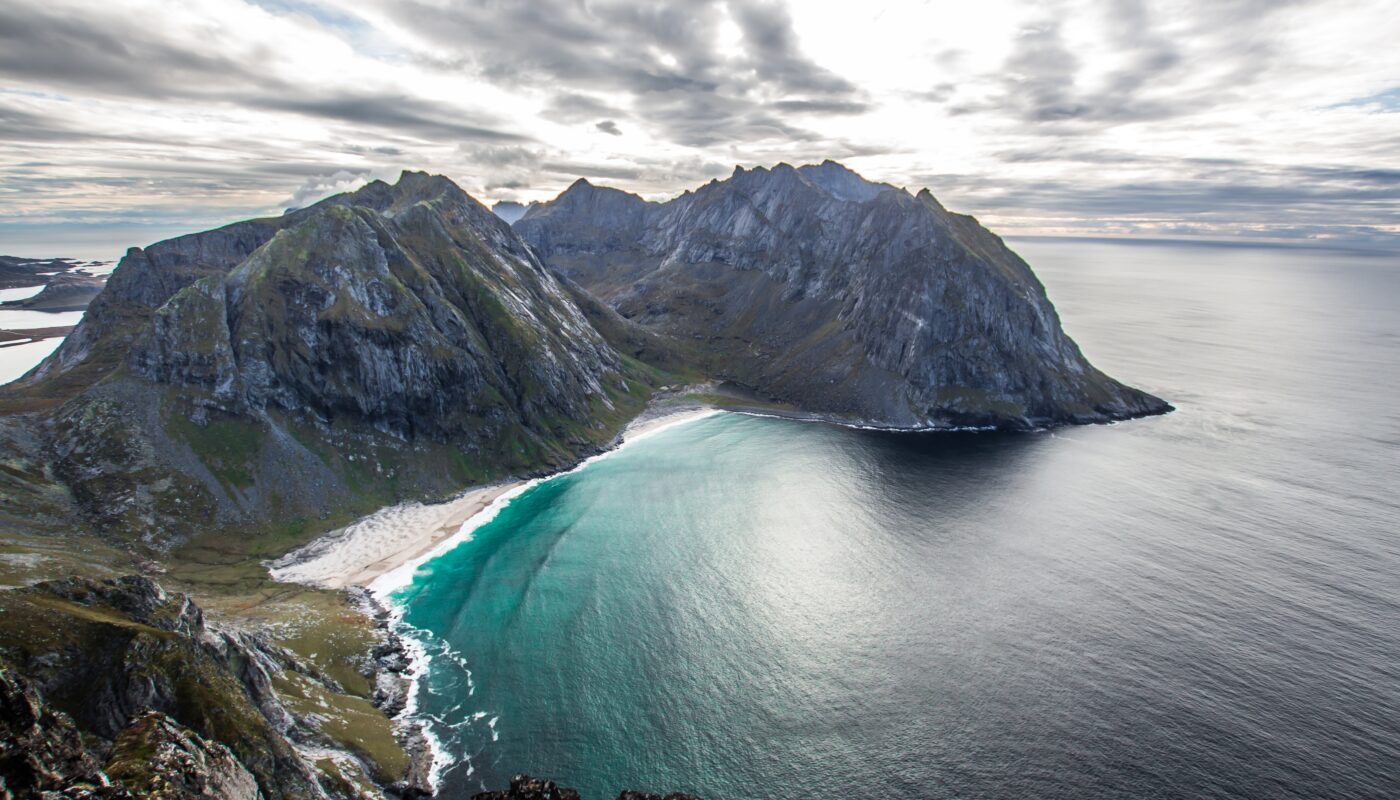
The result? Views that alternate between brooding and breathtaking, where turquoise waters contrast with basalt‑gray rock and brilliant white ice.
Weather That Shapes the Experience
Patagonian weather is famously unpredictable — and part of what defines the character of its fjords. Strong westerly winds, known locally as the “Roaring Forties” and “Furious Fifties,” sweep relentlessly. Clouds race over peaks, fog can engulf narrow channels, and rain and sun often swap places within minutes.
This wild weather contributes to dramatic light conditions and ever‑changing scenery, yet also makes navigation and travel an adventure in its own right.
Ecosystems and Wildlife of the Fjords
Patagonia’s fjords are not just geological masterpieces — they are ecological hotspots. Their cold, nutrient‑rich waters and rugged landforms support an extraordinary range of life.
Marine Marvels
The waters of the fjords teem with life:
- Sea Birds: Albatrosses, cormorants, king and Magellanic penguins all thrive here, nesting on cliff faces and rocky outcrops.
- Marine Mammals: Southern right whales and humpbacks migrate through the fjords; pods of dolphins and occasional orca sightings thrill visitors.
- Sea Lions and Seals: These charismatic mammals haul out on isolated rocks, their barks echoing across the water.
The mixing of ocean currents and freshwater from melting ice creates nutrient upwellings, supporting rich food chains from plankton to large predators.
Terrestrial Life
The harsh terrain around the fjords might seem unwelcoming, but life persists:
- Andean Forests: Hardy species like coihue and lenga trees drape the lower slopes. Mosses and lichens cling to shaded rock faces.
- Birdlife: Raptors like the Andean condor patrol the skies, while colorful songbirds thrive in sheltered valleys.
- Land Mammals: Guanacos, foxes, and elusive pumas roam the more remote regions, although they are rarely seen by casual visitors.
The fjord ecosystem is delicately balanced — shaped by wind, cold, and isolation.
Human Stories on the Edge of the World
While Patagonia’s fjords feel eternally wild, humans have long interacted with this coastline.
Indigenous Heritage
For thousands of years, indigenous peoples such as the Kawésqar and the Yaghan (Yámana) navigated these channels in canoes, living off fish, shellfish, and marine mammals. Their deep knowledge of tides, weather, and hidden coves enabled survival in one of the harshest environments on Earth.
These cultures held rich traditions, languages, and cosmologies tightly bound to the sea — and though they faced near‑extinction during European colonization, their legacy remains an important part of Patagonian history.
Explorers and Settlers
European explorers arrived in the 16th century, and the fjords soon became strategic waypoints for mariners charting the passage between the Atlantic and Pacific before the Panama Canal existed. Later, ranchers and settlers pushed into the hinterlands, establishing outposts and small communities.
Today, several small towns and ports act as gateways for fjord exploration, including:
- Puerto Natales: The launching point for expeditions into the northern fjords.
- Punta Arenas: A historic city with access to southern channels.
- Tierra del Fuego settlements: Bases for wildlife tours and boat excursions.
Despite modern encroachment, vast stretches of the fjord coastline remain uninhabited, preserving an ancient sense of solitude.
Experiencing the Fjords — From Boats to Boots
By Sea: The Classic Journey
The most immersive way to experience Patagonia’s fjords is by water. Small expedition ships, sailboats, and kayaks allow adventurers to thread through narrow channels, slip past looming cliffs, and witness glaciers calving from close range.
- Expedition Cruises: These multi‑day voyages navigate complex waterways, combining comfort with deep immersion into nature.
- Kayaking Adventures: For the brave and physically fit, sea kayaking in the fjords offers unrivaled intimacy with water and wildlife.
- Sailing: Traditional sailboats harness the famous Patagonian winds to glide through remote channels.
Sea travel in the fjords is often subject to weather — but that unpredictability is part of the allure.
By Land: Trails and Lookouts
While much of the fjord landscape is reachable only by boat, terrestrial trails exist near populated areas and parks:
- Hiking Routes: Trails from ports like Puerto Natales offer viewpoints over fjords and glacial valleys.
- Overland 4×4 Expeditions: For remote access, guided overland tours traverse rugged terrain to reach hidden coves and waterways.
- Scenic Flights: Aerial views from small planes or helicopters provide an unforgettable perspective on the intricate fjord network.
Each mode of exploration reveals different facets of the fjords’ beauty.
Conservation, Challenges, and the Future
Despite their remoteness, Patagonia’s fjords face threats — from climate change to unregulated tourism.
Climate Change Impacts
Warming temperatures are accelerating glacial retreat across Patagonia. While retreating glaciers formed the fjords, rapid melting today alters freshwater input into the channels and affects marine ecosystems. Species reliant on cold waters — such as certain fish and plankton — may face stress as conditions shift.
Tourism and Sustainable Access
Tourism brings economic benefits, but unregulated visitation can harm fragile environments. Ensuring that boat traffic, waste management, and land access respect the ecosystem is critical. Increasingly, local organizations advocate for:
- Regulated visitor numbers
- Low‑impact travel practices
- Education on cultural and ecological values
Balancing access with preservation will define Patagonia’s fjords’ long‑term health.
Why Patagonia’s Fjords Matter
Patagonia’s fjords are not merely a scenic destination — they are a symbol of Earth’s raw geological processes and ecological complexity. They remind us of ancient ice ages, of winds that sculpt landscapes, and of life’s tenacity in even the harshest conditions.
For travelers, they offer adventure. For scientists, a living laboratory. For all of humanity, they stand as a reminder of the beauty and fragility of our natural world.
Practical Tips for Travelers
If you’re planning a journey into the fjords:
- Best Time to Visit: Southern Hemisphere summer (December to March) offers milder weather and longer daylight.
- Dress in Layers: Conditions change fast; waterproof and windproof gear is essential.
- Book with Responsible Operators: Choose tours that emphasize sustainability.
- Prepare for Seasickness: Waters can be rough; medication or natural remedies help.
- Respect Wildlife: Keep distance, avoid feeding animals, and minimize noise.
Final Thoughts
Patagonia’s fjords are more than simply wild — they are elemental. Mountains, sea, ice, and wind collide here in breathtaking harmony. Visiting them is not a casual vacation; it’s an immersion into the forces that shape our planet.
Whether viewed under stormy skies, lit by shimmering sunbeams, or seen from a kayak slipping silently between cliffs, Patagonia’s fjords will leave an indelible mark on those who experience them. They are, quite simply, one of the wildest coastlines on Earth — and a wonder worth preserving.