 by
by Norway is famous for its fjords, dramatic mountains, and scenic roads that wind through breathtaking landscapes. Among these routes, few are as iconic as Trollstigen. Known worldwide for its sharp bends, towering cliffs, and spectacular views, Trollstigen is widely considered one of the most remarkable mountain drives on Earth.
Every year, travelers from around the globe visit western Norway to experience this extraordinary road. The journey is not simply about reaching a destination—it is about enjoying the dramatic scenery, engineering marvels, and adventurous spirit that define the route.
In this guide, we explore the history, geography, engineering, and visitor experience of Trollstigen to explain why it remains one of Norway’s most celebrated travel attractions.
Where Trollstigen Is Located
Trollstigen is situated in the rugged mountains of western Norway in the region known as Møre og Romsdal. The road forms part of a scenic route connecting the small town of Åndalsnes with the village of Valldal.
This mountainous region lies near some of Norway’s most dramatic fjord landscapes, including the famous Geirangerfjord. Because of its proximity to these natural wonders, Trollstigen is often included in scenic driving routes that explore Norway’s fjord country.
The road climbs through steep mountain slopes surrounded by towering peaks, waterfalls, and deep valleys carved by ancient glaciers.
The Meaning Behind the Name
The name Trollstigen comes from Norwegian folklore. In Norwegian, “troll” refers to the mythical creatures often found in Scandinavian legends, while “stigen” means ladder or path. The name therefore translates loosely as “The Troll’s Ladder.”
According to traditional stories, trolls once inhabited the wild mountain regions of Norway. These creatures were believed to roam rocky landscapes and hide among cliffs and forests. Many unusual rock formations across the country are said to be trolls turned into stone after exposure to sunlight.
The mysterious atmosphere of the mountains around Trollstigen—often filled with fog, clouds, and dramatic cliffs—fits perfectly with these ancient legends.
The Famous Hairpin Bends
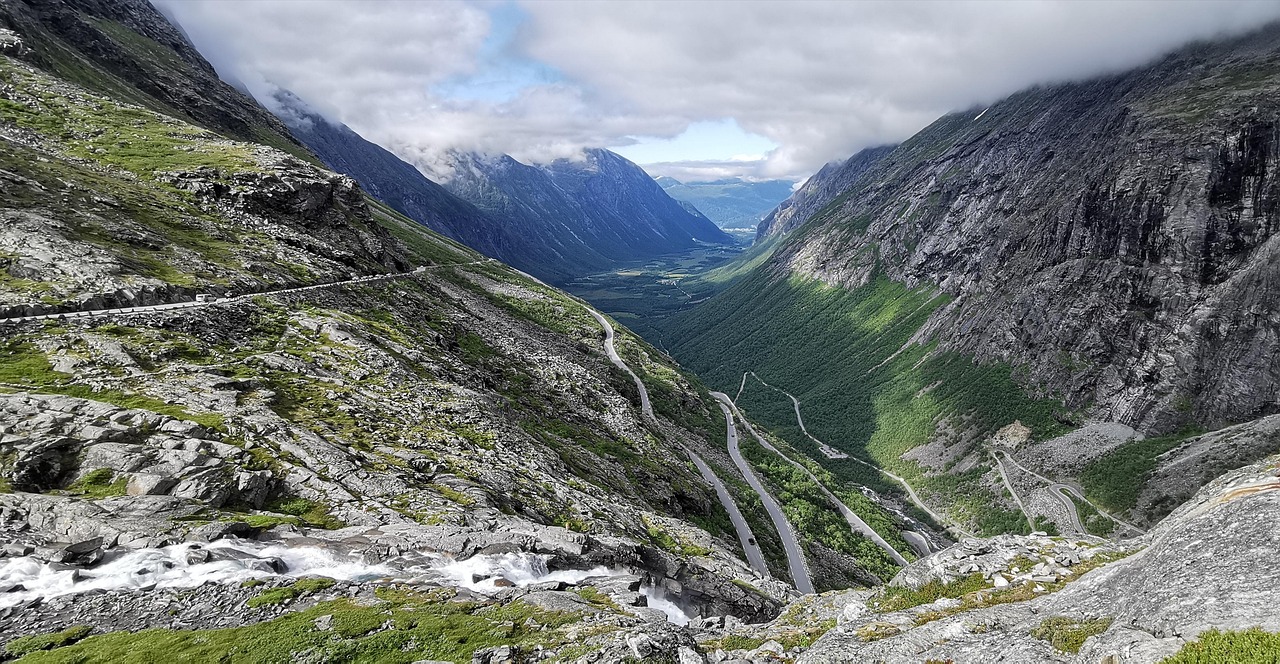
What truly makes Trollstigen famous is its dramatic series of tight turns that climb steeply up the mountainside.
The road contains eleven sharp hairpin curves, each carefully engineered to allow vehicles to navigate the steep incline. From above, the road resembles a ribbon zigzagging across the mountain slope.
These curves serve an important purpose. Without them, it would be impossible for vehicles to climb the steep terrain. By switching direction repeatedly, the road gradually gains elevation while maintaining a manageable gradient.
Some key features of the road include:
- Eleven tight hairpin bends
- Steep slopes approaching ten percent incline
- Narrow sections that require careful driving
- Stunning viewpoints along the route
For drivers, the road demands attention and patience. However, the reward is a driving experience unlike any other.
A Historic Engineering Achievement
Constructing a road through such rugged terrain was a major challenge in the early twentieth century. Norwegian authorities began planning the route in the late 1920s to improve transportation between communities in the region.
At the time, heavy construction machinery was limited, and much of the work required manual labor. Workers used basic tools and small machines to carve the road into the mountainside, stabilizing cliffs and building protective walls along the route.
After years of effort, the road was finally completed in 1936. The opening ceremony was attended by Haakon VII, marking the project as a significant national achievement.
The finished road not only improved travel but also became an example of Norwegian engineering ingenuity in difficult terrain.
Spectacular Natural Scenery
The landscapes surrounding Trollstigen are among the most dramatic in Norway. Visitors encounter steep cliffs, rushing waterfalls, and green valleys shaped by glaciers over thousands of years.
One of the most impressive sights along the road is the powerful Stigfossen. This waterfall plunges down the mountainside beside the road, creating a breathtaking scene where water cascades near the twisting hairpin bends.
Several striking mountain peaks also dominate the skyline near Trollstigen, including:
- Kongen (“The King”)
- Dronningen (“The Queen”)
- Bispen (“The Bishop”)
These peaks rise dramatically above the valley, adding to the sense of scale and grandeur that defines the area.
Viewing Platforms and Visitor Facilities
To allow travelers to safely enjoy the scenery, Norway has developed modern viewing areas near the top of Trollstigen. These platforms provide panoramic perspectives over the valley and the winding road below.
The viewing area includes:
- Scenic observation decks
- Walking paths
- A visitor center
- Restaurants and cafés
- Parking facilities
The architecture of these structures was carefully designed to blend with the surrounding landscape. Modern materials and minimalist designs allow the viewpoints to enhance the natural environment rather than dominate it.
Standing on the viewing platform and looking down at the zigzagging road is one of the most memorable experiences in Norway.
Seasonal Opening of the Road
Because Trollstigen lies high in the mountains, it cannot remain open year-round. During winter, heavy snowfall and icy conditions make travel dangerous.
As a result, the road typically closes during late autumn and remains shut throughout winter. Snowplows and maintenance crews reopen it once conditions become safe in spring.
Most years, the road opens sometime between May and June and remains accessible until October, depending on weather conditions.
Visitors planning to drive Trollstigen should always check current road conditions before starting their journey.
A Popular Attraction for Travelers
Trollstigen has grown into one of Norway’s most visited tourist sites. During the summer travel season, thousands of vehicles travel the road each day.
Tourists arrive in various ways:
- Self-drive road trips
- Guided bus tours
- Motorcycle journeys
- Cycling adventures
Cyclists in particular enjoy the challenge of climbing the steep hairpin turns. Although demanding, the ride offers spectacular rewards in terms of scenery.
Because of its popularity, the road can become crowded during peak summer months. Early morning or evening visits often provide a quieter experience.
Trollstigen and Norway’s Scenic Road Network
Trollstigen is part of Norway’s official National Tourist Routes, a network of scenic drives developed to highlight the country’s natural beauty.
These routes combine stunning landscapes with carefully designed rest areas, viewing platforms, and architectural features.
The goal is to allow travelers to experience Norway’s most beautiful locations while preserving the surrounding environment.
By including Trollstigen in this network, Norway has ensured that the road remains both accessible and protected.
Driving Tips for Visitors
Driving Trollstigen can be an exciting experience, but visitors should approach it with caution.
Some helpful tips include:
- Drive slowly and stay alert on sharp curves
- Use low gears when descending the road
- Watch for cyclists and buses
- Pull over at safe viewpoints for photos
- Avoid driving during heavy fog or rain
Because some sections of the road are narrow, drivers must be prepared to yield to oncoming traffic.
Patience and careful driving help ensure a safe and enjoyable journey.
Trollstigen in Popular Culture
The dramatic appearance of Trollstigen has attracted filmmakers, photographers, and advertisers for decades. The road’s distinctive zigzag pattern makes it instantly recognizable.
It has appeared in travel documentaries, automotive advertisements, and even action films, helping introduce international audiences to Norway’s spectacular landscapes.
Today, images of Trollstigen are frequently used in travel marketing to represent the adventurous spirit of Scandinavian exploration.
Why Trollstigen Remains So Iconic
Several factors contribute to the enduring fame of Trollstigen.
First, its design is visually striking. The tight hairpin turns create a dramatic pattern that looks almost unreal when viewed from above.
Second, the surrounding landscape is breathtaking. Towering peaks, waterfalls, and deep valleys form one of the most impressive mountain settings in Europe.
Third, the road represents a remarkable achievement in engineering, built in a time when construction technology was far less advanced than today.
Finally, Trollstigen captures the adventurous spirit of travel. Driving the road feels like exploring a hidden corner of the mountains where nature and human ingenuity meet.
Conclusion
Trollstigen is more than just a road—it is a symbol of Norway’s dramatic landscapes and innovative engineering. With its eleven sharp hairpin bends, steep climbs, and unforgettable views, it offers one of the most thrilling driving experiences in the world.
From its construction in the early twentieth century to its modern status as a world-famous scenic route, Trollstigen continues to captivate travelers. Whether admired from a viewing platform high above the valley or experienced firsthand behind the wheel, the road remains a remarkable gateway into Norway’s mountainous wilderness.
For anyone exploring the fjords and peaks of western Norway, driving Trollstigen is not simply transportation—it is an adventure that reveals the true beauty of the Scandinavian landscape.