 by
by There are few landscapes on Earth as dramatic and soul-stirring as fjords. Carved by ancient glaciers and framed by towering cliffs, these deep, narrow inlets become even more mesmerizing in winter. When snow blankets the mountains, ice forms along the water’s edge, and the night sky dances with color, fjords transform into a realm of quiet wonder.
From the rugged coastlines of Norway to the remote wilderness of Iceland and Greenland, winter reveals a different side of these natural marvels—one defined by stillness, light, and elemental beauty.
This guide explores what makes fjords in winter so extraordinary, what you can expect, and how to experience them at their most magical.
What Are Fjords—and Why Winter Changes Everything
Fjords are long, narrow sea inlets bordered by steep cliffs, formed over thousands of years by glacial erosion. During warmer months, they are vibrant with greenery and wildlife. But winter strips the landscape down to its essence.
Snow softens the rugged terrain, covering peaks and valleys in a uniform white. Water becomes darker and more reflective, mirroring the pale winter sky. Ice forms along shorelines and sometimes drifts across the surface in sculptural shapes.
This seasonal transformation creates a striking contrast—sharp cliffs against soft snow, dark water against bright ice—that feels almost otherworldly.
The Silence of Snow-Covered Landscapes
One of the most remarkable aspects of fjords in winter is the silence. Snow absorbs sound, muting the environment and creating a deep sense of calm.
In places like Geirangerfjord or Nærøyfjord, the usual sounds of waterfalls and tourist boats fade away. Instead, you may hear only the occasional crack of shifting ice or the distant call of a seabird.
This quiet atmosphere makes winter fjords ideal for reflection and immersion in nature. It’s not just about what you see—it’s about what you feel.
Ice Formations: Nature’s Frozen Sculptures
As temperatures drop, fjords begin to showcase intricate ice formations. Waterfalls freeze into cascading columns of ice, while shoreline rocks become encased in crystalline layers.
In northern regions, floating ice chunks drift slowly through the fjords, catching the light in subtle, shifting patterns. These natural sculptures are constantly changing, shaped by temperature, wind, and tides.
In areas like Scoresby Sund—the largest fjord system in the world—massive icebergs dominate the landscape. Their towering forms, tinted with shades of blue and white, create a surreal visual experience.
Snow-Covered Peaks and Reflections
Winter enhances the visual drama of fjords by simplifying their color palette. Whites, blues, and deep grays dominate the scene, creating a minimalist yet powerful aesthetic.
On calm days, the water becomes mirror-like, reflecting snow-covered peaks with near-perfect clarity. This doubling effect makes the landscape feel vast and immersive, as if the mountains extend both above and below the surface.
Photographers and nature lovers are particularly drawn to this phenomenon, as it offers endless opportunities for capturing unique and striking images.
The Northern Lights: A Celestial Spectacle
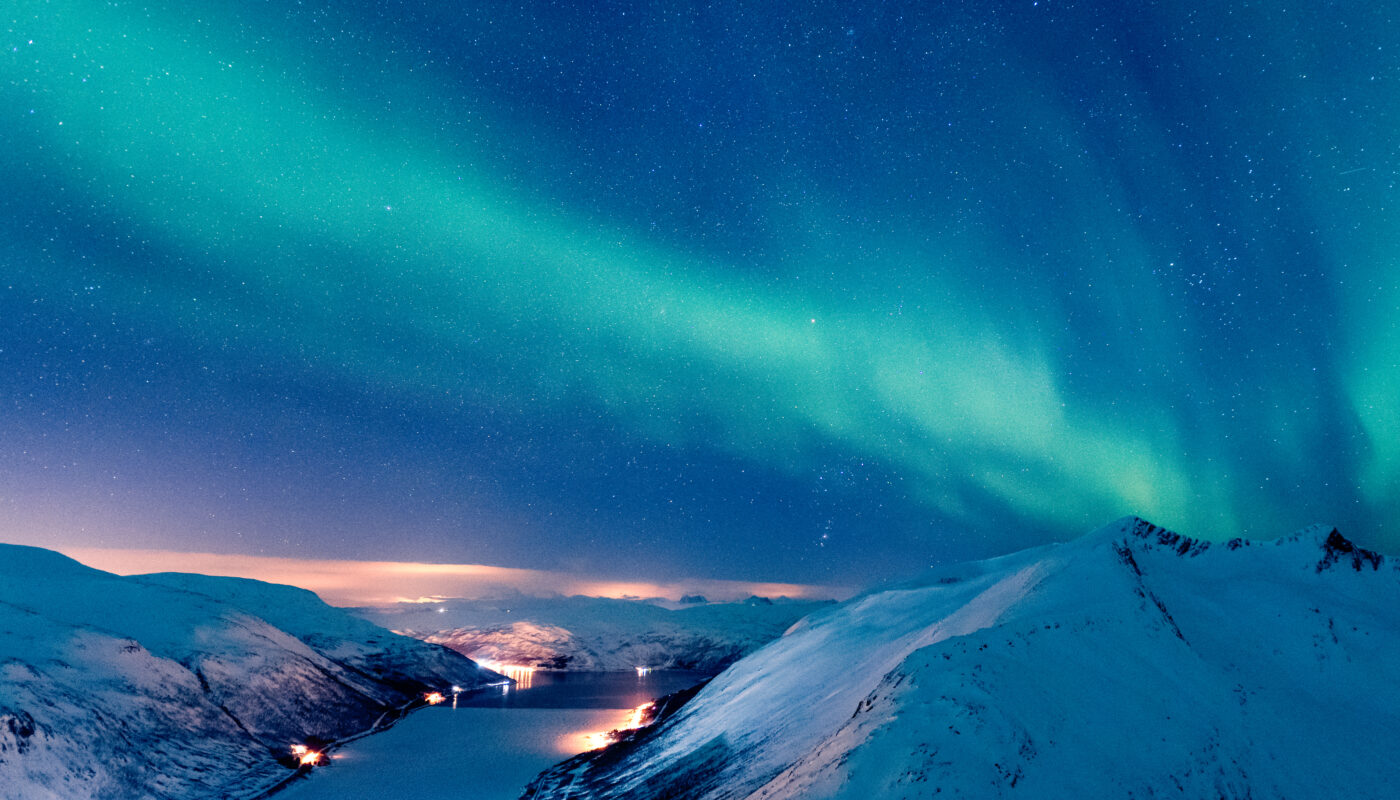
Perhaps the most magical aspect of fjords in winter is the chance to witness the Aurora Borealis.
During the long winter nights, the skies above northern fjords come alive with shimmering waves of green, purple, and pink light. These displays are caused by charged particles from the sun interacting with Earth’s atmosphere, creating a luminous dance across the sky.
Some of the best places to see the Northern Lights over fjords include:
- Tromsø
- Lofoten Islands
- Alta
Watching the aurora reflected in the still waters of a fjord is an experience that feels almost surreal—like witnessing two skies at once.
Wildlife in Winter Fjords
While winter may seem quiet, fjords remain home to a variety of wildlife that adapts to the season.
You may encounter:
- Sea eagles soaring above cliffs
- Seals resting on ice floes
- Whales navigating the deep waters in certain regions
In places like Andenes, winter is actually one of the best times for whale watching, particularly for species like orcas and humpback whales.
The stark winter environment often makes wildlife easier to spot, as animals stand out against the snow.
Winter Activities in Fjord Regions
Exploring fjords in winter isn’t just about sightseeing—it’s about experiencing the landscape in immersive ways.
1. Fjord Cruises in Winter
Winter fjord cruises offer a unique perspective, allowing you to glide through icy waters surrounded by snow-covered cliffs. The absence of crowds makes the experience more intimate and peaceful.
2. Kayaking Among Ice
For adventurous travelers, kayaking in a fjord during winter is unforgettable. Paddling through calm waters, surrounded by ice formations, creates a sense of connection with nature that few experiences can match.
3. Snowshoeing and Winter Hiking
Hiking and snowshoeing are possible on snow-covered pathways along fjords. These activities allow you to explore viewpoints that offer sweeping vistas of the landscape below.
4. Dog Sledding Adventures
In northern regions, dog sledding is a traditional and thrilling way to explore snowy terrain. Gliding across frozen landscapes with a team of huskies adds an element of adventure to your journey.
The Unique Light of Arctic Winter
Winter light in fjord regions is unlike anywhere else. Even during the day, the sun remains low on the horizon, casting a soft, golden glow across the landscape.
In some areas above the Arctic Circle, you may experience the polar night, when the sun does not rise above the horizon for weeks. While this might sound dark, it actually creates extended twilight conditions with beautiful shades of blue and pink.
This unique lighting enhances the visual drama of fjords, making them feel even more ethereal.
Challenges of Visiting Fjords in Winter
While winter fjords are breathtaking, they do come with challenges that travelers should be prepared for.
Cold Temperatures
Temperatures can drop well below freezing, especially in northern regions. Proper clothing is essential.
Limited Daylight
Shorter days mean less time for outdoor activities, so planning is important.
Weather Variability
Snowstorms and icy conditions can affect travel plans, particularly in remote areas.
Despite these challenges, many travelers find that the rewards far outweigh the difficulties.
Tips for Experiencing Fjords in Winter
- Dress in layers: Thermal clothing, waterproof outerwear, and insulated boots are essential
- Plan around daylight: Make the most of limited sunlight hours
- Book early: Winter is increasingly popular for fjord travel
- Stay flexible: Weather conditions may require adjustments to your itinerary
Why Winter Fjords Are Worth the Journey
There is something profoundly moving about fjords in winter. Without the crowds of summer, the landscape feels more personal and untouched. The combination of snow, ice, and sky creates a setting that is both dramatic and peaceful.
Moments linger longer here—watching the aurora ripple across the sky, hearing the faint crack of ice, or simply standing in silence as snow falls gently around you.
Final Thoughts
Fjords in winter offer a rare kind of beauty—one that is quiet, powerful, and deeply immersive. From the icy waters of Norway to the remote wilderness of Greenland, these landscapes invite you to slow down and experience nature in its purest form.
Whether you come for the Northern Lights, the dramatic scenery, or the sense of solitude, a winter journey through the fjords is an experience that stays with you long after you leave.