 by
by There are few travel experiences in the world as visually striking and emotionally memorable as sailing through the fjords of Norway. Carved by ancient glaciers and filled by the sea, these deep, narrow waterways cut dramatically into the Norwegian coastline. They form a landscape of steep mountains, cascading waterfalls, quiet villages, and mirror-like waters that reflect the sky.
A fjord cruise is not just transportation—it is immersion. The scenery does not sit in the distance; it surrounds you completely. Every bend in the water reveals another layer of cliffs, peaks, or hidden valleys.
With hundreds of fjords along the coastline, choosing the most scenic routes can feel overwhelming. This guide explores the most breathtaking fjord cruise routes in Norway and explains what makes each one unforgettable.
Why Fjord Cruising in Norway Is So Special
The fjords of Norway were formed during the Ice Age, when massive glaciers carved deep valleys into the landscape. As the glaciers retreated, seawater filled these valleys, creating long, narrow inlets surrounded by steep rock walls.
What makes cruising so ideal here is accessibility. Many fjords are remote and difficult to explore by land, but ships can travel deep into their interiors, offering close-up views of nature that would otherwise be unreachable.
Unlike open-sea cruising, fjord journeys feel intimate. The scale of the landscape makes ships appear small, emphasizing the grandeur of the natural environment.
Geirangerfjord: Norway’s Most Iconic Waterway
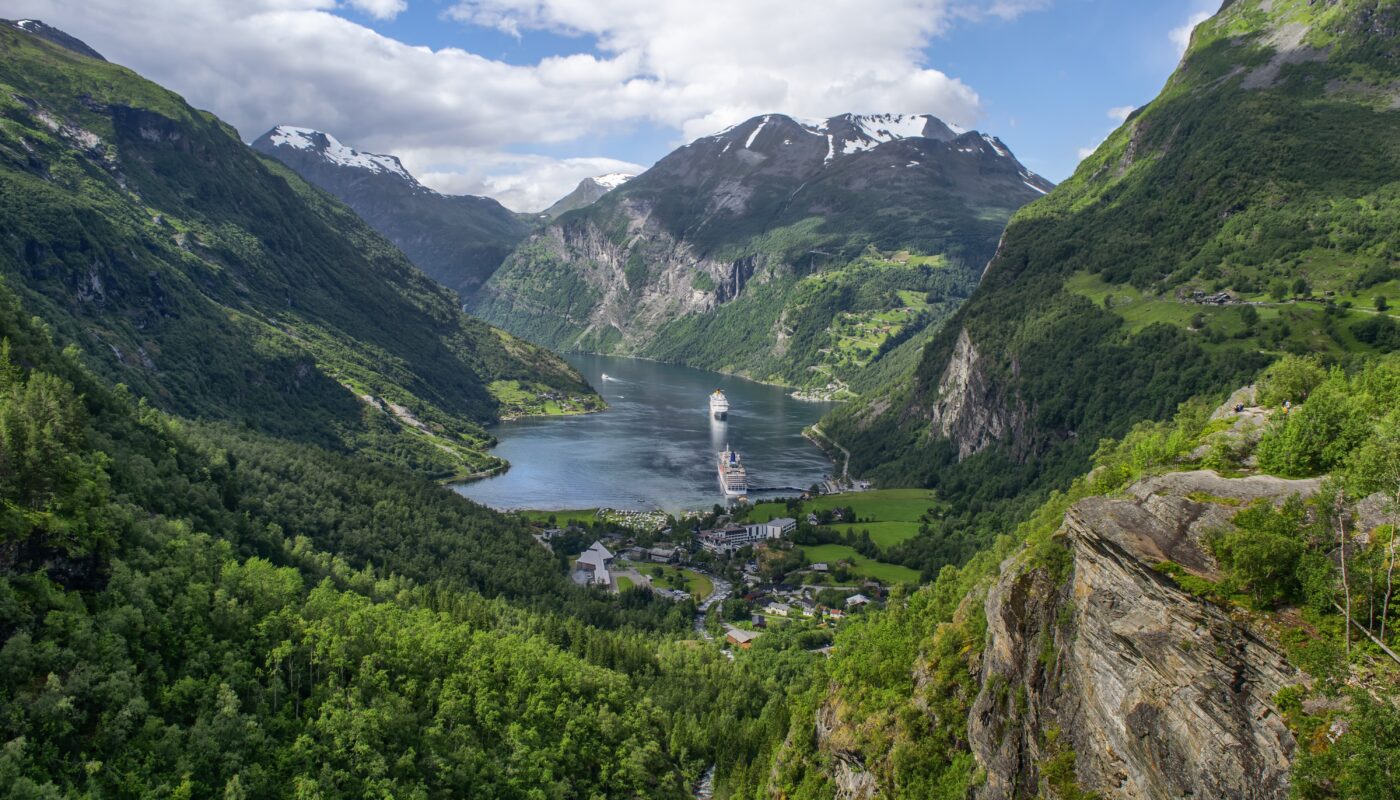
Among all fjords, few are as famous as Geirangerfjord. This UNESCO World Heritage Site is often considered the crown jewel of Norwegian fjord landscapes.
What Makes It Unique
Geirangerfjord is relatively narrow, which means cruise ships pass close to towering cliffs. The walls of the fjord rise steeply on both sides, covered in green vegetation and punctuated by dramatic waterfalls.
Highlights Along the Cruise
- The legendary “Seven Sisters” waterfalls cascading down the cliffs
- Abandoned mountain farms perched on impossible slopes
- Deep blue waters reflecting the surrounding peaks
- The small village of Geiranger at the fjord’s end
The sense of scale is overwhelming. The closer the ship moves through the fjord, the more the landscape feels like a vertical world carved by time and ice.
Nærøyfjord: A Narrow Passage of Silence and Drama
Another UNESCO-listed wonder, Nærøyfjord is known for being one of the narrowest fjords in Europe.
A Sense of Enclosure
Unlike wider fjords, Nærøyfjord creates a feeling of enclosure. The cliffs rise so steeply and so close to the water that at times it feels like sailing through a stone corridor.
Scenic Features
- Towering cliffs that nearly touch above the waterline
- Small waterfalls flowing directly into the fjord
- Minimal human settlement, enhancing the sense of wilderness
This route is often combined with nearby waterways and rail journeys, forming one of the most scenic travel combinations in the country.
Sognefjord: The Immense King of Fjords
Known for its sheer size, Sognefjord is the longest and deepest fjord in Norway, stretching far inland.
A Landscape of Scale
Unlike narrower fjords, Sognefjord feels expansive. The waterway branches into multiple arms, each offering different landscapes and atmospheres.
What You Experience on This Route
- Wide, open waters surrounded by snow-capped peaks
- Quiet villages along the shoreline
- Side fjords with their own unique scenery
- Glacial landscapes in the inner regions
The experience is less about tight dramatic passages and more about vastness and variety. It feels like traveling through an entire region shaped by water and ice.
Hardangerfjord: The Fruit Orchard of the Fjords
Hardangerfjord offers a softer and more pastoral interpretation of fjord scenery.
A Different Kind of Beauty
While many fjords are defined by dramatic cliffs, Hardangerfjord is known for its gentler landscapes. Hillsides are often covered in orchards, particularly in spring and summer when fruit trees bloom.
Seasonal Highlights
- Blossoming apple and cherry orchards in spring
- Waterfalls fueled by melting snow
- Views of distant glaciers such as Folgefonna
This route blends natural beauty with agricultural tradition, showing how people live alongside the fjord landscape.
Lysefjord: Home of Towering Cliffs
Lysefjord is one of the most visually dramatic fjords, known for its steep rock formations and iconic viewpoints.
Dramatic Geological Features
The fjord is flanked by massive granite cliffs that rise sharply from the water. One of the most famous landmarks nearby is the flat plateau of Preikestolen, or Pulpit Rock.
What Makes the Cruise Special
- Sheer vertical cliffs rising hundreds of meters
- Crystal-clear waters reflecting rock formations
- Narrow passages creating a sense of depth and scale
This fjord is shorter than some others but delivers an intense visual experience.
Nordfjord: Glaciers and Quiet Valleys
Nordfjord is less crowded than many famous fjords but offers equally striking scenery.
A Glacial Landscape
This fjord connects directly to glacier regions, allowing visitors to experience both coastal and icy environments in one journey.
Key Highlights
- Access to glaciers such as Briksdal
- Peaceful villages surrounded by mountains
- Deep blue glacial waters in side branches
Nordfjord is ideal for travelers seeking a quieter and more nature-focused experience.
Hjørundfjord: A Hidden Alpine Treasure
Less visited than other fjords, Hjørundfjord is often described as one of Norway’s best-kept secrets.
Untouched Wilderness
This fjord is surrounded by sharp peaks known as the Sunnmøre Alps. The landscape feels wild and untouched, with fewer tourists and more natural silence.
Why It Stands Out
- Dramatic mountain walls rising directly from the water
- Remote villages accessible mainly by boat
- A peaceful atmosphere far from major cruise routes
For many travelers, this is the most authentic fjord experience.
The Coastal Fjord Journey: Bergen to Kirkenes
Beyond individual fjords, one of the most scenic cruise experiences in Norway is the long coastal route from Bergen to the far north.
This journey passes through multiple fjords, islands, and coastal regions, offering a broad overview of Norway’s maritime landscape.
What You See Along the Way
- A continuous transition of fjords and coastal inlets
- Small fishing villages and historic ports
- Arctic landscapes as you move northward
Some journeys even extend into Arctic regions, where phenomena like the midnight sun or northern lights may be visible depending on the season.
When to Take a Fjord Cruise
The best time to experience fjord cruises is generally between late spring and early autumn.
- Spring: Waterfalls are powerful due to melting snow
- Summer: Long daylight hours and lush green landscapes
- Autumn: Golden colors and fewer crowds
Each season transforms the fjords in subtle but meaningful ways.
Choosing the Right Fjord Cruise Route
The best route depends on what kind of experience you want:
- For dramatic scenery: Geirangerfjord and Lysefjord
- For narrow passages: Nærøyfjord
- For scale and variety: Sognefjord
- For calm landscapes: Hardangerfjord
- For solitude: Hjørundfjord
- For long journeys: Coastal routes from Bergen northward
Many cruises combine multiple fjords into a single itinerary, allowing travelers to experience different environments in one trip.
Conclusion
Fjord cruising in Norway is one of the most immersive ways to experience natural landscapes anywhere in the world. Each fjord offers a distinct personality—some are narrow and dramatic, others wide and peaceful, and some feel entirely untouched by time.
Whether you are gliding through the iconic cliffs of Geirangerfjord, the narrow silence of Nærøyfjord, or the vast waters of Sognefjord, the experience is always shaped by scale, silence, and awe.
Ultimately, the most scenic fjord cruise is not defined by a single route, but by the feeling of being surrounded by nature at its most powerful and pristine.