by
Norway’s fjords are famous for their deep blue waters, towering mountains, dramatic waterfalls, and peaceful natural surroundings. Visitors often admire the remarkable clarity of the water and wonder whether it is clean enough to drink. After all, many fjords receive water from glaciers, mountain streams, rainfall, and snowmelt. These natural sources can make the landscape appear exceptionally pure.
However, the cleanliness of a fjord does not automatically mean its water is safe for human consumption. A fjord is generally a long, narrow inlet connected to the sea, which means its water is usually salty or brackish rather than freshwater. It may also contain bacteria, microscopic organisms, sediment, and chemical pollutants, depending on its location and surrounding environment.
Understanding fjord water requires looking beyond its appearance. Salinity, water circulation, glacier runoff, wastewater, agricultural activity, and local industry can all influence its quality. Even water that looks transparent and smells fresh may contain substances that cannot be detected without testing.
This guide explores how clean fjord water really is, whether it can be used for drinking, what affects its quality, and how travellers can enjoy Norway’s spectacular waterways safely.
1. What Exactly Is Fjord Water?
A fjord is a long, relatively narrow sea inlet surrounded by steep mountains or high land. Most fjords were formed when glaciers carved deep valleys that were later flooded by the sea as the ice retreated.
Norway has some of the world’s best-known fjords, including Geirangerfjord, Sognefjord, Nærøyfjord, and Hardangerfjord. Their landscapes differ, but their waters share an important characteristic: they are connected to the marine environment.
Fjord water is therefore generally seawater, although its salt concentration can vary considerably.
Why does fjord water contain different amounts of salt?
Freshwater enters fjords from rivers, streams, rainfall, melting snow, and glaciers. This water mixes with seawater entering from the coast.
Freshwater is less dense than seawater, so it can form a relatively fresh layer near the surface. Saltier water may remain below it. The degree of mixing depends on tides, wind, currents, freshwater inflow, and the shape of the fjord.
As a result, water near the surface may have a lower salt concentration than water at greater depths. However, this does not mean the upper layer is necessarily suitable for drinking.
The key point: Fjord water is not a dependable source of drinking water simply because part of it contains less salt than the open ocean.
2. Why Does Fjord Water Often Look So Clean?
One reason fjords appear remarkably clean is their dramatic natural setting. Many Norwegian fjords are surrounded by forests, rocky mountains, waterfalls, and relatively small settlements. Away from heavily developed areas, the water may have limited exposure to certain sources of pollution.
Yet appearance alone is not a reliable measure of water quality.
Clear water and safe water are different things
Water clarity refers to how easily light passes through water. Drinking-water safety involves a much wider range of characteristics, including microorganisms, dissolved chemicals, salinity, and other potential hazards.
A transparent water sample may still contain bacteria or viruses. Some chemical contaminants cannot be seen, smelled, or tasted at concentrations that may matter for health.
Conversely, water that looks cloudy is not automatically contaminated. Fine mineral particles, natural organic material, and glacial sediment can make otherwise relatively clean water appear grey or turquoise.
What creates the famous blue and turquoise colours?
The colour of a fjord depends on several factors, including depth, light, suspended particles, and the absorption and scattering of sunlight.
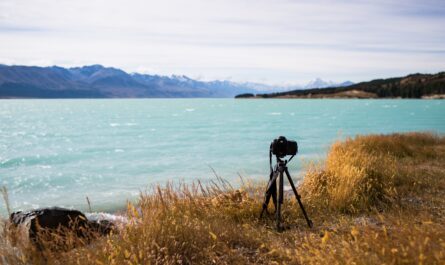
In areas influenced by glaciers, finely ground rock particles known as glacial flour can enter the water. These particles scatter sunlight and may give lakes, rivers, and fjords a pale turquoise or milky appearance.
Other fjords appear dark blue because of their depth, the surrounding landscape, and the way light interacts with the water.
Neither blue nor turquoise colouring proves that water is suitable for drinking.
3. Is Fjord Water Safe to Drink Directly?
In general, no. You should not drink fjord water directly without appropriate treatment and testing.
Most fjords contain seawater or a mixture of seawater and freshwater. Drinking seawater is dangerous because it contains more salt than the human body can safely eliminate using its kidneys. The body may lose additional water while attempting to remove the excess salt, increasing the risk of dehydration.
The freshwater entering a fjord does not necessarily make the entire inlet drinkable. The salt concentration varies with location, depth, rainfall, tides, and freshwater inflow.
There are also biological and chemical concerns. Water may contain microorganisms introduced by wildlife, human activity, wastewater discharges, or runoff from surrounding land.
Even remote fjords can experience natural contamination. For this reason, it is not advisable to assume that an isolated location guarantees safe drinking water.
What about the freshwater layer near the surface?
Some fjords have a relatively fresh surface layer, especially where rivers and glacial streams supply large quantities of water. However, the salt concentration can vary over short distances and change with weather and tides.
Without reliable testing, it is impossible to determine whether a particular sample contains too much salt for drinking. It is also impossible to establish its microbiological safety simply by looking at it.
If you need drinking water during a fjord excursion, carry a suitable supply or use an approved drinking-water source.
4. What Can Affect Fjord Water Quality?
Fjord water quality is influenced by both natural processes and human activities. Some areas experience relatively little direct pollution, while others are affected by urban development, agriculture, transport, fisheries, or industrial activity.
Wastewater and sewage
Wastewater can introduce nutrients, microorganisms, organic matter, and chemical substances into coastal environments when treatment is inadequate or systems are overwhelmed.
Heavy rainfall may increase the amount of water entering drainage systems. In some locations, this can contribute to overflows or increased runoff, affecting nearby coastal waters.
The impact depends on the local wastewater infrastructure, discharge arrangements, water circulation, and the amount of pollution released.
Agriculture and land runoff
Rainwater can carry nutrients, soil particles, fertilisers, and animal waste from agricultural land into streams and rivers. These substances may eventually reach a fjord.
Excess nutrients can contribute to unwanted algal growth, while microorganisms from animal waste can create health risks.
The importance of these sources varies greatly between fjords. An inlet surrounded mainly by undeveloped mountain terrain may face different pressures from one bordered by farms and settlements.
Industry and shipping
Some fjords are close to towns, industrial facilities, ports, aquaculture operations, or shipping routes. Depending on local activities and environmental controls, these areas may be exposed to oil-related substances, metals, industrial chemicals, or other contaminants.
The presence of boats does not automatically mean that a fjord is polluted. However, shipping and industrial activity are factors that water-quality authorities may consider when monitoring a location.
Natural sediment
Rock erosion, landslides, river flow, and glacial meltwater can introduce sediment into fjords. These materials may reduce water clarity without necessarily indicating harmful contamination.
Scientists distinguish between natural sediment and pollution by examining the particles’ composition, concentration, and possible sources.
5. Are Norwegian Fjords Cleaner Than Other Coastal Waters?
Norway is widely recognised for its extensive freshwater resources and high-quality municipal drinking-water systems. According to a Norwegian national report submitted in 2025, approximately 99.7% of the population received drinking water of satisfactory hygienic quality, although smaller water supplies present some uncertainties. <Cite refs={[“turn131807search23”]}/>
However, this statistic describes drinking water supplied through water systems. It does not mean that every fjord is suitable for drinking.
The distinction matters because municipal water suppliers collect water from selected sources and apply risk assessments, treatment, and monitoring as required. A fjord is a natural environment rather than a certified drinking-water supply.
What about remote fjords?
Remote fjords may have fewer nearby sources of urban and industrial pollution, but remoteness is not a guarantee of safety.
Wildlife can introduce microorganisms into water. Rainfall can wash material from the land into streams and coastal waters. Natural conditions can also change quickly after storms, landslides, or unusually heavy runoff.
A fjord can be in excellent ecological condition and still be unsuitable for direct consumption because its water is salty.
What about urban fjords?
Urban fjords may experience more pressure from wastewater, stormwater, transport, and industry. Oslofjord, for example, has been the subject of environmental monitoring and restoration efforts because of ecological pressures associated with human activity. Norwegian authorities have identified nutrient runoff, wastewater, and other interacting pressures as important concerns. <Cite refs={[“turn131807search5″,”turn131807search10”]}/>
This does not mean every urban fjord is equally polluted. Conditions vary by location, and scientific monitoring is necessary to understand the actual risks.
6. Is Glacial Meltwater Cleaner Than Fjord Water?
Glacial meltwater often looks exceptionally pure because it originates from melting ice and snow. In some remote mountain environments, it may have relatively low concentrations of certain dissolved substances.
Nevertheless, glacial water is not automatically safe to drink untreated.
As water flows across exposed rock, soil, and vegetation, it can collect sediment and microorganisms. Wildlife activity, human visitors, and environmental conditions can introduce additional contamination.
Glacial streams may also contain substantial quantities of fine mineral particles. These particles can make the water cloudy or give it a milky appearance.
Why glacial water needs careful handling
The safety of glacial meltwater depends on the source, the surrounding catchment, and the conditions along the flow path.
A fast-moving stream in a remote area may appear cleaner than a stagnant pool, but this is not a guarantee that it contains no harmful organisms.
The Norwegian Institute of Public Health advises people to boil water collected directly from nature whenever possible because natural water can contain bacteria, viruses, and parasites that cause gastrointestinal illness. <Cite refs={[“turn131807search3”]}/>
For hikers and visitors, the safest approach is to carry drinking water or use a suitable treatment method recommended for the specific conditions.
7. Can Boiling Fjord Water Make It Drinkable?
Boiling is an effective method for killing many disease-causing microorganisms. However, it does not solve every problem associated with fjord water.
This is especially important because fjord water is often saline.
Why boiling is not enough
When seawater is boiled, the water evaporates while most of the dissolved salt remains in the container. Ordinary boiling therefore does not remove the salt and cannot turn seawater into drinking water.
Boiling also does not reliably remove dissolved chemical pollutants, heavy metals, or other non-volatile contaminants. Some substances may even become more concentrated as water evaporates.
What treatment would be required?
To turn seawater into potable water, salt must be removed through a process such as reverse osmosis or distillation. Appropriate treatment systems also need to account for other potential contaminants and ensure the final water is safe.
Simply passing seawater through a basic camping filter will not normally remove dissolved salt.
For freshwater collected from a stream, boiling may address many microbiological risks, but it will not remove every possible chemical hazard. The correct treatment depends on the water source and the risks involved.
Practical advice: Do not rely on boiling alone to make fjord seawater drinkable. Use a reliable drinking-water supply or an appropriate desalination system.
8. Is Fjord Water Safe for Swimming?
Water that is unsuitable for drinking may still be suitable for swimming. Recreational water quality and drinking-water quality are assessed differently.
Swimming safety depends on factors such as microbial contamination, local pollution sources, temperature, currents, and weather conditions.
A fjord may offer excellent swimming conditions at a designated bathing area while another location nearby is affected by runoff or wastewater.
What should swimmers consider?
Before entering the water, check local advice and any posted warnings. Avoid swimming near wastewater outlets, suspicious discharges, or areas where authorities have issued restrictions.
Heavy rainfall can affect water quality by carrying contaminants from the surrounding land into rivers and coastal waters. In some places, it may be sensible to avoid swimming immediately after significant rain, depending on local guidance.
Cold water is another important concern. Norwegian fjord water can remain very cold even during summer, particularly in areas influenced by glacier meltwater. Sudden immersion can trigger an involuntary gasp, rapid breathing, and loss of swimming control.
Strong currents, boat traffic, steep shorelines, and limited access to rescue services may create additional risks.
A beautiful view should never replace a check of the actual conditions.
9. How Do Scientists Test Fjord Water?
Scientists and environmental authorities use several methods to understand water quality. These tests help distinguish between natural conditions and contamination caused by human activity.
Microbiological testing
Samples may be analysed for indicator organisms, including E. coli. Their presence can indicate contamination associated with faecal material and help authorities assess potential health risks.
Testing for specific pathogens may be necessary in some circumstances, but not every water sample is tested for every organism.
Chemical analysis
Laboratories can test water for substances such as metals, nutrients, and selected industrial or agricultural chemicals. The substances measured depend on the location and the suspected sources of contamination.
Physical measurements
Scientists also measure temperature, salinity, acidity, dissolved oxygen, and turbidity. These measurements help explain the water’s physical and chemical characteristics.
Salinity profiles are particularly useful in fjords because they reveal how freshwater and seawater are distributed at different depths.
Long-term monitoring
A single sample provides information about one place at one time. It cannot describe all conditions across an entire fjord.
Repeated sampling helps researchers identify seasonal changes, pollution patterns, and responses to storms or other environmental events. The World Health Organization’s recreational-water guidance similarly emphasises monitoring and risk assessment to protect public health. <Cite refs={[“turn131807search7”]}/>
10. How Climate Change Could Affect Fjord Water Quality
Climate change can alter the physical and biological conditions of fjords. Changes in rainfall, snowmelt, glacier retreat, and temperature can affect water circulation, sediment transport, and the amount of freshwater entering an inlet.
More intense rainfall
Heavy rainfall can increase runoff from surrounding land. This may carry additional sediment, nutrients, and microorganisms into nearby waters.
Research on Norwegian drinking-water sources has also found that increased rainfall and runoff are associated with deteriorating raw-water quality indicators in some regions. This research concerns water supplies rather than every fjord, but it demonstrates how changing weather can affect water quality. <Cite refs={[“turn131807search9″,”turn131807search17”]}/>
Glacier retreat
As glaciers shrink, the quantity and seasonal timing of meltwater entering rivers and fjords may change. In some locations, changes in sediment delivery can influence water clarity.
The impact depends on local geography and the stage of glacier retreat. There is no single outcome that applies equally to every fjord.
Warmer water
Rising water temperatures can affect marine organisms, oxygen levels, and the timing of biological activity. In some circumstances, warmer conditions can contribute to algal blooms or alter the way contaminants behave in coastal ecosystems.
These effects depend on nutrient availability, water circulation, sunlight, and other local factors.
Protecting fjord water quality therefore requires attention to both climate-related changes and direct sources of pollution.
11. What Should Tourists Do to Stay Safe?
Travellers can enjoy Norway’s fjords while taking simple precautions to protect their health.
- Drink treated tap water. Norway’s municipal drinking water is generally a reliable option, although local advisories should always be followed.
- Carry enough water on excursions. Do not assume that every stream or natural source is safe to drink.
- Do not drink seawater. Its salt content can worsen dehydration.
- Treat freshwater collected from nature. Follow appropriate guidance for boiling, filtration, or disinfection.
- Check swimming conditions. Pay attention to local warnings, water quality, cold temperatures, and currents.
- Avoid swallowing recreational water. This reduces exposure to microorganisms and other contaminants.
- Respect environmental protection signs. Restrictions may be in place because of contamination, wildlife protection, or safety concerns.
For visitors staying in hotels, guesthouses, and other established accommodation in Norway, ordinary tap water is generally the most convenient drinking-water choice.
Conclusion
Fjord water can be remarkably clear and may exist within a well-preserved natural environment, but its appearance does not establish whether it is safe to drink. Most fjords contain seawater or a mixture of seawater and freshwater, and the salt concentration alone makes untreated fjord water unsuitable for drinking.
Water quality also varies according to local geography, wildlife, rainfall, wastewater, agriculture, shipping, and industrial activity. Glacial meltwater and mountain streams may look exceptionally pure, yet they can still contain harmful microorganisms or other contaminants.
The good news is that visitors can enjoy Norway’s fjords safely by understanding the difference between clean-looking water, healthy aquatic ecosystems, and certified drinking water. Use treated tap water for drinking, follow local guidance for swimming, and avoid consuming untreated fjord water.
Ultimately, protecting these extraordinary waterways requires careful monitoring, responsible tourism, effective wastewater management, and continued attention to climate change. The more accurately we understand fjord water, the better equipped we are to preserve its beauty and ecological value for future generations.