 by
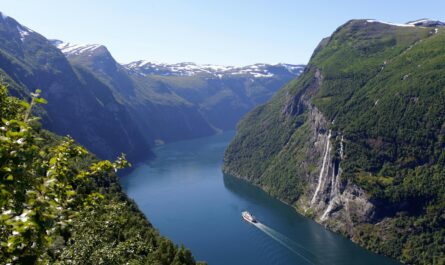
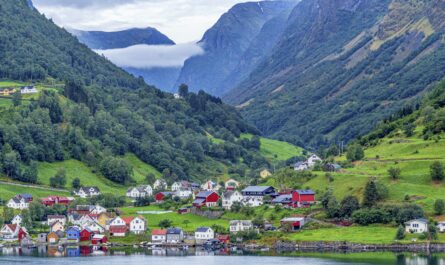
One of the most striking places on Earth is a fjord. Long, narrow waterways cut deep into mountains, surrounded by steep cliffs, waterfalls, forests, glaciers, and remote coastal communities. From the Norwegian fjords and Icelandic inlets to the great fjords of Greenland, Alaska, Chile, and New Zealand, these landscapes are closely connected to the climate that created them.
For thousands of years, glaciers have carved their way through mountains, creating the deep valleys that later filled with seawater. Today, however, the same climate system that helped shape many fjords is changing rapidly. Rising temperatures, retreating glaciers, changing precipitation, warming oceans, increasing freshwater discharge, altered circulation, and ocean acidification are transforming fjord environments.
Climate change does not affect every fjord in exactly the same way. Some are strongly influenced by glaciers, while others are mostly surrounded by forests and mountains. Some receive large quantities of freshwater, whereas others have stronger connections to the open ocean. Nevertheless, fjords are particularly interesting climate indicators because they sit at the meeting point of land, freshwater, glaciers, and the sea.
Understanding these changes helps explain not only what is happening inside fjords but also how broader climate changes can affect marine ecosystems, wildlife, tourism, and coastal communities.
What Makes Fjords Sensitive to Climate Change?
A fjord is essentially a deep coastal valley carved by glaciers and later flooded by seawater.
This geological history gives fjords several characteristics that make them sensitive to environmental changes. Their steep sides restrict the movement of water, while underwater sills can limit the exchange between deep fjord basins and the open ocean.
Many fjords also receive freshwater from rivers, rainfall, snowmelt, and glaciers.
That means a fjord can respond to changes occurring in several different parts of the climate system at once.
For example, warmer temperatures can cause a glacier to lose mass. That can increase meltwater entering the fjord, change its salinity, alter water layering, transport additional sediment, and influence marine organisms.
At the same time, warmer ocean water can enter from offshore and affect the glacier from below.
The result is a complex interaction between atmosphere, glacier, freshwater, ocean, and ecosystem.
Glacier Retreat Is Changing Fjord Landscapes
One of the most visible consequences of climate change is the retreat of glaciers.
The IPCC reports that global warming has caused widespread shrinking of the cryosphere, including widespread glacier mass loss. It also projects continued glacier mass loss in the near term because of rising air temperatures.
For fjords containing tidewater glaciers, this can dramatically alter the landscape.
A glacier that once reached the head of a fjord may retreat inland, leaving behind newly exposed rock, sediment, and water.
As the glacier retreats, the boundary between ice and sea moves. The shape of the fjord may remain recognizable, but its ecological and physical conditions can change substantially.
In some places, retreat can expose new areas of shallow water and land. Over time, plants can colonize newly exposed ground, while marine organisms occupy habitats that were previously influenced by glacier ice.
Research on glacier-influenced ecosystems shows that deglaciation can initially create new ice-free habitats and increase habitat diversity, although continued glacier loss can eventually reduce specialized glacial environments and lead to ecological changes.
More Meltwater Does Not Always Mean More Water Forever
A common misconception is that glacier retreat simply means fjords will continuously receive more freshwater.
The reality is more complicated.
As temperatures rise, glacier melt can initially increase. More meltwater may flow from the glacier into rivers and fjords.
However, if a glacier becomes substantially smaller, there is eventually less ice available to melt.
This creates a long-term transition from a system dominated by large stores of glacial ice toward one with reduced glacier contribution.
Recent research on glacier hydrology shows that warming can increase glacier runoff for a period before declining ice volume ultimately reduces the amount of water available from glaciers.
For fjords, this means the timing and amount of freshwater entering the marine environment may change over decades.
The result can be different seasonal patterns of salinity, circulation, nutrient delivery, and biological productivity.
Freshwater Is Reshaping Fjord Water Chemistry
Freshwater is less dense than seawater.
When large quantities of glacier meltwater enter a fjord, they can create a relatively fresh surface layer above denser seawater.
This process influences stratification, the tendency of water to form layers rather than mix freely.
Climate-driven increases in freshwater discharge can therefore change how nutrients, oxygen, heat, and carbon move through a fjord.
Research from Arctic fjords shows that glacier-derived freshwater can alter salinity, turbidity, nutrient concentrations, and organic matter availability, creating significant changes in the physical and chemical environment.
The effects can be particularly strong near glacier fronts.
Farther toward the mouth of a large fjord, mixing with seawater can reduce the influence of freshwater.
This creates environmental gradients, with conditions near the glacier potentially very different from those closer to the open ocean.
Changing Stratification Can Affect Oxygen
Stratification is important because it influences how easily surface and deep waters exchange.
In some fjords, deep water must periodically be renewed by water entering from the surrounding ocean.
If changes in temperature and salinity make this exchange less frequent, deep waters may remain isolated for longer periods.
Research in Norwegian sill fjords has found evidence of warming coastal and fjord waters, reduced water density, stronger stratification, and less frequent renewal of basin water. Because deep-water renewal is a major source of oxygenation in these systems, changes in circulation can have ecological consequences.
This does not mean every fjord will experience oxygen depletion in the same way.
Fjord depth, sill structure, tides, winds, freshwater inputs, ocean currents, and biological activity all matter.
But climate-driven changes in circulation can modify the delicate balance between oxygen production, consumption, and renewal.
Warmer Ocean Water Can Reach Glaciers From Below
Climate change does not affect tidewater glaciers only from above.
Ocean temperatures can also influence glaciers from below.
In Arctic fjords, relatively warm ocean water can enter deep fjord basins and reach glacier fronts. Submarine melting can then contribute to glacier retreat.
This process is particularly important because a glacier may lose ice at its submerged front even when atmospheric conditions alone do not explain the full rate of retreat.
Research on Svalbard and Greenland fjords shows that submarine melt and freshwater discharge interact with changing water masses and fjord circulation.
This creates a feedback-rich environment:
warmer climate → glacier mass loss → more freshwater → changed fjord circulation → altered ocean-glacier interaction.
The exact strength of each connection differs among fjords.
Fjord Ecosystems Are Changing
Fjords are not simply beautiful geological structures. They are productive ecosystems containing plankton, fish, seabirds, marine mammals, benthic organisms, algae, and microorganisms.
Climate change can affect these organisms by changing temperature, salinity, nutrients, oxygen, turbidity, sea ice, and the timing of seasonal biological events.
In Arctic waters, warming and sea-ice retreat have already contributed to changes in species distributions, including contractions of some Arctic marine species and expansions of boreal species toward higher latitudes.
This can alter food webs.
A species arriving in a fjord may compete with existing species for food or habitat. At the same time, a species adapted to colder conditions may find that suitable habitat is shrinking.
The result is not necessarily a simple decline in biodiversity.
Some species may benefit from warmer conditions while others lose habitat. The composition of the ecosystem can therefore change even when the total number of species does not immediately fall.
Plankton and Food Webs Can Shift
Phytoplankton form the foundation of many marine food webs.
Their growth depends on light, nutrients, temperature, mixing, and other environmental factors.
Climate change can modify the timing and location of plankton blooms. The IPCC notes that climate-driven changes in ocean conditions can alter the timing of phytoplankton growth and create potential mismatches between plankton availability and the reproductive cycles of fish.
In fjords, these effects can be especially complicated because glacier meltwater can carry nutrients and mineral particles into the water.
Recent research has shown that glacier-derived meltwater can influence microbial communities and biogeochemical processes in Arctic fjords.
Another recent study from a Norwegian fjord found that nitrogen fixation was highest near areas influenced by glacial meltwater, demonstrating that glacier inputs can have important biological consequences.
This illustrates an important point: climate change does not simply remove nutrients from fjords. Instead, it can reorganize when, where, and how nutrients become available.
Turbidity Is Increasing in Some Glacier-Fed Fjords
Glacial meltwater often carries extremely fine sediment known as glacial flour.
When glaciers erode bedrock, they grind it into fine particles. Meltwater then transports these particles into rivers and fjords.
Higher glacier runoff can therefore increase turbidity, making the water appear cloudy or milky.
This can affect marine organisms because suspended sediment reduces light penetration.
For organisms that depend on sunlight, including phytoplankton and some algae, reduced light availability can influence productivity.
At the same time, glacial sediments also contain minerals and nutrients that can support biological processes.
The ecological result depends on the amount and timing of sediment delivery.
Ocean Warming Is Adding Another Layer of Stress
Fjords are connected to the wider ocean, so they are also exposed to global ocean warming.
The world’s oceans have absorbed more than 90% of the excess heat accumulated in the climate system, and ocean warming has continued over recent decades.
Warm water entering a fjord can alter the temperature structure of the entire system.
For cold-adapted species, even relatively modest temperature changes can be important.
Ocean warming can also influence the timing of seasonal events, species distributions, metabolic rates, and interactions between predators and prey.
In Arctic fjords, increasing influence from warmer Atlantic water is already associated with ecological changes.
Studies of Svalbard fjords have documented differences in ecosystem structure related to exposure to warmer Atlantic waters.
Ocean Acidification Is Also Reaching Fjords
Climate change is not only about temperature.
As atmospheric carbon dioxide increases, the ocean absorbs some of that CO₂. This changes seawater chemistry and lowers pH, a process known as ocean acidification.
NOAA explains that ocean acidification is driven primarily by ocean uptake of atmospheric carbon dioxide and can affect marine organisms and ecosystems.
Fjords can be particularly complex environments because freshwater inputs, biological activity, sediment chemistry, and exchange with offshore waters can all influence local carbonate chemistry.
Some organisms, particularly those that build shells or skeletons from calcium carbonate, may be vulnerable to changes in carbonate availability.
Cold Arctic waters are of particular concern because they can absorb large amounts of carbon dioxide.
Recent research also indicates that Arctic Ocean acidification could persist even after atmospheric CO₂ begins declining, highlighting the long-lasting nature of some ocean-chemistry changes.
Sea-Level Rise Will Influence Fjord Communities
Glacier and ice-sheet melting contribute to global sea-level rise.
Although a steep fjord itself may remain relatively protected from some coastal flooding, communities, infrastructure, roads, ports, and settlements near fjord entrances can still be affected by changing sea levels and extreme coastal events.
The IPCC identifies sea-level rise as an ongoing global climate impact and notes that coastal ecosystems and communities face multiple interacting climate hazards.
The consequences can include changes to coastal wetlands, harbor infrastructure, roads, drainage systems, and low-lying settlements.
In areas where fjord communities already experience storms, landslides, or coastal flooding, multiple hazards can interact.
Climate Change Can Increase Natural Hazards
Changing glaciers and precipitation patterns can influence natural hazards around fjords.
Rapid glacier retreat can leave unstable slopes exposed.
Loss of ice support and thawing permafrost can contribute to slope instability in some high-latitude mountain environments.
Large rockfalls can enter fjords and generate waves.
Glacial lakes can also expand as glaciers retreat. Globally, research has documented substantial growth in the number and area of glacial lakes and associated risks from glacial lake outburst floods.
Not every fjord will experience these hazards, but warming can change the conditions that influence their probability.
This is particularly important for communities and infrastructure located close to steep fjord walls.
Tourism Is Facing a Changing Fjord Environment
Fjords are major tourism destinations.
Visitors travel to Norway, Iceland, Greenland, Alaska, Chile, New Zealand, and other regions to experience glaciers, waterfalls, wildlife, hiking, kayaking, boat cruises, and dramatic coastal scenery.
Climate change may affect tourism in several ways.
Some glaciers that currently attract visitors may retreat significantly or become less accessible.
Wildlife distributions can change.
Weather patterns can become less predictable.
Heavy rainfall, flooding, landslides, and rockfalls can create temporary transport disruptions.
At the same time, newly exposed landscapes and changing ecosystems may create new tourism experiences.
However, tourism itself needs to adapt carefully.
Popular fjord destinations can face pressure from increasing visitor numbers, so climate adaptation and responsible tourism should be considered together.
Not Every Fjord Will Respond in the Same Way
One of the most important points about climate change and fjords is that there is no single universal response.
A glacier-fed fjord in Greenland is not identical to a forested fjord in New Zealand.
A Norwegian fjord with a shallow sill may behave differently from a deep Greenlandic fjord connected directly to offshore waters.
Even two neighboring fjords can respond differently because of their depth, orientation, freshwater inputs, glacier characteristics, currents, and geology.
For this reason, scientists increasingly study individual fjord systems in detail rather than assuming that one climate impact applies everywhere.
Research from Arctic fjords demonstrates how glacier meltwater can have different physical and biogeochemical effects depending on fjord structure, water depth, glacier geometry, and circulation.
Could Some Changes Create New Ecosystems?
Climate change does not simply mean that fjords will become biologically poorer everywhere.
As glaciers retreat, new habitats can appear.
Previously ice-covered areas may become accessible to plants and animals. Marine communities may establish themselves in newly available environments, while species adapted to warmer conditions may move northward.
Research on deglaciating ecosystems suggests that newly exposed landscapes can initially experience increases in habitat availability and biodiversity before longer-term glacier loss produces different ecological pressures.
This makes fjords valuable natural laboratories.
They allow researchers to observe ecological succession and environmental change over relatively short periods.
How Scientists Monitor Changing Fjords
Scientists use many methods to understand how fjords are changing.
Satellite imagery
Satellites can measure glacier retreat, surface changes, ice cover, and changes in surrounding landscapes.
Ocean sensors
Temperature, salinity, oxygen, and currents can be measured at different depths.
Sediment cores
Sediments accumulating on the fjord floor can preserve evidence of past environmental conditions.
Biological surveys
Scientists monitor plankton, fish, benthic organisms, seabirds, and marine mammals.
Glacier measurements
Researchers measure glacier mass balance, movement, thickness, and terminus position.
Combining these techniques provides a much clearer picture than relying on a single measurement.
What the Future Could Look Like
The future of the world’s fjords will depend heavily on how rapidly the climate continues to warm.
The IPCC projects continued changes in ocean temperature, stratification, sea level, acidification, and oxygen conditions during this century, with the magnitude strongly dependent on future emissions.
For glacier-fed fjords, continued warming is likely to mean further glacier retreat in many regions.
Some fjords may gradually transition from strongly glacier-dominated systems to environments where rivers, rainfall, groundwater, and ocean processes play larger roles.
The ecological communities may change accordingly.
Some cold-water species could decline locally, while warmer-water species expand.
Nutrient cycles may shift.
The timing of plankton blooms may change.
Sediment delivery may increase or eventually decline as glaciers become smaller.
And the relationship between fjords and their glaciers may become increasingly different from the one that existed for centuries.
Why Protecting Fjords Matters
Fjords are valuable not only because they are beautiful but because they connect multiple parts of the Earth system.
They link glaciers to oceans.
They connect mountains to marine ecosystems.
They store sediments and carbon.
They support wildlife.
They provide food and livelihoods.
They attract visitors.
They also preserve evidence of past climate conditions.
Protecting fjords therefore requires more than protecting the water itself.
Effective conservation must consider the entire watershed, from mountain glaciers and rivers to the fjord basin and offshore ocean.
Reducing greenhouse-gas emissions remains central to limiting long-term climate change, while local adaptation can help communities manage unavoidable changes.
Monitoring is equally important because many fjord systems are changing rapidly and their responses are not identical.
Final Thoughts
The world’s fjords are living records of Earth’s climate.
They were carved by glaciers during colder periods, filled with seawater as climates changed, and shaped by thousands of years of interactions between ice, rock, freshwater, and ocean.
Today, those interactions are changing again.
Glaciers are retreating in many regions. Meltwater is altering salinity and stratification. Ocean temperatures are rising. Species are shifting their ranges. Ocean acidification is changing marine chemistry. Sediment and nutrient flows are being reorganized, while changing glacier and permafrost conditions can influence natural hazards.
Yet fjords are not simply disappearing.
They are transforming.
Some changes may create new habitats, while others threaten species and ecosystems that depend on cold, glacier-influenced conditions. Some fjords may become warmer and more biologically diverse in certain respects, while simultaneously losing species uniquely adapted to colder environments.
The greatest lesson is that a fjord should not be viewed as a static landscape.
It is a dynamic system connecting mountains, glaciers, rivers, oceans, wildlife, and people.
As climate change accelerates, the world’s fjords will continue to evolve. Watching those changes carefully—and understanding the complex processes behind them—will be essential for protecting these extraordinary landscapes and the communities and ecosystems that depend on them.