 by
by Norway is home to some of the most spectacular hiking destinations in the world, and few trails are more famous than Trolltunga and Preikestolen. Photos of hikers standing on Trolltunga’s dramatic rock ledge or gazing from the top of Preikestolen’s towering cliff have inspired countless travelers to add these destinations to their bucket lists.
However, one question arises repeatedly among visitors planning a Norwegian adventure: How fit do you need to be to hike Trolltunga or Preikestolen?
The answer depends on which hike you choose, your hiking experience, weather conditions, and your overall fitness level. While both trails reward hikers with unforgettable views of Norway’s stunning fjord landscapes, they differ significantly in terms of difficulty, distance, elevation gain, and physical demands.
The good news is that neither hike requires elite athletic ability. Many ordinary travelers successfully complete these trails every year. However, proper preparation, realistic expectations, and an understanding of the challenges involved can make the difference between an enjoyable adventure and an exhausting struggle.
This guide explores the fitness requirements for both hikes, compares their difficulty levels, and provides practical advice to help you prepare.
Why Trolltunga and Preikestolen Are So Popular
Norway’s dramatic landscapes were shaped by glaciers over thousands of years. Deep fjords, steep mountains, waterfalls, and rugged cliffs create some of the most impressive scenery on Earth.
Both Trolltunga and Preikestolen offer unique viewpoints over these landscapes.
Trolltunga
The name “Trolltunga” means “Troll’s Tongue.”
The formation is a narrow rock ledge projecting horizontally from a mountainside high above a lake.
It has become one of Norway’s most iconic landmarks.
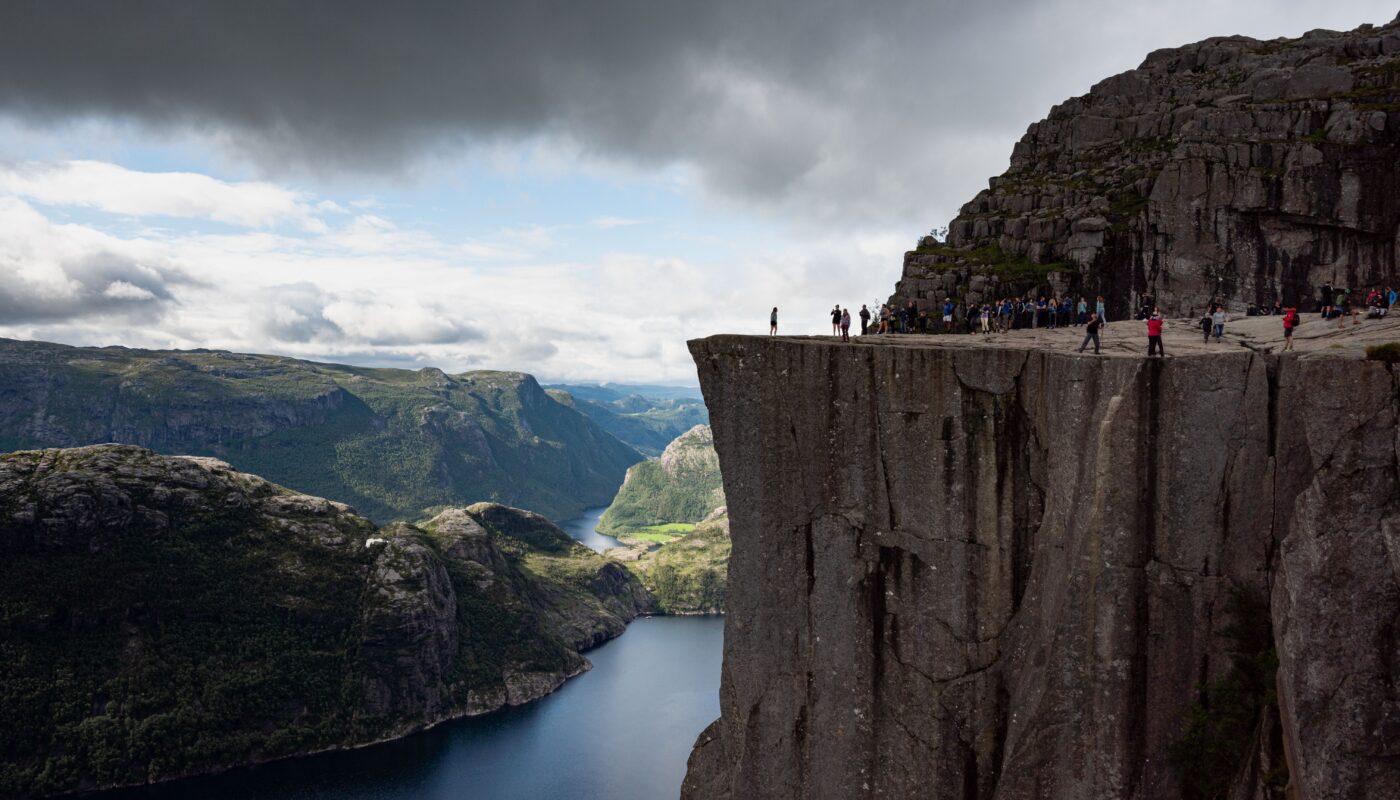
Preikestolen
Preikestolen translates to “The Pulpit Rock.”
This massive cliff rises approximately 600 meters above the waters of the fjord below.
Its flat summit creates one of the most recognizable viewpoints in Scandinavia.
Although both destinations are famous, the physical demands of reaching them differ considerably.
Comparing the Two Hikes
Before examining fitness requirements, it helps to understand the basic characteristics of each trail.
Trolltunga Overview


6
Typical characteristics:
- Approximately 27–28 kilometers round trip
- Full-day hike
- Significant elevation gain
- Often requires 8–12 hours
- More remote terrain
- Higher physical demands
Preikestolen Overview


7
Typical characteristics:
- Approximately 8 kilometers round trip
- Half-day hike
- Moderate elevation gain
- Usually completed in 4–5 hours
- Well-developed trail
- Suitable for a broader range of fitness levels
Immediately, it becomes clear that Trolltunga is considerably more demanding.
Fitness Requirements for Preikestolen
For many travelers, Preikestolen represents an achievable hiking goal.
Average Fitness Is Usually Enough
Most healthy adults with average fitness can complete the hike successfully.
You do not need to be:
- A marathon runner
- An experienced mountaineer
- A professional athlete
However, you should be comfortable with sustained physical activity.
What You Should Be Able to Do
A person prepared for Preikestolen should generally be able to:
- Walk several kilometers comfortably
- Climb stairs without major difficulty
- Handle moderate uphill sections
- Remain active for several hours
If you regularly engage in activities such as:
- Walking
- Cycling
- Light jogging
- Recreational sports
you will likely find Preikestolen manageable.
Terrain Challenges
Although considered moderate, the trail includes:
- Rocky surfaces
- Uneven terrain
- Steep sections
- Stone stairways
Good balance and basic hiking fitness are helpful.
Fitness Requirements for Trolltunga
Trolltunga presents a much greater challenge.
Strong Fitness Recommended
While many non-athletes successfully complete the hike, a higher fitness level is beneficial.
The long distance alone makes Trolltunga demanding.
Hikers must sustain physical effort for much of the day.
Endurance Is Critical
Unlike Preikestolen, which many visitors complete before lunch, Trolltunga requires endurance.
You should ideally be comfortable with:
- Long walks
- Sustained uphill hiking
- Full-day outdoor activities
Many experienced hikers describe endurance as the most important factor.
Not Just a Mountain Climb
The difficulty comes from a combination of:
- Distance
- Elevation gain
- Time on feet
- Weather exposure
Even relatively fit individuals can find the hike challenging if they underestimate these factors.
Cardiovascular Fitness Matters
Cardiovascular endurance plays a major role in both hikes.
For Preikestolen
Moderate cardiovascular fitness is generally sufficient.
Examples include:
- Brisk walking
- Recreational cycling
- Regular gym workouts
For Trolltunga
Stronger endurance is advantageous.
Helpful activities include:
- Long-distance walking
- Trail hiking
- Running
- Cycling
- Stair climbing
The ability to maintain a steady pace for several hours becomes extremely important.
Leg Strength and Muscle Endurance
Both hikes place significant demands on the lower body.
Key muscle groups include:
- Quadriceps
- Hamstrings
- Glutes
- Calves
The descent often surprises hikers more than the climb.
Downhill sections require muscles to absorb repeated impact forces.
Building leg strength beforehand can improve comfort considerably.
How Much Hiking Experience Is Needed?
Many travelers worry that a lack of hiking experience will prevent them from completing these trails.
Preikestolen
Minimal hiking experience is usually acceptable.
The trail is well-marked and frequently traveled.
Many first-time hikers successfully complete it each year.
Trolltunga
Previous hiking experience is strongly recommended.
Experience helps with:
- Pacing
- Energy management
- Equipment selection
- Navigating variable conditions
While beginners can complete Trolltunga, preparation becomes more important.
Weather Can Change Everything
Weather significantly affects perceived difficulty.
Sunny Conditions
On pleasant days:
- Trails are easier to navigate
- Energy expenditure is lower
- Visibility is excellent
Rainy Conditions
Rain introduces additional challenges:
- Slippery rocks
- Wet clothing
- Reduced visibility
Wind
Strong winds increase fatigue and can make exposed sections feel more demanding.
Cold Temperatures
Maintaining body warmth in cold weather demands extra work.
In Norway’s mountain environments, weather can change rapidly.
Age Is Less Important Than Fitness
One common misconception is that only young hikers can complete these trails.
In reality, fitness matters far more than age.
Every year, hikers in their:
- 50s
- 60s
- 70s
successfully reach both destinations.
Conversely, younger travelers with poor fitness sometimes struggle.
Consistent physical preparation matters more than age alone.
How to Know If You’re Ready for Preikestolen
You are likely ready if you can comfortably:
- Walk 8–10 kilometers
- Climb several flights of stairs
- Remain active for four to five hours
- Carry a small backpack
Most reasonably active travelers meet these requirements.
How to Know If You’re Ready for Trolltunga
You are likely prepared if you can:
- Hike for eight or more hours
- Walk 20 kilometers or more comfortably
- Manage sustained uphill sections
- Carry supplies throughout the day
If these activities currently feel difficult, additional preparation is advisable.
Training for Preikestolen
Most people can prepare for Preikestolen within a few weeks.
Useful activities include:
Walking
Regular brisk walks improve endurance.
Stair Climbing
Excellent preparation for uphill sections.
Light Strength Training
Focus on:
- Legs
- Core
- Balance
Weekend Hikes
Short hikes provide valuable experience on uneven terrain.
Training for Trolltunga
Trolltunga benefits from more structured preparation.
Long Walks
Gradually increase distance over several weeks.
Hill Training
Practice hiking on inclines whenever possible.
Endurance Activities
Examples include:
- Running
- Cycling
- Swimming
Strength Training
Emphasize:
- Legs
- Core stability
- Functional movement
Training consistently for several months can significantly improve performance.
Mental Fitness Is Important Too
Physical conditioning is only part of the equation.
Long hikes also require mental resilience.
Challenges may include:
- Fatigue
- Weather changes
- Slow progress
- Unexpected discomfort
Positive mindset and realistic expectations often contribute to success.
Many hikers find that mental determination becomes especially important during the later stages of Trolltunga.
What to Carry
Packing appropriately helps reduce physical strain.
Recommended items include:
- Water
- Snacks
- Rain jacket
- Extra layers
- First aid supplies
- Fully charged phone
Avoid carrying unnecessary weight.
A lighter backpack conserves energy.
Common Mistakes
Underestimating Trolltunga
Many visitors assume it is simply a longer version of Preikestolen.
In reality, it is significantly more demanding.
Wearing Improper Footwear
Supportive hiking shoes improve comfort and reduce injury risk.
Starting Too Fast
Maintaining a sustainable pace is essential.
Ignoring Weather Forecasts
Mountain weather can change rapidly.
Preparation remains critical.
Which Hike Should Beginners Choose?
For most first-time visitors, Preikestolen is the better introduction.
Advantages include:
- Shorter distance
- Easier logistics
- Moderate difficulty
- Outstanding views
After gaining hiking experience, many travelers feel more confident tackling Trolltunga.
The Rewards of Reaching the Summit
Despite their challenges, both hikes offer remarkable rewards.
At Preikestolen, hikers enjoy:
- Dramatic fjord views
- Vast cliff-edge panoramas
- Memorable photography opportunities
At Trolltunga, visitors experience:
- One of Norway’s most iconic viewpoints
- Extraordinary mountain scenery
- A strong sense of accomplishment
The physical effort enhances the satisfaction of reaching these destinations.
Safety Considerations
Fitness alone does not guarantee safety.
Always:
- Check weather forecasts
- Follow trail recommendations
- Bring sufficient supplies
- Turn back if conditions worsen
Mountain environments demand respect regardless of fitness level.
Conclusion
So, how fit do you need to be to hike Trolltunga or Preikestolen?
For Preikestolen, average fitness is generally enough. Most healthy adults who engage in regular physical activity can complete the hike successfully with proper preparation and pacing. It is an accessible adventure that offers world-class scenery without requiring extreme endurance.
Trolltunga, however, is a much more demanding undertaking. While it does not require elite athletic ability, hikers should possess strong endurance, good cardiovascular fitness, and the ability to remain active for an entire day. The combination of distance, elevation gain, and changing mountain conditions makes preparation especially important.
Ultimately, both hikes are achievable goals for many travelers. By understanding the physical requirements, training appropriately, and respecting the mountain environment, visitors can safely enjoy two of Norway’s most spectacular natural attractions while creating memories that last a lifetime.