 by
by In the far reaches of the Arctic, where icy winds sweep across frozen landscapes and towering icebergs drift silently through deep blue waters, lies one of the most breathtaking natural environments on Earth: the Ilulissat Icefjord. Located on the west coast of Greenland, this remarkable fjord is famous for its dramatic ice formations, powerful glaciers, and extraordinary natural beauty. For travelers, scientists, and nature enthusiasts alike, Ilulissat Icefjord represents a rare opportunity to witness the raw power of the Arctic environment.
More than just a stunning destination, the Icefjord plays a vital role in understanding Earth’s climate systems and glacial movements. Its constantly shifting ice, produced by one of the world’s fastest glaciers, makes it a dynamic landscape that changes day by day. The combination of geological significance, cultural history, and unparalleled beauty has made Ilulissat Icefjord one of Greenland’s most treasured natural landmarks.
This geography guide explores how the fjord formed, why it is so important scientifically, and what makes it one of the most spectacular natural wonders in the Arctic.
The Geographic Setting of Ilulissat Icefjord
Ilulissat Icefjord is located near the town of Ilulissat on Greenland’s western coastline, just north of the Arctic Circle. The fjord stretches roughly 40 kilometers inland from Disko Bay toward the vast Greenland Ice Sheet, which covers about 80 percent of the island.
The word “Ilulissat” translates to “icebergs” in Greenlandic, a fitting name for a town surrounded by some of the largest floating ice formations in the Northern Hemisphere. From the nearby coastline and hillsides, visitors can watch enormous icebergs drift slowly through the fjord before eventually reaching the open waters of Disko Bay.
The surrounding landscape is rugged and starkly beautiful. Rocky hills, icy waters, and Arctic tundra dominate the scenery, creating a dramatic environment shaped by thousands of years of glacial activity.
The Glacier That Feeds the Icefjord
The spectacular icebergs filling the fjord originate from a massive glacier called Sermeq Kujalleq, also known internationally as the Jakobshavn Glacier. This glacier flows directly from the Greenland Ice Sheet into the fjord and is one of the fastest-moving glaciers in the world.
Glaciers move gradually as the enormous weight of accumulated ice pushes them downhill toward the sea. In the case of Sermeq Kujalleq, the movement is particularly rapid. As the glacier advances, huge sections of ice break off at its edge in a process called calving.
When these enormous chunks of ice collapse into the fjord, they create massive icebergs that can be hundreds of meters tall. Many of these icebergs then travel slowly through the fjord, carried by ocean currents and winds toward the North Atlantic.
The glacier produces an astonishing amount of ice every year, making Ilulissat Icefjord one of the most active iceberg-generating regions outside Antarctica.
How the Icefjord Was Formed
The formation of Ilulissat Icefjord is deeply connected to Earth’s glacial history. During the Ice Ages, massive ice sheets covered much of the Northern Hemisphere. These moving ice masses carved deep valleys into the land as they slowly advanced and retreated over thousands of years.
When glaciers carve valleys that later fill with seawater, they create fjords—long, narrow sea inlets surrounded by steep cliffs or mountains. Ilulissat Icefjord is a classic example of this process.
Over time, the powerful movement of glaciers sculpted the landscape, deepening the valley and pushing enormous quantities of ice toward the ocean. Even today, the glacier continues to reshape the fjord by delivering fresh ice into its waters.
Because the glacier remains extremely active, Ilulissat Icefjord is considered a living geological system rather than a static landscape.
A Landscape of Towering Icebergs
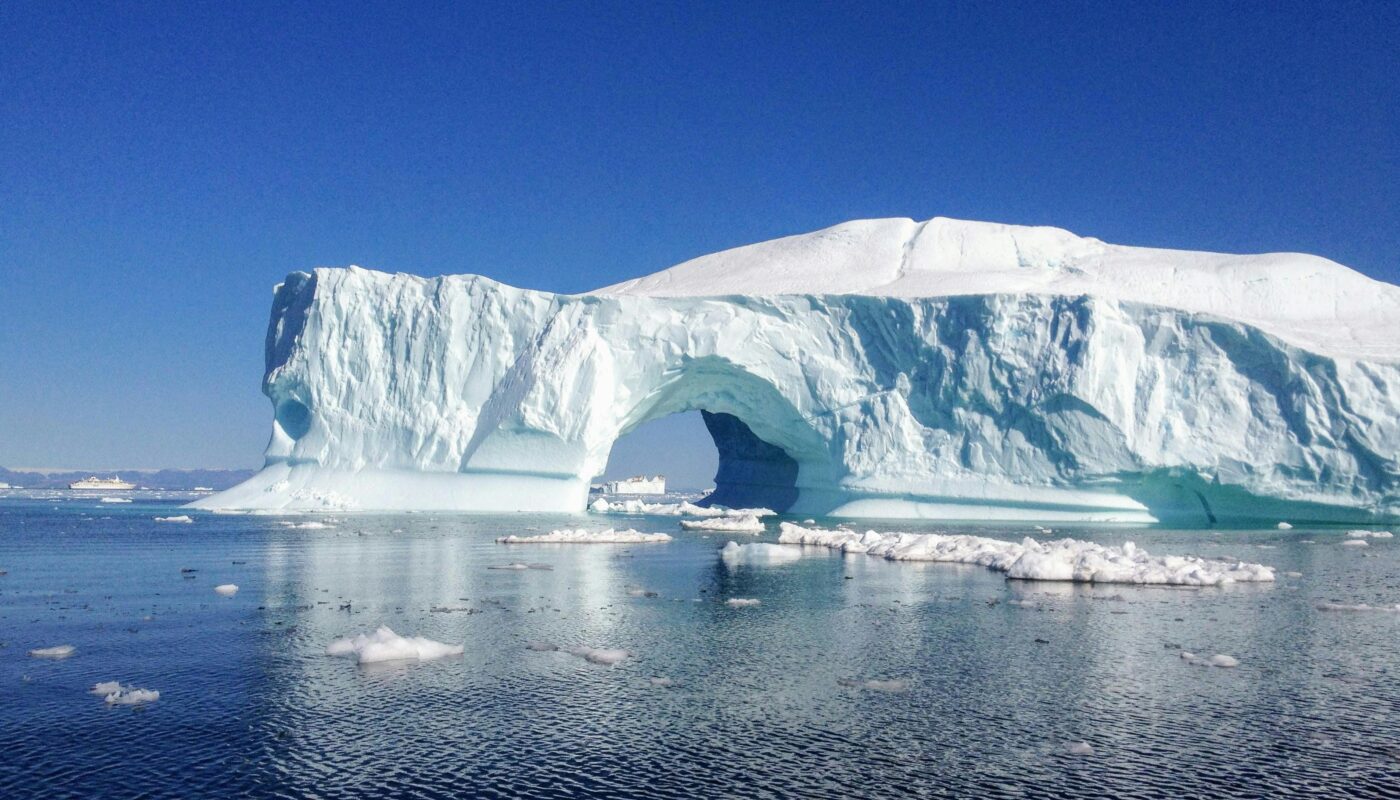
The most visually striking feature of Ilulissat Icefjord is the vast number of icebergs that fill its waters. These icebergs vary dramatically in size and shape, from small floating chunks to colossal ice mountains that rise high above the sea surface.
Some of the largest icebergs in the fjord can reach heights exceeding 100 meters above the waterline. However, only about one-tenth of an iceberg’s total mass is visible above the surface. The majority lies hidden beneath the water.
These giant ice structures often appear in stunning shades of white, blue, and turquoise. The color variations occur because compacted ice absorbs different wavelengths of light, allowing blue hues to become visible.
Sunlight reflecting off the ice can create dazzling displays of color, especially during sunrise and sunset. At certain times of the year, the midnight sun bathes the icebergs in golden light for hours at a time.
Constant Movement in the Icefjord
Although the Icefjord may appear calm from a distance, it is actually a place of constant motion and dramatic natural activity.
Icebergs frequently collide, rotate, and shift positions as they move through the fjord. Some of them become temporarily stuck in shallow sections of water, creating massive ice jams that can last for months.
Meanwhile, the glacier at the fjord’s head continues to produce new icebergs through calving events. When large pieces break off, the sound can resemble distant thunder echoing across the Arctic landscape.
These dynamic processes ensure that the appearance of Ilulissat Icefjord is never exactly the same from one day to the next.
Wildlife of the Icefjord Region
Despite the harsh Arctic environment, the area around Ilulissat Icefjord supports a surprising range of wildlife.
Marine mammals are among the most notable inhabitants of the region. Seals are commonly seen resting on floating ice or swimming through the cold waters. Occasionally, whales pass through nearby Disko Bay during their migration routes.
Birdlife is also abundant along the fjord’s rocky coastline. Arctic seabirds nest on cliffs and hunt for fish in the surrounding waters. Species such as gulls, terns, and eider ducks are frequent visitors to the area.
On land, the surrounding tundra ecosystem supports hardy plant species that bloom during the short Arctic summer. Mosses, lichens, and small flowering plants thrive during the brief warm season when sunlight is nearly constant.
Cultural and Historical Significance
Humans have lived in the Ilulissat region for thousands of years. Archaeological sites near the fjord reveal evidence of ancient Inuit cultures that once inhabited the area.
One of the most important historical sites nearby is the Sermermiut Valley, located just south of the modern town of Ilulissat. This site contains remains of several prehistoric settlements dating back roughly 4,000 years.
For these early communities, the fjord was a vital source of food and transportation. Fishing, seal hunting, and gathering marine resources allowed people to survive in the challenging Arctic environment.
Today, Ilulissat remains one of Greenland’s most important cultural centers. The town’s population relies on fishing, tourism, and traditional Arctic livelihoods.
Importance for Climate Science
Ilulissat Icefjord is not only visually spectacular—it is also one of the most important locations in the world for studying climate change.
Because the glacier feeding the fjord moves so quickly, it responds rapidly to shifts in temperature and ocean conditions. Scientists monitor the glacier carefully to understand how warming climates affect ice sheets.
Research conducted in the region helps scientists examine several critical questions, including:
- How quickly glaciers are melting
- How rising ocean temperatures influence glacial movement
- How melting ice contributes to global sea-level rise
The Icefjord has been studied by scientists for more than two centuries, making it one of the best-documented glacial systems on the planet.
Tourism and Arctic Adventure
Although Ilulissat Icefjord lies in a remote part of the Arctic, it has become a popular destination for adventurous travelers.
There are several ways for visitors to experience the region, such as:
- Boat tours among towering icebergs
- Guided hikes along scenic coastal trails
- Kayaking through icy waters
- Helicopter flights above the glacier and ice sheet
One of the most famous hiking routes leads from Ilulissat to the Sermermiut Valley, offering panoramic views of the fjord filled with drifting ice.
During summer months, travelers can witness the midnight sun shining almost continuously. In winter, the region becomes a prime location for viewing the Northern Lights dancing across the Arctic sky.
Protecting the Icefjord
Because of its extraordinary natural and scientific value, Ilulissat Icefjord is carefully protected.
The region has been designated as a UNESCO World Heritage Site, recognizing its importance both as a natural wonder and as a site of global scientific significance.
Strict environmental regulations help preserve the fragile Arctic ecosystem. Activities such as mining, heavy construction, and pollution are tightly controlled to prevent damage to the landscape.
These conservation efforts ensure that the Icefjord remains intact for future generations to study and admire.
Why Ilulissat Icefjord Is Truly Unique
Many fjords exist around the world, particularly in places like Norway, Chile, and New Zealand. However, Ilulissat Icefjord stands apart for several reasons.
First, it is directly connected to the immense Greenland Ice Sheet, one of the largest bodies of ice on Earth. Second, it is fed by an exceptionally fast-moving glacier that produces a remarkable number of icebergs.
Additionally, the fjord’s accessibility from the nearby town of Ilulissat allows both scientists and visitors to observe glacial processes up close—something that is rare in many polar environments.
The combination of scientific importance, cultural history, and stunning scenery makes Ilulissat Icefjord one of the most extraordinary natural landscapes on the planet.
Final Thoughts
Ilulissat Icefjord represents the raw power and beauty of the Arctic world. Its massive icebergs, roaring glaciers, and constantly changing landscapes offer a powerful reminder of the forces that shape our planet.
For scientists, the fjord provides crucial insights into glacial behavior and the future of Earth’s climate. For travelers, it offers an unforgettable glimpse into one of the last great wildernesses on Earth.
Standing on the rocky cliffs overlooking the fjord, watching enormous icebergs drift silently toward the sea, visitors often feel a profound sense of wonder. Ilulissat Icefjord is not just Greenland’s most spectacular natural wonder—it is one of the most remarkable natural environments anywhere in the world.