 by
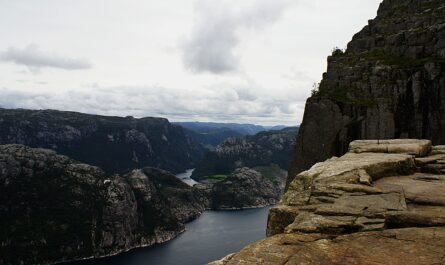
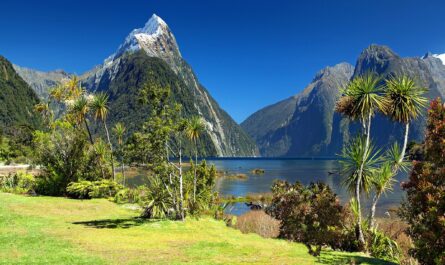
Fjords look inviting from a distance. Their deep blue water reflects towering mountains, waterfalls tumble down steep cliffs, and quiet villages sit beside the shoreline. On a sunny summer day, the water can appear almost tropical—until you discover how cold it actually is.
So, can you swim in fjords?
The short answer is yes, swimming is possible in some fjords, but it is not as simple as jumping into a beautiful stretch of water whenever you see one. Fjords are natural bodies of seawater with changing temperatures, currents, tides, weather conditions, boat traffic, underwater terrain, and potentially very cold water.
In Norway, official tourism guidance recommends never swimming alone, staying within your abilities, avoiding alcohol before swimming, and getting out if you become cold or unwell.
For experienced open-water swimmers, a carefully chosen fjord can provide an unforgettable experience. For inexperienced travelers, however, the combination of cold water and remote surroundings can become dangerous surprisingly quickly.
Understanding the reality of fjord swimming is therefore much more important than simply asking whether it is technically allowed.
What Is a Fjord?
A fjord is a long, narrow inlet created when glaciers carve deep valleys into the landscape and the sea later floods those valleys.
This geological history explains why fjords often have:
- Very deep water
- Steep mountain walls
- Narrow entrances
- Sheltered sections
- Rocky shorelines
- Strong local currents
- Rapid changes in depth
Some fjords are connected directly to the open ocean, while others contain narrower inner sections where freshwater from rivers and streams mixes with seawater.
The result is a complicated aquatic environment.
A shoreline may look perfectly calm while conditions farther out are very different.
That is one reason travelers should never judge fjord safety solely by looking at the surface.
Is It Actually Possible to Swim in a Fjord?
Yes, people do swim in fjords.
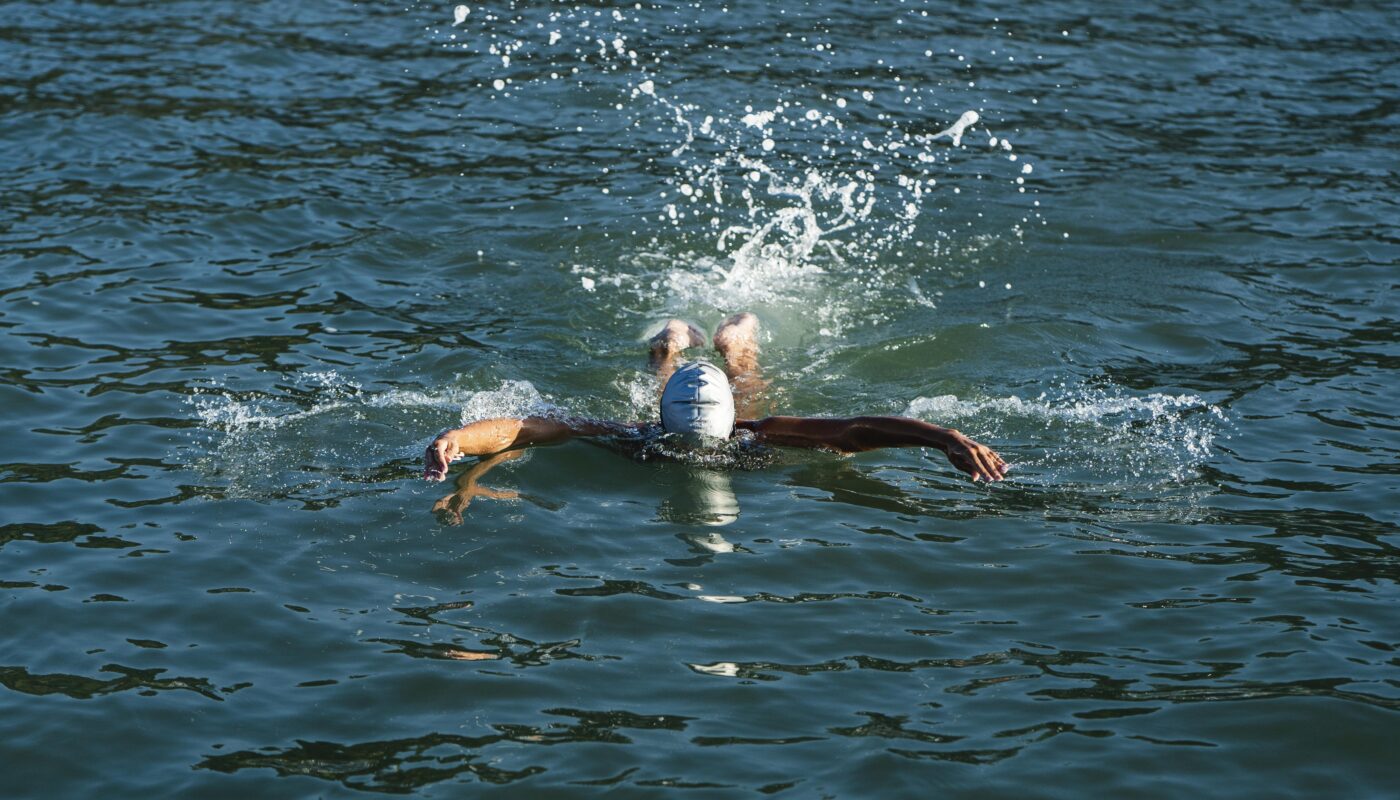
Open-water swimming, cold-water dipping, kayaking, paddleboarding, and other water activities take place in various fjord regions.
But “possible” does not mean “safe everywhere.”
A fjord is not a swimming pool.
There may be no lifeguard, no marked swimming lane, no easy exit, and no nearby medical assistance. Some areas may also have boat traffic or dangerous currents.
The safest approach is to identify a known, suitable swimming location rather than simply selecting a random shoreline.
Norway’s official tourism guidance advises swimmers to know their limits, never swim alone, stay along the shore, and get out if they become cold or sick.
That advice is particularly relevant to visitors unfamiliar with Nordic waters.
How Cold Is Fjord Water?
This is perhaps the biggest surprise for travelers.
A fjord may look warm because the surrounding air is pleasantly mild, but the water can remain extremely cold.
There is no single temperature for “fjord water.” Conditions vary according to:
- Location
- Season
- Latitude
- Depth
- Ocean currents
- Freshwater inflow
- Snowmelt
- Glacier melt
- Weather
- Time of day
The surface may also be considerably warmer than deeper water.
In a glacier-influenced fjord, meltwater can contribute to particularly cold conditions in certain areas.
This means you should never assume that summer weather makes a fjord warm enough for casual swimming.
Cold-water safety organizations commonly classify water below 15°C as cold enough to create a significant cold-water-shock risk. The RNLI warns that entering water at or below this threshold can cause sudden changes in breathing, heart rate, and blood pressure.
That is an important reality for fjord visitors.
A beautiful sunny afternoon does not necessarily mean comfortable swimming conditions.
Why Cold Water Is Dangerous
Cold water can affect the human body much faster than many people expect.
When you enter very cold water suddenly, your body can react automatically.
You may experience:
- An involuntary gasp
- Rapid breathing
- Panic
- Increased heart rate
- Reduced swimming coordination
- Muscle weakness
- Difficulty controlling breathing
The RNLI explains that cold-water shock can occur below 15°C and may interfere with breathing and movement almost immediately.
This creates an important problem.
A strong swimmer who normally feels completely comfortable in a pool may suddenly struggle in cold open water.
The danger is not necessarily that the person cannot swim.
The danger is that cold water can temporarily reduce their ability to use their swimming skills effectively.
Cold Water Shock vs. Hypothermia
These terms are sometimes confused.
They are not the same thing.
Cold Water Shock
Cold-water shock occurs shortly after entering cold water.
The initial response can include gasping and uncontrolled breathing.
This can make it difficult to stay calm or prevent water from entering the lungs.
The RNLI advises people who unexpectedly enter cold water to take a moment, relax, float, regain control of their breathing, and only then attempt to move to safety.
Hypothermia
Hypothermia occurs when the body’s core temperature falls dangerously low.
It generally develops over a longer period of exposure rather than immediately upon entering cold water.
As someone becomes increasingly cold, they can experience:
- Shivering
- Weakness
- Poor coordination
- Confusion
- Exhaustion
- Reduced ability to swim
The two risks can therefore overlap.
A swimmer may first struggle with cold-water shock and later become dangerously cold if they remain in the water too long.
Why Fjords Can Be More Complicated Than Ordinary Beaches
At a conventional beach, you may have shallow water, marked swimming areas, lifeguards, and relatively easy access to the shore.
A fjord may offer none of these.
The shoreline can consist of:
- Rocks
- Steep banks
- Cliffs
- Slippery surfaces
- Deep water
- Private property
- Docks
- Boat ramps
- Vegetation
In some places, you may enter the water from a gently sloping shore and discover that the bottom becomes deep very quickly.
This makes choosing the entry and exit point extremely important.
Tides and Currents Matter
Fjord water is not necessarily motionless just because it looks calm.
Tidal movements can create currents, particularly in narrower sections or around constrictions.
Freshwater flowing from rivers and streams can also affect local circulation.
The strength and direction of currents can vary with:
- Tide
- Wind
- River discharge
- Fjord shape
- Ocean conditions
- Local geography
A swimmer who enters a calm-looking area without understanding local conditions can find themselves farther from shore than expected.
The RNLI specifically recommends checking weather, tides, and swell conditions before cold-water swimming.
That principle is equally useful for fjord swimming.
What About Glacier-Fed Fjords?
Glacier-fed fjords are particularly fascinating.
They combine seawater with enormous quantities of meltwater and sediment.
For swimmers, however, glacier influence can mean colder water.
Water near glacier outlets may be extremely cold, and conditions can change as meltwater enters the fjord.
This is one reason swimming close to a glacier front is not a sensible casual activity.
A glacier may look still and peaceful, but the surrounding environment can be unstable. Ice can calve, rocks can fall, currents can change, and floating ice can create hazards.
The best rule is simple:
Never treat a glacier-front lagoon or fjord as an ordinary swimming spot.
Is Summer the Best Time to Swim?
Generally, summer provides the most comfortable conditions for anyone considering a fjord swim.
Longer daylight hours and warmer air make the experience more pleasant.
But summer does not automatically make fjord water warm.
Water temperatures respond more slowly to seasonal changes than air temperatures. A hot day can therefore be followed by surprisingly cold water.
For travelers who are not accustomed to cold-water swimming, a short dip may feel much more intense than expected.
If swimming is an important part of your trip, research the specific location rather than relying on general assumptions about the season.
Can You Swim in Norwegian Fjords in Winter?
Technically, yes.
Practically, winter fjord swimming should be considered a specialized cold-water activity rather than ordinary recreation.
Some experienced cold-water swimmers deliberately enter very cold water throughout the year.
But experience, preparation, appropriate equipment, acclimatization, and supervision become increasingly important as temperatures fall.
For the average traveler visiting Norway in winter, there is little reason to enter a remote fjord simply for the experience.
The water may be dangerously cold, daylight can be limited, weather can change quickly, and access to assistance may be difficult.
If your goal is to experience cold-water swimming, a structured activity in a known location is a much more sensible option than improvising beside a remote fjord.
Should Beginners Swim in Fjords?
Beginners should be cautious.
If you have only ever swum in warm pools or sheltered beaches, a cold fjord is not the ideal place for your first open-water experience.
Open-water swimming introduces additional variables:
- Cold
- Waves
- Currents
- Depth
- Visibility
- Weather
- Distance from shore
- Boat traffic
- Difficult exits
A better approach is to develop open-water skills gradually in a controlled environment.
If you eventually decide to swim in a fjord, choose a familiar, sheltered location and go with an experienced companion.
The RNLI advises cold-water swimmers to go with a friend, choose a familiar location, check conditions, enter gradually, stay within their depth, and have a way to call for help.
Never Swim Alone
This is one of the most important rules.
Even highly capable swimmers can experience unexpected problems.
Cold can affect your coordination.
A cramp can occur.
You can become disoriented.
A current can carry you away from your intended route.
A simple buddy system provides another person who can recognize a problem and seek assistance.
Norway’s official tourism guidance also advises against swimming alone.
If you are traveling solo, this does not mean you can never enjoy the water. It means you should choose activities and locations where appropriate supervision, organized groups, or other safety arrangements are available.
Never Jump Straight Into Cold Fjord Water
One of the worst ways to enter very cold water is by suddenly jumping or diving in.
Your body has no opportunity to adjust.
Cold-water swimming guidance recommends entering slowly and allowing your breathing to settle. The RNLI specifically advises against jumping or diving into cold water because sudden immersion can intensify cold-water shock.
A gradual entry allows you to recognize how your body is reacting.
If your breathing becomes uncontrolled or you immediately feel overwhelmed, that is a clear signal to get out.
There is nothing embarrassing about deciding the water is too cold.
Should You Wear a Wetsuit?
For cold-water swimming, a wetsuit can provide significant additional insulation and buoyancy.
The appropriate thickness depends on:
- Water temperature
- Swim duration
- Body composition
- Personal tolerance
- Activity level
- Experience
The RNLI recommends wetsuits for cold-water dipping because they can help keep swimmers warmer and increase buoyancy.
However, a wetsuit does not make a dangerous location safe.
It does not eliminate currents, tides, boats, cliffs, poor visibility, or other hazards.
Think of it as one piece of safety equipment—not a substitute for good judgment.
What Other Equipment Is Useful?
A cold-water swimmer may consider carrying or wearing:
- A brightly colored swim cap
- A tow float
- Appropriate wetsuit
- Warm clothing for afterward
- Waterproof phone or communication device
- Suitable footwear for rocky entries
- Whistle where appropriate
A bright cap helps other people see you.
A tow float can provide additional visibility and buoyancy.
The RNLI specifically recommends visibility aids such as bright swim caps and considers tow floats useful for cold-water swimmers.
What Should You Do After Swimming?
The experience does not end when you leave the water.
Your body can continue losing heat after the swim.
Prepare your warm clothing before entering.
After getting out:
- Dry yourself quickly.
- Remove wet clothing.
- Put on warm layers.
- Cover your head.
- Move somewhere sheltered.
- Warm up gradually.
- Drink something warm if appropriate.
- Monitor how you feel.
The RNLI recommends having warm clothing available and warming up promptly after cold-water swimming.
Do not treat the post-swim period as an afterthought.
Boat Traffic Is Another Major Concern
Many fjords are working waterways.
You may encounter:
- Ferries
- Cruise ships
- Fishing boats
- Private vessels
- Kayaks
- Rigid inflatable boats
- Tour boats
- Small recreational craft
A swimmer can be extremely difficult for a boat operator to see.
Never assume that because you can see a boat, the boat can see you.
Avoid swimming near busy ferry routes, harbors, docks, or navigation channels.
Choose designated or locally recommended swimming areas whenever possible.
What About Wildlife?
Fjords support rich ecosystems.
Depending on the region, you may encounter:
- Seabirds
- Fish
- Seals
- Porpoises
- Dolphins
- Whales
- Jellyfish
- Other marine organisms
Wildlife encounters are exciting, but they should not be treated as an invitation to approach animals.
Do not chase, touch, feed, or deliberately swim toward marine wildlife.
If a wild animal appears nearby, give it space and allow it to decide whether to remain in the area.
Can You Swim Near Whales?
Swimming near whales is a completely different matter from ordinary fjord swimming.
Whales are enormous wild animals, and approaching them can disturb their behavior or create safety risks.
If you encounter whales during a swim, maintain distance and leave the animals alone.
Never enter the water specifically to approach whales or dolphins unless you are participating in a legally permitted and professionally managed activity where such interaction is explicitly authorized.
For most travelers, viewing marine mammals from a responsible distance is the better experience.
Fjord Swimming and Alcohol Do Not Mix
A holiday atmosphere can make it tempting to combine swimming with drinks.
That is a dangerous combination.
Alcohol can affect:
- Judgment
- Balance
- Coordination
- Reaction time
- Perception of cold
- Ability to respond to emergencies
Norway’s official water-safety guidance specifically advises against swimming after drinking alcohol.
The same principle applies to boating and other water activities.
Save the celebration for after you are safely out of the water.
What If You Fall Into a Fjord Accidentally?
This is an important scenario because not everyone enters the water voluntarily.
A person may slip from a rocky shoreline, fall from a dock, or lose balance while taking a photograph.
If you unexpectedly enter cold water, the first instinct may be to panic and swim immediately.
Cold-water safety guidance recommends doing the opposite.
Take a moment.
The initial shock can interfere with breathing and movement. The RNLI recommends floating on your back, controlling your breathing, and then deciding how to reach safety.
If there is something secure you can hold onto, use it.
Once your breathing is under control, call for help or move toward safety if you are capable of doing so.
The “Float to Live” Principle
The basic idea behind “Float to Live” is simple: if you are struggling unexpectedly in cold water, floating can give you time to regain control of your breathing.
The recommended position involves leaning back, keeping your ears submerged, relaxing, and using your hands to help maintain stability.
This does not mean you should deliberately enter dangerous water to practice the technique.
It means you should know what to do if you unexpectedly find yourself in it.
How to Choose a Safer Fjord Swimming Location
If you want to swim during a fjord trip, look for a location with several positive characteristics.
Ideally, it should have:
- Known swimming access
- Easy entry and exit
- Sheltered water
- Limited boat traffic
- Local knowledge
- Clear information about conditions
- Nearby people or supervision
- A shoreline rather than a steep drop
- No obvious strong current
- Suitable weather
Avoid locations with:
- Strong currents
- Large waves
- Active boat traffic
- Steep cliffs
- Unstable rocks
- Glacier fronts
- Remote access
- Poor visibility
- Severe weather
When in doubt, ask local authorities, accommodation staff, guides, or experienced swimmers about the specific location.
Is Fjord Swimming Worth It?
For the right person and the right conditions, absolutely.
A fjord swim can be an extraordinary travel memory.
Imagine standing in cold, clear water with mountains rising directly from the shoreline. The landscape is silent except for birds, wind, or distant waterfalls.
It can feel completely different from swimming at a conventional beach.
But the experience becomes meaningful precisely because it requires respect.
You do not need to swim far.
You do not need to stay in the water for a long time.
You do not need to prove how cold you can tolerate.
Sometimes the best fjord swim is simply a short, controlled dip followed by warm clothes, a hot drink, and a spectacular view.
Alternatives for Travelers Who Don’t Want to Swim
You can enjoy fjord water without entering it.
There are many alternatives:
Kayaking
Kayaking provides an intimate perspective while keeping you above the water.
Paddleboarding
On calm and suitable days, paddleboarding can offer a wonderful way to explore sheltered sections.
Boat Tours
Boat trips provide spectacular views without exposing you to cold water.
Fjord Sauna Experiences
In some Nordic destinations, travelers can combine a sauna with carefully managed cold-water experiences. These should still follow local safety guidance.
Shoreline Photography
You can capture reflections, waterfalls, boats, and mountains without getting wet.
For many visitors, these alternatives provide most of the visual and emotional experience of the fjord without the risks associated with cold-water swimming.
Final Reality: Beautiful Does Not Mean Safe
Fjords can be among the most beautiful places on Earth, but beauty should never be confused with safety.
The calm surface of a fjord can hide extremely cold water, changing currents, considerable depth, slippery rocks, boat traffic, and difficult exits.
So, can you swim in fjords?
Yes—but only where swimming is appropriate and conditions are suitable.
For experienced open-water swimmers, a well-chosen fjord can be an unforgettable adventure. For beginners, the safest approach is to start in controlled environments and gradually develop cold-water and open-water skills.
The most important rules are straightforward:
Never swim alone.
Check the weather, tides, and local conditions.
Enter cold water gradually.
Do not underestimate temperatures below 15°C.
Stay within your ability.
Avoid boat channels and dangerous shorelines.
Use appropriate equipment.
Get out if you become excessively cold or unwell.
Norway’s official tourism guidance emphasizes knowing your limits, avoiding swimming alone, staying near the shore, and getting out when you become cold or sick.
Cold-water safety organizations likewise emphasize gradual entry, companionship, weather and tide checks, visibility, and knowing how to float if something goes wrong.
Ultimately, fjord swimming is less about bravery and more about preparation.
You do not have to conquer the water to appreciate it.
Sometimes, simply sitting beside a fjord, watching mist move between mountains, listening to waterfalls, and seeing the surface change with the light is enough.
And if you do decide to swim, treat the fjord with the respect you would give any powerful natural environment.
The mountains may look peaceful.
The water deserves your full attention.