 by
by Fjord landscapes are among the most dramatic hiking environments on Earth. Towering cliffs rise directly from deep blue water, glaciers carve valleys through ancient mountains, waterfalls thunder down vertical rock walls, and narrow ridgelines offer views that feel almost unreal. For experienced adventurers, fjord regions provide some of the world’s most physically demanding and mentally challenging hikes — routes where endurance, technical skill, weather awareness, and confidence all become essential.
Unlike casual scenic walks, the hardest fjord hikes often involve:
- Steep elevation gains
- Long distances
- Exposed ridges
- Unpredictable weather
- Technical scrambling
- Glacier crossings
- Remote wilderness terrain
These walks reward effort with breathtaking landscapes that most tourists don’t get to see. Reaching remote viewpoints above fjords often requires hours of climbing through rugged alpine environments where nature remains largely untouched.
The most difficult fjord hikes are not only tests of physical fitness. They also demand careful planning, proper equipment, route-finding skills, and respect for rapidly changing mountain conditions. In many fjord regions, weather can shift from sunshine to dense fog, rain, or snow within minutes.
For skilled hikers seeking true adventure, however, these challenges become part of the attraction. Fjord mountains create experiences that combine wilderness exploration, mountaineering, and breathtaking scenery in ways few other landscapes can match.
Why Fjord Hikes Are So Challenging
Fjord landscapes were shaped by glaciers over thousands of years.
As glaciers carved deep valleys through mountains, they created:
- Extremely steep terrain
- Sharp ridges
- Vertical cliffs
- Narrow valleys
- Rugged alpine routes
Unlike rolling mountain trails found in some regions, fjord hikes often involve relentless elevation gain from sea level directly into alpine terrain.
This means hikers may climb:
- 1,000 meters or more
- Within relatively short horizontal distances
The result is physically demanding ascents with little gradual terrain.
In addition, fjord environments often experience:
- Heavy rainfall
- Slippery rock
- Sudden fog
- Strong winds
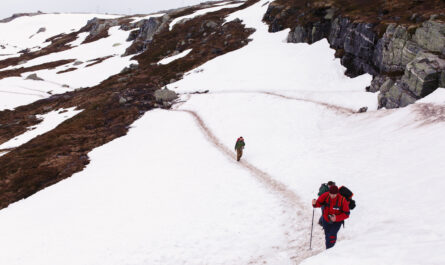
- Snow patches even in summer
These conditions increase both difficulty and risk.
Norway: Home of the World’s Most Famous Fjord Hikes
Norway contains some of the planet’s most iconic and demanding fjord hikes.
The country’s western coastline features massive fjord systems surrounded by steep mountains and exposed cliff formations.
Trolltunga — Norway’s Legendary Endurance Hike
Trolltunga, meaning “Troll’s Tongue,” is one of Norway’s most famous hikes and one of its most physically demanding day adventures.
The route features:
- Approximately 27 kilometers round trip
- Long elevation gain
- Rocky alpine terrain
- Exposure to changing weather
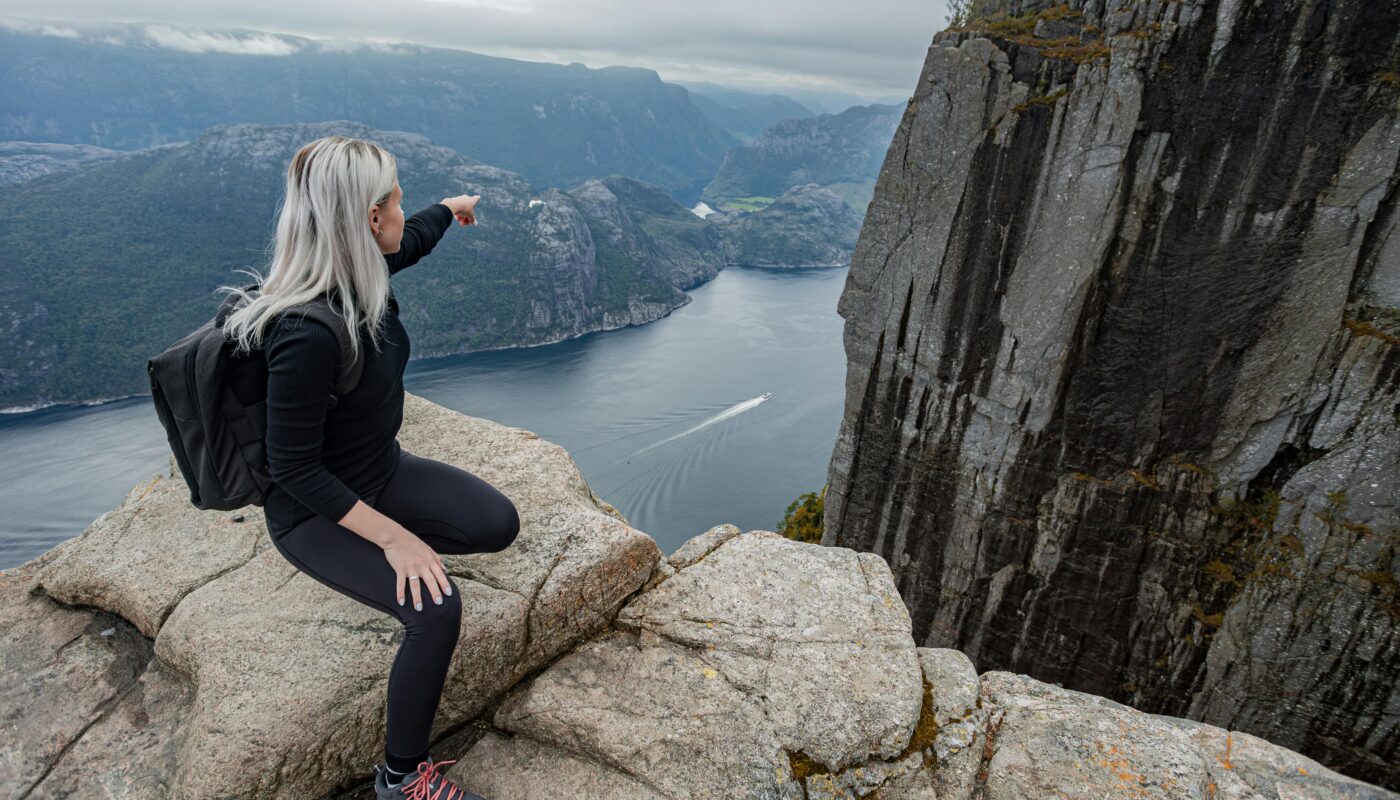
The hike leads to a dramatic rock ledge suspended high above a fjord.
Why It’s Difficult
Trolltunga is challenging because:
- The distance is long
- Weather shifts rapidly
- Much of the terrain is exposed
- The route requires strong endurance
Even experienced hikers may spend:
- 10 to 14 hours completing the journey
Snow and ice can remain on sections of the trail well into summer.
Mental Challenge
Beyond physical effort, Trolltunga also demands mental focus because:
- Fatigue accumulates gradually
- Weather exposure becomes intense
- Return hiking after exhaustion can be difficult
Despite growing popularity, the route remains serious mountain terrain.
Kjeragbolten — Exposure Above Lysefjord
Kjeragbolten is another legendary Norwegian fjord hike famous for its suspended boulder trapped between cliffs high above Lysefjord.
The Terrain
The route includes:
- Steep rock ascents
- Chain-assisted scrambling
- Exposed mountain sections
- Slippery granite surfaces
The hike is shorter than Trolltunga but considerably steeper in sections.
Weather Hazards
Rain transforms smooth granite into extremely slippery terrain.
Strong winds near cliff edges can also create dangerous conditions.
Psychological Difficulty
Many hikers find Kjerag mentally challenging because of:
- Exposure
- Heights
- Narrow sections near cliffs
It takes courage and cautious maneuvering to stand atop the well-known boulder.
Romsdalseggen Ridge — Norway’s Ultimate Ridge Hike
The Romsdalseggen Ridge hike is widely considered one of Norway’s most spectacular and demanding ridge traverses.
The trail overlooks:
- Deep valleys
- Sharp peaks
- Fjords
- Alpine lakes
Why Experts Love It
Experienced hikers value the route because it combines:
- Technical terrain
- Continuous exposure
- Long-distance endurance
- Exceptional scenery
The ridge itself includes narrow and airy sections where footing and balance become extremely important.
Constant Elevation Changes
Unlike simpler summit hikes, Romsdalseggen involves continuous:
- Ascents
- Descents
- Uneven rock sections
This creates accumulated fatigue over many hours.
Besseggen Ridge — A Classic High-Alpine Challenge
Besseggen Ridge is one of Scandinavia’s most celebrated hikes.
Although not directly above a fjord in the traditional coastal sense, the glacier-carved alpine lakes and steep ridges reflect classic Norwegian glacial landscapes.
The Ridge Traverse
The trail includes:
- Narrow scrambling sections
- Significant elevation gain
- Long hiking distances
- Exposure to weather changes
One of the route’s highlights is the dramatic contrast between two lakes of different colors on opposite sides of the ridge.
Crowds Add Complexity
During peak season, crowding on narrow ridge sections can create additional difficulty and stress.
Experienced hikers often begin early to avoid congestion.
New Zealand Fjord Hikes: Wilderness at Its Most Remote
New Zealand’s fjord regions contain some of the Southern Hemisphere’s toughest alpine hikes.
Milford Track — More Than a Scenic Walk
The Milford Track is famous worldwide, but difficult weather conditions can make it far more challenging than many travelers expect.
The route crosses:
- Mountain passes
- Rainforest terrain
- Glacier-carved valleys
- Flood-prone regions
Extreme Rainfall
Fiordland receives extraordinary rainfall.
Heavy rain can create:
- Mudslides
- Flooded rivers
- Dangerous trail conditions
Even fit hikers may struggle during poor weather periods.
Multi-Day Endurance
The track’s multi-day nature adds cumulative physical fatigue, especially when carrying gear through wet environments.
Routeburn Track — Alpine Exposure and Rapid Weather Shifts
The Routeburn Track combines fjord landscapes, alpine passes, and remote mountain terrain.
Challenges Include:
- Steep alpine sections
- Unpredictable storms
- Wind exposure
- Cold temperatures
Fiordland weather changes extremely quickly, making preparation essential.
Experienced hikers often consider weather management the greatest challenge rather than terrain alone.
Patagonia: Fjord Wilderness at the Edge of the World
Patagonia’s fjord regions offer some of the harshest hiking environments on Earth.
Torres del Paine National Park — Extreme Weather and Long Distances
Although best known for granite towers, Torres del Paine also borders fjord systems and glacier-fed waterways.
The region’s hiking routes challenge adventurers through:
- Violent winds
- Rapid weather shifts
- Long trekking distances
- Isolated wilderness
Wind as a Major Hazard
Patagonian winds can become so strong that:
- Hikers lose balance
- Progress slows dramatically
- Temperatures feel far colder
Experienced trekkers often describe Patagonia as psychologically exhausting because of constant environmental exposure.
Iceland’s Glacier and Fjord Hikes
Iceland’s fjord regions combine volcanic landscapes with steep coastal mountains and glaciers.
Hornstrandir Nature Reserve — Isolation and Arctic Conditions
Hornstrandir is one of Iceland’s most remote wilderness regions.
Accessible mainly by boat, the area offers:
- Rugged fjord coastlines
- Arctic weather
- Limited infrastructure
- Difficult navigation
Why It’s Challenging
The difficulty comes less from technical climbing and more from:
- Isolation
- Self-sufficiency
- Weather unpredictability
- Limited rescue access
Multi-day trekkers must carry supplies and prepare for harsh conditions.
Greenland: True Arctic Fjord Expeditions
Greenland contains some of the world’s most remote and demanding fjord hiking environments.
Arctic Conditions
Challenges include:
- Glacier travel
- Polar weather
- Extreme remoteness
- Ice-covered terrain
Routes may involve:
- River crossings
- Rocky moraines
- Snowfields
- Navigation without marked trails
Mental Endurance
In Greenland, psychological resilience becomes as important as physical strength because hikers may spend days without seeing other people.
The Role of Weather in Fjord Hiking
Weather is often the greatest danger in fjord regions.
Mountain and coastal systems combine to create:
- Rapid fog formation
- Heavy rainfall
- Sudden winds
- Snowfall at high elevations
Conditions can deteriorate within minutes.
This makes:
- Navigation
- Layering systems
- Emergency preparation
critically important.
Even experienced hikers may underestimate fjord weather.
Technical Skills Often Required
The hardest fjord hikes may involve:
- Scrambling
- Rope-assisted sections
- Glacier travel
- River crossings
- Route-finding
These are not casual hiking trails.
Depending on the route, adventurers may need:
- Mountaineering experience
- Navigation skills
- Ice equipment
- Emergency training
Preparation becomes essential for safety.
Physical Preparation for Fjord Hikes
Experienced hikers preparing for difficult fjord routes should focus on:
- Cardiovascular endurance
- Leg strength
- Balance
- Core stability
Steep ascents place enormous stress on:
- Knees
- Ankles
- Muscles
- Cardiovascular systems
Training with weighted packs is especially valuable for multi-day routes.
Essential Gear for Fjord Adventures
Because fjord weather changes rapidly, proper gear is critical.
Important equipment often includes:
- Waterproof layers
- Insulated clothing
- Navigation tools
- Trekking poles
- Emergency supplies
- Strong hiking boots
In remote areas, satellite communication devices may also be recommended.
Why Experienced Adventurers Seek Fjord Hikes
The hardest fjord hikes offer something beyond ordinary tourism.
They provide:
- Isolation
- Challenge
- Immersion in wilderness
- Emotional reward
- Extraordinary scenery
Reaching remote viewpoints after hours of difficult climbing creates a sense of accomplishment difficult to replicate elsewhere.
Many hikers describe fjord adventures as deeply transformative because the landscapes feel both beautiful and powerful.
Responsible Hiking and Environmental Protection
Fjord ecosystems are fragile.
Experienced hikers should practice:
- Leave No Trace principles
- Proper waste disposal
- Trail respect
- Wildlife protection
Overtourism increasingly threatens some famous routes.
Responsible behavior helps preserve these environments for future adventurers.
Final Thoughts
The world’s hardest fjord hikes are far more than scenic walks. They are serious wilderness adventures demanding strength, preparation, resilience, and respect for nature’s power.
From the exposed granite ridges of Norway and the storm-lashed valleys of New Zealand to the isolated fjords of Iceland and Greenland, these routes challenge even experienced adventurers physically and mentally.
Yet the rewards are extraordinary: towering cliffs above deep blue water, glacier-carved valleys, remote alpine ridges, endless wilderness, and moments of silence found only in some of the planet’s most dramatic landscapes.
For those willing to embrace the difficulty, fjord hiking offers one of the purest forms of adventure travel — journeys where effort, risk, beauty, and wilderness combine into unforgettable experiences.