 by
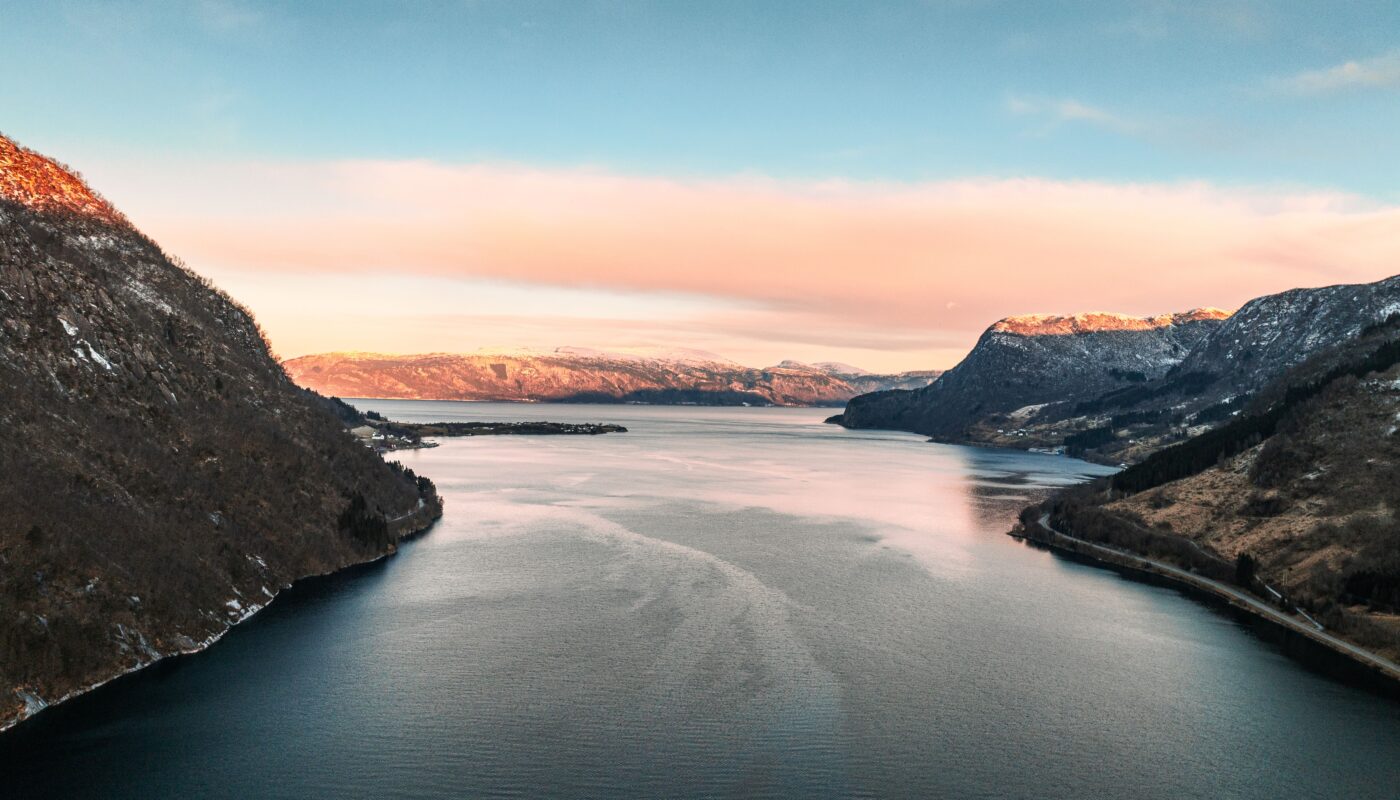
Fjord landscapes are among the most spectacular places for photography. Towering cliffs rise from dark, reflective water, waterfalls stream down mountain walls, mist drifts through valleys, and snow-covered peaks create dramatic backgrounds. With so much natural beauty, it is easy to assume that a tripod is an essential piece of photography equipment.
But is it really necessary?
The short answer is no—not always.
A tripod can be extremely useful in fjord landscapes, especially for long exposures, low-light photography, panoramas, and carefully composed images. However, modern cameras and smartphones have impressive stabilization and high-ISO capabilities, while many travelers prefer to keep their equipment lightweight.
Whether you actually need a tripod depends on what you want to photograph, when you plan to shoot, your camera equipment, weather conditions, and your preferred photography style.
For some photographers, a tripod can make the difference between an ordinary snapshot and a carefully crafted landscape photograph. For others, carrying one through steep trails and windy viewpoints may add unnecessary weight.
This guide explores when a tripod is useful in fjord country, when you can leave it behind, and how to make the best decision for your particular trip.
Why Fjord Landscapes Present Special Photography Challenges
Fjords are visually spectacular, but they can be technically challenging to photograph.
The scenery often contains enormous differences between light and shadow. Bright skies may sit above dark mountain walls, while reflective water can create additional exposure difficulties.
Weather is another factor.
A fjord can change appearance within minutes. Sunlight may suddenly illuminate a mountain, clouds can cover the peaks, rain may arrive unexpectedly, and fog can completely transform the atmosphere.
Wind can also be a problem, particularly on exposed viewpoints and mountain trails.
All these conditions influence whether a tripod will be helpful.
A photographer who wants to capture a calm reflection at sunrise has very different requirements from someone photographing a hiking group during midday.
What Does a Tripod Actually Do?
A tripod provides one basic advantage: stability.
Three sturdy legs create a stable platform for the camera. Once mounted, the camera can remain perfectly still while the shutter is open.
This becomes particularly important when using slow shutter speeds.
For example, if you want to photograph a waterfall with a shutter speed of several seconds, even a tiny movement from your hands can make the entire landscape appear blurred.
A tripod eliminates most of that unwanted camera movement.
It also allows photographers to carefully compose an image and keep the exact framing while experimenting with different settings.
Tripods Are Excellent for Waterfall Photography
Waterfalls are one of the biggest reasons to carry a tripod in a fjord landscape.
Fjords are famous for waterfalls, and many photographers want to create images in which the water appears smooth and silky.
To achieve this effect, photographers often use slower shutter speeds.
A shutter speed of around 1/2 second can already produce visible movement in flowing water. Longer exposures can create an even softer appearance.
However, the slower the shutter becomes, the more important camera stability is.
Holding a camera by hand at a slow shutter speed can introduce blur into the rocks, mountains, trees, and other stationary parts of the image.
A tripod keeps these elements sharp while allowing the moving water to become beautifully blurred.
When Long Exposure Photography Makes a Tripod Essential
A tripod becomes especially valuable when you deliberately want to use a long exposure.
Long exposures are popular in fjord photography because they can create a sense of movement and calmness.
Water can become smooth.
Clouds can appear stretched.
Mist can develop a soft appearance.
Small waves can turn into subtle patterns.
The mountains remain sharply defined while the moving elements become blurred.
This contrast can produce a very atmospheric photograph.
Without a tripod, achieving a multi-second exposure while keeping the entire landscape sharp is extremely difficult.
For photographers who specifically enjoy this style, a tripod is not merely convenient—it is one of the most useful pieces of equipment they can bring.
Sunrise and Sunset Photography
A tripod can also be extremely useful during the first and last hours of the day.
Sunrise and sunset provide some of the most beautiful light in fjord landscapes.
However, these periods also tend to have lower light levels.
As the sun disappears behind mountains, the camera may need to use:
- A slower shutter speed
- A wider aperture
- A higher ISO
Increasing ISO can introduce noise, while opening the aperture may reduce depth of field.
A tripod provides another option.
Instead of increasing ISO excessively, you can keep the ISO relatively low and use a slower shutter speed.
This can produce cleaner, higher-quality landscape photographs.
Blue Hour Is Another Reason to Bring One
The period immediately before sunrise or after sunset is often called blue hour.
During this time, the sky can take on deep blue and purple tones while mountains and water remain relatively dark.
Fjords can look particularly dramatic during this period because the surrounding mountains create strong silhouettes.
However, light levels are low.
A tripod allows photographers to take longer exposures without worrying about hand movement.
This can be especially useful when photographing still water, boats, cabins, mountains, or illuminated settlements around the fjord.
Tripods Are Helpful for Reflections
Calm fjord water can produce stunning reflections.
Mountains, waterfalls, clouds, and colorful skies may appear mirrored on the water’s surface.
To photograph these reflections carefully, stability can be important.
A tripod allows you to position the camera precisely and maintain the composition.
You can also make multiple exposures without changing the framing.
This can be useful when light changes quickly.
However, there is an important exception.
If the water is moving strongly, you may actually want a faster shutter speed to preserve texture and movement. In that situation, a tripod may not be necessary.
Panoramic Photography Can Benefit From a Tripod
Fjords are often so wide that a single photograph cannot capture the entire scene.
A photographer may therefore create a panorama by taking several overlapping images.
A tripod can make this process easier.
With a stable camera position, you can maintain a consistent horizontal level and carefully overlap each frame.
A tripod head designed for panoramic photography can make the process even more precise.
That said, modern cameras and smartphones can create excellent handheld panoramas.
If you are simply taking a quick panoramic photograph for personal memories, carrying a tripod specifically for this purpose may not be worthwhile.
Night Photography in Fjords
If your trip includes night photography, a tripod becomes much more important.
Fjords can offer extraordinary opportunities for photographing:
- Stars
- The Milky Way
- Moonlit mountains
- Reflections
- Small settlements at night
- Northern lights in Arctic regions
Night photography generally requires longer exposures or specialized camera settings.
Even modern cameras with excellent high-ISO performance benefit from being stabilized when maximum image quality is the goal.
A tripod allows you to use longer exposures while keeping stationary objects sharp.
For serious astrophotography, a sturdy tripod is essentially fundamental.
Northern Lights and Tripods
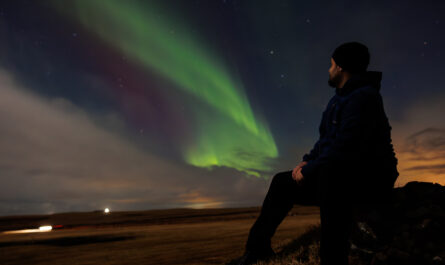
Northern lights photography is another situation where a tripod can be extremely valuable.
In northern fjord regions, such as parts of Norway and Iceland, aurora displays may appear above mountains and water.
A camera needs to remain stable during the exposure.
Although modern cameras can sometimes photograph auroras handheld with specialized settings, a tripod provides much greater flexibility.
It allows you to:
- Use longer exposures
- Maintain a consistent composition
- Include foreground elements
- Experiment with different shutter speeds
- Capture multiple frames
If photographing the northern lights is one of your major goals, bringing a tripod is generally a sensible decision.
When You Probably Do Not Need a Tripod
Despite all these advantages, there are plenty of situations where a tripod is unnecessary.
Suppose you are hiking through a fjord region during bright daylight.
You see a beautiful viewpoint and want to photograph the mountains.
Your camera can use a fast enough shutter speed to eliminate camera shake.
In this situation, handheld photography may be perfectly adequate.
Similarly, if you are taking photographs of people, wildlife, boats, or moving clouds, you may actually prefer the freedom of handheld shooting.
A tripod can slow you down.
Sometimes the best photograph happens when you can quickly react to changing light.
Modern Image Stabilization Has Changed the Equation
Photography technology has changed significantly.
Many modern cameras and lenses include image stabilization systems.
These systems can compensate for small movements made while holding the camera.
Some cameras can produce sharp photographs at shutter speeds that would have been difficult to use handheld in the past.
Smartphones have gone even further.
Computational photography can combine multiple frames and use software stabilization to produce remarkably sharp low-light images.
Because of this technology, casual travelers may not need a tripod at all.
If your primary goal is documenting your journey rather than producing professional long-exposure images, handheld photography may be enough.
Smartphones and Fjord Photography
For travelers using smartphones, the tripod question becomes even more interesting.
Modern smartphones can capture excellent landscape images in good lighting.
They also offer night modes that combine multiple exposures automatically.
For casual fjord photography, you can often get impressive results without carrying additional equipment.
However, a small smartphone tripod can still be useful for:
- Night photography
- Long exposures
- Group photographs
- Time-lapse videos
- Sunrise shots
- Static compositions
A compact tripod can therefore provide some of the advantages of a full-size tripod without adding as much weight.
Wind Is a Major Consideration
Fjord landscapes can be windy.
Strong winds create a problem for tripod users.
A tripod may stabilize the camera, but if the tripod itself vibrates or moves, the photograph can still be blurred.
Lightweight travel tripods are particularly vulnerable in strong winds.
If conditions are windy, photographers should:
- Use a sturdy tripod
- Keep the legs relatively short
- Avoid extending the center column unnecessarily
- Remove unnecessary accessories
- Shield the camera from wind where possible
- Use a remote shutter or timer
A tripod is most useful when the entire setup remains stable.
Hiking With a Tripod Can Be Exhausting
The biggest disadvantage of carrying a tripod in fjord landscapes is simple:
weight.
A full-size tripod can be bulky.
If your itinerary includes long mountain hikes, steep trails, uneven terrain, and frequent changes of location, the extra weight can become frustrating.
Fjord destinations often reward hikers who travel efficiently.
You may already be carrying:
- Water
- Food
- Waterproof clothing
- Camera equipment
- Extra batteries
- First-aid supplies
- Navigation equipment
Adding a heavy tripod may not make sense if you rarely use it.
This is why many travel photographers choose lightweight tripods or leave them at their accommodation unless they know they will need one.
A Lightweight Travel Tripod Can Be the Best Compromise
For many travelers, the solution is not choosing between a huge professional tripod and no tripod.
A compact travel tripod can offer a useful middle ground.
These tripods are designed to fold down into smaller sizes and weigh considerably less than many studio or professional landscape tripods.
They may not be as stable as large models, but they can be sufficient for:
- Mirrorless cameras
- Lightweight DSLR setups
- Small telephoto lenses
- Smartphones
- Long-exposure landscape photography
The key is to match the tripod to your camera.
A tiny tripod designed for a smartphone should not necessarily be expected to safely support a heavy professional camera and lens.
A Tripod Is Useful for Composition Too
There is another advantage that is often overlooked.
A tripod encourages you to slow down.
When photographing handheld, it is easy to raise the camera, take a picture, and move on.
With a tripod, you are more likely to examine the composition carefully.
You can adjust:
- Camera height
- Horizon position
- Foreground elements
- Mountain alignment
- Water reflections
- Leading lines
This deliberate approach can improve landscape photography.
Fjord scenery is so dramatic that photographers can easily become distracted by the view.
A tripod encourages careful composition rather than simply recording what is in front of you.
When a Tripod Can Actually Get in the Way
There are also circumstances where a tripod becomes inconvenient.
If you are photographing from a crowded viewpoint, setting up a tripod may take up valuable space.
If you are moving rapidly between locations, constantly folding and unfolding it can become irritating.
During a boat excursion, a tripod may be difficult or unsafe to use because of movement and limited space.
Likewise, when photographing wildlife, you may need to move quickly rather than remain fixed in one location.
The best photography equipment is not necessarily the equipment with the most features.
It is the equipment that suits the situation.
Tripods on Boats and Ferries
Fjord cruises are popular ways to experience these landscapes.
However, a boat is constantly moving.
Even a stable-looking vessel may experience vibration, engine movement, waves, and wind.
A tripod cannot eliminate movement caused by the boat itself.
In these circumstances, a fast shutter speed may be more useful than a tripod.
Handheld photography allows you to respond quickly as the boat changes position.
For boat-based photography, it is often better to prioritize:
- Fast shutter speeds
- Image stabilization
- Appropriate ISO
- Quick autofocus
- Flexible lenses
A tripod is usually more useful once you are back on solid ground.
Should Beginners Buy a Tripod for a Fjord Trip?
If you are new to photography, there is no need to immediately purchase an expensive professional tripod.
First consider your goals.
If you mostly want:
Travel memories:
A tripod may not be necessary.
Waterfall long exposures:
A tripod is strongly recommended.
Sunrise and sunset landscapes:
A tripod can be very useful.
Northern lights:
A tripod is highly recommended.
Wildlife photography:
A tripod may or may not be useful depending on your lens and shooting style.
Boat photography:
A tripod is usually less useful.
Professional landscape work:
A sturdy tripod is generally worth bringing.
Simple Alternatives to a Tripod
If you decide not to carry one, there are ways to improve stability.
You can place your camera on a solid surface such as a rock, bench, or wall.
A small beanbag can also be useful.
Some photographers use compact supports that allow a camera to rest securely without the bulk of a conventional tripod.
When photographing handheld, use proper technique:
- Hold the camera close to your body.
- Support the lens with your other hand.
- Keep your elbows close.
- Press the shutter gently.
- Use image stabilization when appropriate.
- Choose a sufficiently fast shutter speed.
These simple techniques can produce surprisingly sharp results.
The Best Approach: Plan Around Your Photography Goals
Rather than asking whether every fjord traveler needs a tripod, a better question is:
What kind of photographs do you want to create?
If you want quick travel snapshots, leave the tripod behind.
If you want silky waterfalls, detailed sunrise landscapes, star-filled skies, or northern lights photographs, bring one.
If you are unsure, consider a lightweight travel tripod.
It provides additional possibilities without making your camera bag excessively heavy.
Conclusion
So, is a tripod really necessary in fjord landscapes?
No—but it can be extremely valuable.
Fjord photography presents a unique combination of opportunities. There are waterfalls to blur, reflections to capture, mountains to photograph at sunrise, misty valleys to explore, and dark skies that can reveal the stars or northern lights.
A tripod is particularly useful when you need long exposures or maximum image quality. It provides stability, encourages careful composition, and gives photographers greater control over difficult lighting conditions.
However, it is not essential for every traveler.
Modern cameras, stabilized lenses, and smartphones have made handheld photography more capable than ever. During bright daylight, a tripod may simply become extra weight that you carry without using.
The ideal choice depends on your itinerary and photography style.
For a casual sightseeing trip, your camera or smartphone may be all you need.
For a serious landscape photography expedition, a sturdy tripod can be one of the most valuable pieces of equipment in your bag.
Ultimately, the spectacular scenery of a fjord does not require expensive equipment to appreciate. A tripod is a tool—not a requirement. The most important things are understanding light, choosing an interesting composition, respecting the environment, and being ready when the mountains, water, clouds, and weather come together to create a remarkable moment.