 by
Some destinations impress travelers with beautiful views, while others create an experience that stays in their memories long after the journey ends. Milford Sound, located in Fiordland National Park on New Zealand’s South Island, belongs to the second category. Its towering mountains, dark waters, powerful waterfalls, and untouched surroundings make it one of the most remarkable places to explore in New Zealand.
A Milford Sound cruise gives visitors the opportunity to discover this extraordinary landscape from the water. Instead of viewing the scenery from a distant lookout, passengers travel between enormous cliffs, watch streams of water descend from the mountains, and look for wildlife along the shoreline. Every part of the journey reveals another detail of the natural environment.
The attraction is not limited to its appearance. The fjord has a fascinating geological history, a distinctive marine ecosystem, and important connections to Māori culture. Its weather can transform the scenery within minutes, creating a different atmosphere from one visit to another.
Whether you enjoy photography, wildlife, peaceful surroundings, or outdoor adventures, a cruise through Milford Sound offers something worth discovering. Here are the main reasons this remarkable destination deserves a place on your New Zealand travel itinerary.
1. An Impressive Landscape Shaped by Ancient Glaciers
One of the most remarkable features of Milford Sound is the enormous scale of its landscape. Steep mountains rise directly from the water, leaving relatively little space between the shoreline and the rocky slopes. From a cruise boat, these formations appear even more imposing because passengers can observe them from below.
The fjord was formed through a long geological process. During past ice ages, massive glaciers moved through the region, gradually cutting deep valleys into the rock. As the ice retreated, seawater entered the valleys and created the dramatic waterways visible today.
Milford Sound’s distinct appearance from a typical coastal bay can be explained by this history. Its deep water, steep sides, and rugged mountain walls reflect the powerful influence of moving ice over thousands of years.
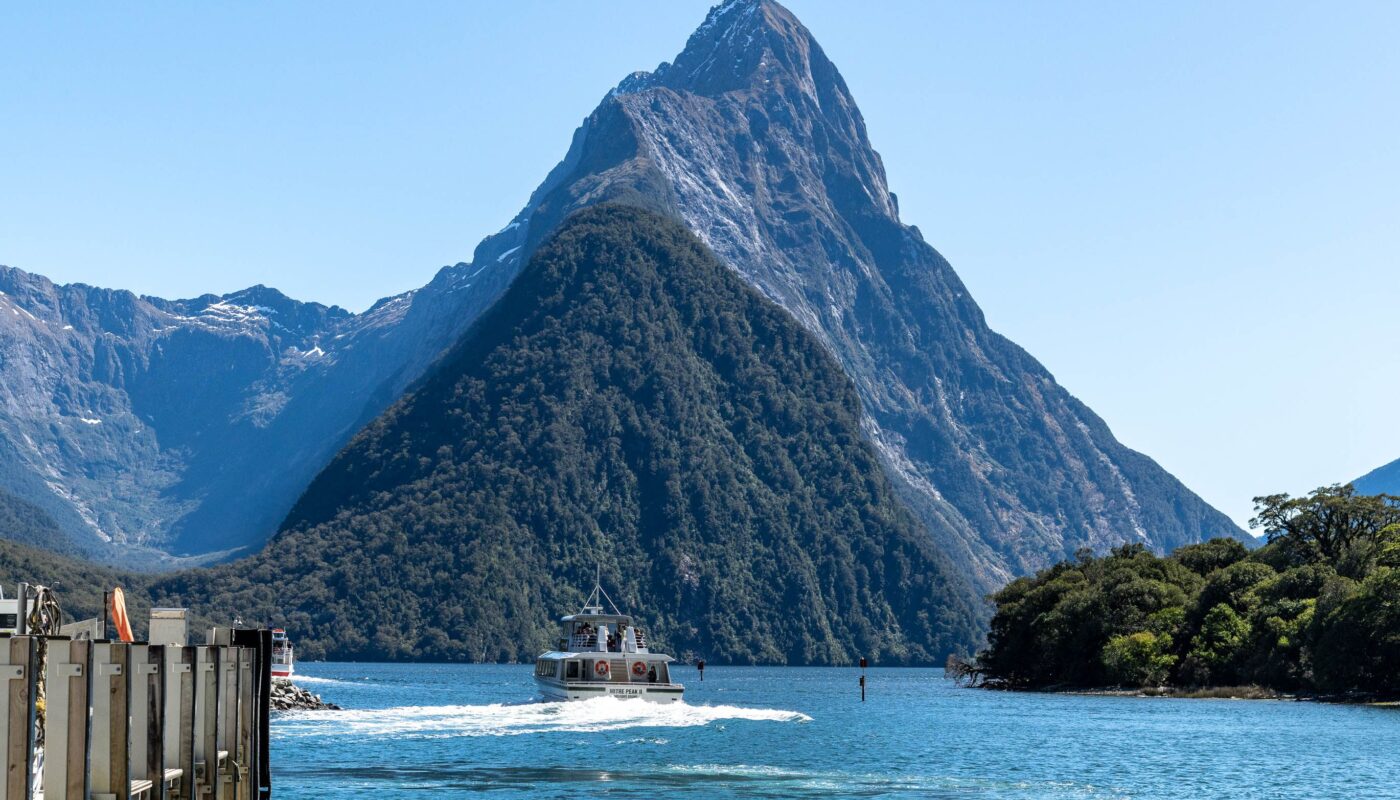
One of its most recognizable landmarks is Mitre Peak, whose distinctive profile dominates the surrounding scenery. The mountain looks impressive from viewpoints on land, but viewing it from a boat offers a different sense of scale. As the vessel moves through the fjord, the surrounding cliffs seem to rise higher with every passing moment.
The landscape also includes dense native vegetation, exposed rock faces, and narrow streams descending from elevated slopes. These contrasting features make the scenery interesting from every direction.
For travelers who appreciate natural landscapes, the cruise provides more than a collection of beautiful views. It offers a close look at the geological forces that shaped one of New Zealand’s most distinctive environments.
2. Waterfalls That Bring the Mountains to Life
Waterfalls are among the highlights of a Milford Sound cruise. The region receives abundant rainfall, allowing water to flow down the steep mountain walls and into the fjord. After heavy rain, temporary waterfalls can appear across the cliffs, transforming the landscape into a network of moving streams.
Stirling Falls is one of the best-known attractions along the cruise route. Its water drops from a high rock face, creating a striking contrast against the dark surrounding stone. Bowen Falls is another famous waterfall near the Milford Sound settlement.
These waterfalls are particularly impressive because of their setting. Rather than flowing through a broad valley, they descend from steep mountain slopes into the water below. The surrounding cliffs make their height and movement especially noticeable.
Rain also creates countless smaller cascades. Water may spill over ledges, emerge from forested slopes, or follow narrow channels through the rock. Some of these temporary waterfalls disappear when conditions become drier.
This changing scenery makes the weather an important part of the experience. A rainy day can offer more dramatic waterfalls than a period of clear skies.
Depending on the cruise operator and conditions, passengers may travel close enough to selected waterfalls to feel some of the spray. It is an exciting reminder that the fjord is not simply a landscape to observe from a distance; it is an active natural environment shaped by water.
3. Weather That Creates a Different Experience Every Time
Many travelers prefer sunshine when planning outdoor activities, but Milford Sound demonstrates that cloudy or rainy weather can have its own appeal.
On a clear day, sunlight illuminates the mountains and brings out the different shades of green in the surrounding vegetation. The water may appear especially reflective when the surface is calm, creating beautiful opportunities for landscape photography.
Cloudy conditions produce a more dramatic atmosphere. Clouds can settle around the mountain peaks, partially hiding the highest sections and revealing them again as the weather changes. This movement creates a constantly shifting view.
Rain often brings the greatest number of temporary waterfalls. Mist may rise from the water, while narrow streams become visible across the cliffs. The combination of low clouds, flowing water, and dark rock gives the fjord a mysterious appearance.
These conditions mean that visitors do not need perfect sunshine to enjoy the cruise. In fact, rain is part of the natural character of the region.
However, weather can also affect visibility, road conditions, and transport arrangements. Travelers should bring waterproof clothing, check local forecasts, and follow advice from cruise operators.
The most rewarding approach is to arrive prepared for changing conditions rather than expecting the landscape to look exactly like a photograph. Milford Sound’s atmosphere is one of its greatest attractions precisely because it is never entirely predictable.
4. Opportunities to See Wildlife in the Wild
A cruise through Milford Sound can also introduce visitors to the wildlife that inhabits Fiordland’s waters and surrounding landscape.
New Zealand fur seals are among the animals commonly associated with the area. They can sometimes be seen resting on rocky outcrops close to the water. From the boat, passengers may observe them without disturbing their natural behavior.
Dolphins are another exciting possibility. Bottlenose dolphins sometimes travel through the fjord, and lucky visitors may see them swimming near the vessel or moving through the water in groups. Their appearances depend on natural conditions, so sightings cannot be guaranteed.
The region is also associated with the Fiordland crested penguin, a distinctive native species. These birds are relatively elusive, and seeing one during a standard cruise is not certain. Nevertheless, their presence adds to the area’s ecological importance.
Seabirds and other native animals contribute to the wider environment. The surrounding forests and mountains provide different habitats, while the fjord supports marine life beneath its surface.
Wildlife watching requires patience. Animals may remain hidden, appear briefly, or move away before passengers can take photographs. This uncertainty is part of what makes an encounter meaningful.
Visitors should avoid disturbing animals, follow crew instructions, and respect the distance recommended by their guides. Responsible observation helps protect the natural environment and allows wildlife to continue behaving normally.
5. A Fascinating World Beneath the Water
The beauty of Milford Sound extends below the surface, where unusual environmental conditions support an interesting marine ecosystem.
The area receives so much rainfall that a layer of relatively fresh water often sits above the deeper salt water. Organic material from surrounding vegetation darkens this upper layer, limiting the amount of sunlight that reaches lower depths.
This creates conditions in which certain marine organisms normally associated with deeper ocean environments can occur at surprisingly shallow levels.
Black coral is one of the notable examples. Despite its name, living black coral may have pale or white branches. It forms part of an underwater community that makes Milford Sound interesting to marine researchers and divers.
The fjord’s steep sides and deep water also contribute to its distinctive underwater habitats. Although a regular sightseeing cruise mainly reveals the scenery above the surface, the knowledge that another ecosystem exists below adds depth to the experience.
Visitors interested in this hidden environment may explore specialist diving experiences where available and suitable. These activities require appropriate guidance and equipment.
Understanding the underwater environment also highlights the importance of conservation. Water quality, marine habitats, and surrounding forests are connected, meaning that protecting the wider landscape supports the health of the fjord itself.
6. An Excellent Destination for Photography
Milford Sound offers a wide range of photographic opportunities within a relatively short journey. Its mountains, waterfalls, wildlife, reflections, and shifting weather provide different subjects for beginners and experienced photographers.
A boat allows passengers to observe the scenery from changing angles. Rather than taking every photograph from the same viewpoint, travelers can capture mountain profiles, cliff faces, distant waterfalls, and sections of the shoreline as the cruise progresses.
Wide-angle photographs are useful for showing the size of the landscape. A zoom lens can help capture details that appear farther away, including animals resting on rocks or narrow waterfalls descending from high slopes.
Reflections are another appealing subject. When the water is calm, the mountains may appear on its surface, creating a balanced composition. On windier days, the movement of the water can produce a different visual effect.
Weather also provides creative possibilities. Mist can soften the background, while rain makes waterfalls more prominent. Even a cloudy sky can help create a photograph with strong contrast and atmosphere.
A few practical tips can improve your results:
- Carry a waterproof cover for your camera or phone.
- Keep a clean cloth available to remove moisture from the lens.
- Take photographs from different sides of the boat when it is safe to do so.
- Capture both wide landscapes and smaller details.
- Use a secure grip when photographing from an outdoor deck.
- Enjoy the surroundings instead of spending the entire cruise looking at a screen.
The aim is not simply to collect attractive pictures. Photography can also help travelers notice small details that might otherwise go unnoticed, such as the texture of a cliff or the changing shape of clouds above a mountain.
7. A Cruise Experience for Different Types of Travelers
Another reason Milford Sound is popular is that visitors can appreciate its beauty without needing advanced outdoor skills.
Families can enjoy the changing scenery together, while couples may appreciate the peaceful atmosphere and dramatic views. Solo travelers can use the journey as an opportunity to explore nature at a comfortable pace.
Older visitors may find a boat cruise appealing because it offers extensive sightseeing without requiring a demanding mountain hike. Travelers with mobility limitations may also be able to participate, depending on the vessel and available facilities.
However, accessibility should never be assumed. Anyone who requires wheelchair access, assistance with boarding, accessible toilets, or specific seating arrangements should confirm these details with the operator before booking.
Cruise styles vary. Some vessels carry larger groups and provide indoor seating, while smaller boats may offer a more intimate experience. Commentary can help visitors understand the landscape, wildlife, and history of the area.
Travelers who want a slower experience can consider an overnight cruise, which allows them to spend more time in the fjord rather than returning immediately after a daytime sightseeing trip.
Choosing the right option depends on your budget, schedule, interests, and preferred level of comfort.
8. Māori Heritage and the Cultural Importance of the Fjord
Milford Sound is known by its Māori name, Piopiotahi. Its cultural significance adds another layer to the visitor experience and reminds travelers that the landscape has meaning beyond its scenic value.
Māori traditions connect the region with stories about the natural world, ancestral history, and the relationship between people and the environment. The name Piopiotahi is associated with the piopio, a native bird now considered extinct, and a traditional story connected to the legendary hero Māui.
Māori historically visited the wider region to fish, hunt, and collect pounamu, a valued greenstone. These activities reflect the importance of the surrounding environment as a source of food, materials, and cultural connection.
Visitors can learn more through knowledgeable guides and onboard commentary. Listening to these explanations helps place the landscape within a wider cultural context rather than treating it only as a tourist attraction.
Milford Sound also forms part of Te Wāhipounamu, the World Heritage-listed wilderness area of southwestern New Zealand. This recognition reflects the exceptional natural value of the region.
Respectful travel includes recognizing local cultural heritage, following conservation guidance, and understanding that protected places deserve care and consideration.
9. The Scenic Road Journey Adds to the Adventure
For many visitors, the journey to Milford Sound is almost as memorable as the cruise itself.
The Milford Road runs through Fiordland and provides access to a variety of landscapes, including mountain valleys, native forests, lakes, and rugged alpine terrain.
Travelers driving from Te Anau may stop at Mirror Lakes, where surrounding features can be reflected in the water when conditions are calm. The Eglinton Valley offers broad views of the surrounding mountains, while the Homer Tunnel passes through a dramatic alpine setting.
These stops create opportunities to stretch your legs, take photographs, and appreciate the diversity of the region before arriving at the fjord.
However, the road journey requires careful planning. Visitors should check current road conditions, allow sufficient time for stops, and avoid driving too quickly on winding sections. Weather can affect travel, especially during colder months.
Fuel and food options are limited along the route, so it is sensible to prepare before leaving Te Anau. Mobile phone coverage may also be unreliable or unavailable along parts of the journey.
Travelers who do not wish to drive can consider an organized coach-and-cruise package. This can make the day easier by combining transport with the boat trip.
Planning the journey carefully allows visitors to enjoy the scenery without feeling rushed or risking a missed cruise departure.
10. A Peaceful Break From Everyday Life
A Milford Sound cruise offers something that can be difficult to find in a busy modern routine: time to observe the natural world without constantly moving between activities.
The mountains provide a sense of scale, while the deep water and steep cliffs create a feeling of remoteness. The sound of flowing waterfalls and the movement of clouds can encourage visitors to slow down and pay attention to their surroundings.
Even a short cruise may provide quiet moments when passengers simply watch the landscape pass by. These moments can become just as memorable as the major landmarks.
An overnight cruise offers another way to experience the fjord. Spending more time in the area may provide opportunities to enjoy quieter periods and observe changes in the atmosphere. Facilities, schedules, and activities depend on the operator.
Travelers do not need to follow a demanding itinerary to appreciate Milford Sound. Sometimes, allowing time for observation creates a richer experience than trying to fit as many attractions as possible into one day.
For visitors seeking a break from crowded cities and digital distractions, the fjord provides an opportunity to reconnect with nature and enjoy a different pace of life.
11. When Should You Plan Your Milford Sound Cruise?
Milford Sound can be visited throughout the year, and each season offers different conditions.
Spring, from September to November: The landscape begins to show fresh growth, although weather can remain unsettled. Rain may produce impressive temporary waterfalls.
Summer, from December to February: Longer daylight hours and milder temperatures make this a popular period for sightseeing. Booking ahead is sensible during busy travel periods.
Autumn, from March to May: Conditions gradually become cooler, and visitors may enjoy changing seasonal scenery. Rain remains possible.
Winter, from June to August: The surrounding mountains can look particularly dramatic, with colder conditions and possible snow or ice affecting the road journey.
There is no single season that guarantees the best experience. Waterfalls, cloud cover, visibility, and wildlife activity vary with conditions.
Before traveling, check the weather forecast and confirm your cruise departure. If you are driving, check road conditions as well. Keeping some flexibility in your plans can help you respond to changes without unnecessary stress.
12. Practical Advice for a Comfortable Cruise
A little preparation can make a significant difference to your day.
Book your cruise early. Popular departures may fill up during peak travel periods. Choose a time that works with your transport plans.
Dress for changing weather. A waterproof jacket and warm layers are useful even during summer. Outdoor viewing areas may feel colder than expected.
Bring food and water. Refreshment options are limited along the road, so carry supplies if they are not included in your tour.
Protect your camera. Rain and waterfall spray can reach outdoor viewing areas. Keep electronic equipment secure and dry.
Allow enough travel time. The drive from Te Anau generally requires around three hours in suitable conditions, without accounting for sightseeing stops. The journey from Queenstown is considerably longer.
Choose the right boat. Compare cruise duration, onboard commentary, seating, passenger capacity, and accessibility before making a reservation.
Follow safety instructions. Stay within designated areas and listen to the crew, particularly when the vessel approaches waterfalls or experiences changing conditions.
Respect the environment. Do not disturb wildlife or leave rubbish behind. Small responsible choices help preserve the destination for future visitors.
These simple measures allow you to concentrate on the landscape and enjoy the experience more comfortably.
13. Why a Milford Sound Cruise Is Worth Experiencing
Milford Sound is special because several remarkable features come together in one place. Its steep cliffs reveal the effects of ancient glaciers, its waterfalls respond to rainfall, and its marine environment supports unusual wildlife and underwater habitats.
A cruise provides a perspective that cannot be fully reproduced from the road. Visitors can travel through the fjord, observe its scale from the water, and see how the landscape changes as the boat moves toward the Tasman Sea.
The experience also connects travelers with the cultural history of Piopiotahi and the conservation importance of Fiordland. This combination makes the journey meaningful for people interested in geology, wildlife, photography, and responsible tourism.
Although weather conditions are unpredictable and wildlife sightings are never guaranteed, these uncertainties are part of the attraction. Each journey offers a different combination of views and experiences.
Conclusion
A Milford Sound cruise is an outstanding way to explore one of New Zealand’s most distinctive natural landscapes. From the imposing form of Mitre Peak to the waterfalls descending from steep mountain walls, the scenery offers a memorable experience throughout the journey.
Wildlife encounters, unusual underwater conditions, Māori heritage, and the dramatic road through Fiordland make the destination even more rewarding. Whether you choose a daytime sightseeing trip or an overnight cruise, there are plenty of reasons to appreciate the fjord beyond its famous photographs.
Ultimately, Milford Sound stands out because it combines beauty with a powerful sense of place. It encourages visitors to observe the natural world, learn about its history, and recognize the importance of protecting fragile environments.
For anyone planning a trip to New Zealand’s South Island, a cruise through Piopiotahi is an experience worth considering. With thoughtful preparation and an open mind about the weather, visitors can enjoy a remarkable journey through a landscape shaped by ice, water, and time.