by
When most people imagine Norway, they picture green mountains, bright summer evenings, waterfalls rushing down cliffs, and boats moving through deep blue fjords. Winter creates an entirely different version of this famous landscape. Mountains become covered with snow, daylight becomes softer and shorter, and many villages settle into a slower rhythm.
For travelers who enjoy dramatic scenery, peaceful surroundings, and unusual seasonal experiences, winter can be a fascinating time to explore the Norwegian fjords. The landscape becomes quieter, colder, and more atmospheric. In northern parts of the country, long winter nights also create opportunities to search for one of nature’s most famous spectacles—the Northern Lights.
A winter journey through Norway is not simply a summer fjord holiday with lower temperatures. It requires different planning, different clothing, and a willingness to accept changing weather. In return, travelers can experience snow-covered mountains, frozen landscapes, peaceful waterways, colorful winter skies, and, when nature cooperates, the magical glow of the aurora.
Why the Norwegian Fjords Look So Different in Winter
The fjords of Norway were formed by enormous glaciers that gradually carved deep valleys into the mountains. When the glaciers retreated, seawater entered these valleys, creating the dramatic waterways seen today.
During summer, vegetation covers many of the surrounding slopes. Winter changes the visual character of the landscape completely.
Snow can spread across mountain ridges and forests, creating broad white surfaces above the dark water. Low clouds may settle between the peaks, while mist can make distant mountains appear almost invisible. On clear days, sunlight reflects from the snow and produces a striking contrast between bright mountains and deep-colored fjord water.
The landscape can also change rapidly.
A fjord that looks bright and peaceful in the morning might be surrounded by fog a few hours later. Snow can begin falling unexpectedly, or the clouds may disappear to reveal a clear evening sky.
Rather than seeing this unpredictability as a problem, winter visitors can treat it as part of the experience.
The Peaceful Side of Fjord Norway
One of the greatest attractions of winter is the atmosphere.
Popular Norwegian destinations can be busy during the warmer months, particularly around major viewpoints and well-known fjords. Winter generally brings a slower pace, although popular destinations can still attract visitors during the Christmas and Northern Lights seasons.
There is something special about standing beside a fjord when there are few people around.
Instead of hearing crowds and constant activity, you may hear wind moving through the trees, snow crunching beneath your boots, water touching the shoreline, or a distant boat crossing the fjord.
This sense of calm can make winter especially appealing to photographers, couples, solo travelers, and people looking for a slower type of holiday.
The objective does not have to be seeing as many attractions as possible. Sometimes the most memorable part of a winter fjord journey is simply watching the landscape change.
Snow-Covered Mountains Above the Fjords
Snow is one of the defining features of a Norwegian winter.
Mountain peaks can become heavily covered in snow, while lower elevations may experience a mixture of snow, rain, and bare rock depending on the weather and location.
The combination of mountains and water creates countless photographic opportunities.
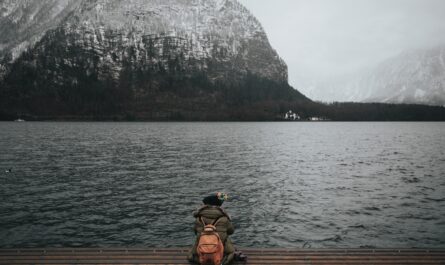
A snow-covered peak reflected in a calm fjord can produce an almost symmetrical scene. Fresh snow can make traditional houses, boats, forests, and roads stand out against their surroundings.
After snowfall, the landscape can appear particularly clean and quiet. Trees may carry thick layers of snow, while paths and rooftops become softly rounded.
For photographers, cloudy weather should not automatically be considered bad weather. Clouds can add depth to a mountain composition and create a more dramatic mood.
Winter Light in the Norwegian Fjords
Light is one of the most unusual aspects of winter travel in Norway.
In southern and western parts of the country, winter days are shorter than in summer but still provide daylight for sightseeing. Farther north, the seasonal difference becomes much more dramatic.
Near the Arctic Circle and beyond, winter produces extremely short days, while some northern areas experience a period known as the polar night.
Polar night does not necessarily mean complete darkness throughout every hour of the day. Around midday, the sky can develop beautiful shades of blue, purple, pink, and orange even when the sun remains below the horizon.
This soft illumination can make mountains and fjords look completely different from their summer appearance.
Photographers often find these conditions particularly interesting because harsh midday sunlight is replaced by gentle, atmospheric light.
The Northern Lights Experience
For many travelers, the possibility of seeing the Northern Lights is one of the main reasons for visiting Norway during winter.
The aurora occurs when charged particles associated with solar activity interact with gases in Earth’s upper atmosphere. The resulting display may appear as green, white, purple, pink, or other colors depending on atmospheric and viewing conditions.
Northern Norway is particularly associated with aurora viewing.
Destinations such as Tromsø, Lofoten, Senja, and other areas of northern Norway are frequently used as bases for Northern Lights trips.
However, an important point should be remembered: the Northern Lights cannot be guaranteed.
Several factors must come together for a successful viewing experience. There needs to be sufficient auroral activity, the sky must be reasonably clear, and the viewer needs to be somewhere with suitable darkness and visibility.
Cloudy skies can hide even a strong aurora.
For this reason, travelers should avoid planning an entire holiday around one specific evening. Spending several nights in an aurora destination provides more opportunities.
Tromsø and the Arctic Winter
Tromsø is one of the best-known starting points for travelers interested in Arctic Norway.
The city provides access to a variety of winter experiences while also offering restaurants, accommodation, cultural attractions, and transportation connections.
Visitors can combine city sightseeing with activities such as Northern Lights excursions, dog sledding, snowshoeing, reindeer experiences, skiing, and other seasonal adventures.
One advantage of using Tromsø as a base is that travelers do not have to spend their entire holiday in remote surroundings. They can enjoy the comforts of a city and then travel into darker landscapes for nighttime aurora excursions.
Because winter tourism is popular in Tromsø, accommodation and guided experiences can become busy. Booking important activities ahead of time is therefore sensible.
Lofoten in Winter
The Lofoten Islands offer a particularly dramatic combination of mountains, ocean, fishing villages, and fjords.
Traditional red fishing cabins are scattered around many coastal communities, and their bright appearance can contrast beautifully with snowy surroundings.
Winter also changes the character of the islands.
Instead of the long, bright days associated with summer, visitors encounter darker skies, snowy mountains, dramatic weather, and extended opportunities for aurora viewing.
The surrounding sea can make winter conditions change quickly, so travelers should not assume that every day will be clear or calm.
Lofoten is particularly attractive for people who want to combine landscape photography with an Arctic road trip or village-based exploration.
Geirangerfjord During the Cold Season
Geirangerfjord is one of Norway’s most famous fjord destinations.
Its steep mountains and narrow waterway create an impressive setting in every season, but winter gives the area a much quieter appearance.
Snow can cover the surrounding mountains while the fjord remains relatively dark beneath them. Clouds moving through the valleys can create dramatic compositions for photographers.
Winter access requires more planning than a summer visit. Some roads, attractions, tours, and services may operate on different schedules or close seasonally.
This makes checking current local information particularly important before traveling.
For visitors who enjoy peaceful landscapes rather than crowded sightseeing, however, a winter visit can provide a very different perspective on the region.
Flåm and Western Norway in Winter
Flåm is another well-known gateway to Norway’s fjord landscapes.
The village is associated with spectacular mountain scenery and the famous Flåm Railway. Its location makes it a convenient base for experiencing the dramatic landscape of western Norway.
Winter visitors may find the area considerably calmer than during the busiest summer period.
The important distinction is that western fjord destinations and northern Norway offer different types of winter experiences.
If your main objective is snowy fjords, mountains, and peaceful scenery, western Norway can be an excellent choice.
If your primary objective is Northern Lights viewing, northern Norway generally offers more suitable conditions and locations.
Combining both regions can create a broader Norwegian journey, but travelers should account for the considerable distances involved.
Winter Activities Around the Fjords
A winter fjord holiday does not have to be limited to sightseeing.
Depending on where you travel, there are many seasonal activities available.
Snowshoeing
Snowshoeing is a simple way to explore snowy terrain without requiring the technical skills associated with some forms of skiing.
Guided snowshoe excursions can take visitors through forests, valleys, and mountain environments while providing advice about local conditions.
Dog Sledding
Dog sledding offers a memorable way to experience snowy Arctic landscapes.
Visitors can join guided tours ranging from short introductory trips to longer excursions.
The experience also provides an opportunity to learn about the dogs, equipment, and traditions associated with sled travel.
Skiing
Norway has a strong skiing culture, and winter travelers can find opportunities for both cross-country and downhill skiing.
More advanced travelers may also be interested in ski touring in suitable mountain regions. Such activities require proper preparation because winter mountain environments can present serious hazards.
Reindeer Experiences
Northern Norway offers opportunities to learn about Sami culture and reindeer herding through organized experiences.
Travelers should approach these activities respectfully and recognize that Sami culture is a living culture with a history and identity extending far beyond tourism.
Sauna and Relaxation
After spending hours outdoors in cold conditions, a warm sauna can be an ideal way to end the day.
The combination of cold outdoor scenery and warm indoor relaxation has become an important part of the Nordic winter experience.
Photographing the Fjords in Winter
Winter is an excellent season for landscape photography because snow simplifies the visual appearance of the environment.
Instead of dozens of different colors, a winter composition may contain only a few major elements: white snow, dark mountains, muted sky, and reflective water.
Some excellent subjects include:
- Snow-covered mountains
- Fjord reflections
- Traditional fishing cabins
- Snowy forests
- Frozen or partially frozen waterfalls
- Winter villages
- Boats crossing dark water
- Mist between mountains
- Polar-night colors
- Northern Lights
- Snow-covered roads and bridges
When photographing the aurora, a tripod is particularly useful because nighttime exposures often require the camera to remain completely still.
Keeping spare batteries warm is also helpful because cold temperatures can reduce battery performance.
Most importantly, photographers should remember that winter scenery does not always need extreme editing. Natural colors and subtle contrast can preserve the quiet atmosphere that makes the landscape special.
What Kind of Weather Should You Expect?
There is no single Norwegian winter climate.
Coastal areas are influenced by the North Atlantic and can be considerably milder than inland areas at similar latitudes.
Northern inland locations can experience extremely low temperatures, while coastal destinations may alternate between snow, rain, wind, and milder conditions.
Western fjord regions can also have wet winter weather.
This is why travelers should research their exact destination rather than relying on a general assumption that “Norway in winter” always means deep snow and freezing temperatures.
Weather forecasts should be checked regularly because conditions can change quickly.
Winter Driving: What Travelers Should Know
Driving through Norway’s fjord regions during winter can be spectacular, but it should not be underestimated.
Snow and ice can make roads slippery. Strong winds can affect exposed roads, while heavy snowfall can reduce visibility.
Darkness is another consideration. In northern Norway, some driving may take place during very limited daylight.
Drivers should check road conditions before setting out and allow extra time for journeys.
Travelers who are unfamiliar with winter driving may prefer trains, ferries, buses, organized excursions, or professional transfers where these options are available.
A flexible itinerary is particularly valuable because transportation can sometimes be affected by weather.
What to Pack for a Norwegian Winter
Good clothing is essential.
A practical winter packing list can include:
- Thermal base layers
- Warm insulating layers
- Waterproof outer clothing
- Insulated winter jacket
- Waterproof winter boots
- Thick socks
- Warm gloves or mittens
- Wool or thermal hat
- Neck warmer or scarf
- Sunglasses for bright snow
- Small backpack
- Hand warmers
- Reusable water bottle
- Camera batteries and power bank
For Northern Lights tours, remember that you may spend a considerable amount of time standing outdoors.
Clothing that feels comfortable during a short walk may not be sufficient during several hours outside at night.
Choosing Between December, January, February, and March
Different winter months offer different experiences.
December
December brings a strong festive atmosphere. Northern areas have very limited daylight, and Christmas events can add cultural interest to the journey.
January
January is a deep-winter month in much of Norway. In northern areas, darkness remains a major feature of daily life, creating long opportunities for aurora hunting.
February
February offers a useful combination of winter scenery and gradually increasing daylight. Outdoor activities become easier to enjoy as daylight returns.
March
March brings noticeably longer days while winter conditions can still remain strong in many regions.
For travelers who want snowy landscapes but also want more daylight for sightseeing and photography, late winter can be particularly interesting.
How Many Days Do You Need?
A short three-day trip can provide a taste of Norway’s winter scenery, but travelers interested in the Northern Lights should consider staying longer.
A five- to seven-day trip gives you more flexibility.
For example, you could spend several nights around Tromsø, take an Arctic excursion, dedicate an evening to Northern Lights viewing, and reserve another day for weather-dependent activities.
A longer trip could combine northern Norway with a western fjord destination.
However, trying to visit too many regions in a short period can make the journey tiring.
Winter travel generally works better when the schedule leaves room for weather changes.
Responsible Tourism in Winter
Beautiful winter landscapes deserve careful treatment.
Stay on permitted routes where required, follow local instructions, respect wildlife, and avoid disturbing fragile natural areas.
Visitors should also respect local communities and cultural traditions.
In northern Norway, travelers may encounter Sami cultural experiences. These should be approached as opportunities to learn rather than simply as entertainment.
Responsible tourism also includes personal preparation.
A traveler who checks the weather, follows road advice, wears appropriate clothing, and understands local hazards is better prepared to enjoy the landscape without creating unnecessary risks.
Tips for a Successful Fjord Winter Trip
Before leaving for Norway, keep these practical ideas in mind:
Allow extra time. Winter transportation can take longer than expected.
Stay flexible. Weather may force changes to your plans.
Spend several nights in aurora destinations. One cloudy evening should not determine your entire experience.
Check seasonal opening times. Some attractions and services operate differently during winter.
Dress in layers. Temperatures can vary significantly between indoor and outdoor environments.
Check road conditions. Never assume that a route will have the same conditions as it did the previous day.
Do not chase the perfect photograph at the expense of safety. Mountain and coastal environments can become dangerous quickly.
Give yourself time to enjoy the scenery. A winter fjord trip does not need to be a race between attractions.
The Beauty of a Slower Norwegian Winter
Perhaps the most memorable thing about winter in the Norwegian fjords is not one particular attraction.
It is the atmosphere.
Imagine waking up to snow-covered mountains, watching pale winter light spread across the fjord, and walking through a quiet village while snow falls around you.
Later, you might return to a warm hotel, enjoy a traditional meal, and wait for darkness.
If the sky clears, you could head outside with a warm jacket and camera.
For a while, there may be nothing to see.
Then a faint green glow may appear above the mountains.
It may become brighter, stretch across the sky, disappear, and return again.
That uncertainty is part of the experience.
The Northern Lights cannot be ordered like a scheduled attraction. Snow cannot always be guaranteed. Weather cannot be controlled.
Winter travel therefore encourages patience.
Conclusion
Norwegian fjords in winter offer an experience built around contrasts: cold mountains and warm villages, darkness and colorful skies, snow and deep water, adventure and silence.
Western fjords such as Geirangerfjord and the landscapes around Flåm provide remarkable winter scenery, while northern destinations such as Tromsø and Lofoten offer additional opportunities to experience Arctic conditions and search for the Northern Lights.
The season requires more preparation than a summer trip. Travelers need suitable clothing, careful transportation planning, realistic expectations about weather, and flexibility.
But those willing to embrace the cold can discover a remarkably atmospheric side of Norway.
Snow softens the mountains. Winter light transforms the sky. Quiet villages create a slower rhythm. And on a clear night in the north, the aurora may appear above the fjords and mountains.
That combination of snow, silence, darkness, and light is what makes a Norwegian winter journey so memorable.