 by
by Hiking through the fjords with children can be one of the most memorable family experiences in Norway. Towering mountains, waterfalls, forests, peaceful lakes, rocky trails, and spectacular views create the kind of scenery that children may remember for years.
But there is an important question parents should ask before planning a fjord hiking adventure: What is actually realistic with kids?
The answer is not the same for every family.
A two-hour forest-and-fjord walk may be perfect for a young child, while a long, steep mountain hike may be exhausting even for an active teenager. Norway has plenty of family-friendly trails, but it also has demanding mountain routes that require considerable fitness and experience.
The good news is that families do not need to conquer a famous summit to enjoy the fjords. In fact, some of the best family experiences come from short walks, scenic viewpoints, waterfalls, beaches, forests, village trails, and relaxed picnic stops.
Fjord Norway specifically recommends choosing hikes according to the age of the youngest child, while its family hiking guidance highlights that there are walks suitable for both young children and older kids with more mountain experience.
The key is to choose the right adventure rather than trying to make children fit an adult hiking itinerary.
Why Fjord Hiking Can Be Wonderful for Children
Children often experience landscapes differently from adults.
A parent may be focused on reaching a viewpoint, while a child may be more interested in a waterfall, unusual rock, stream, sheep, bird, puddle, or tiny plant beside the trail.
That can actually make family hiking more enjoyable.
Instead of treating the hike as a race toward a destination, parents can turn it into an outdoor adventure.
Norway’s tourism authority describes the country’s nature as a natural playground for children, where young travelers can explore, climb, investigate, and discover their surroundings.
Fjord landscapes are particularly useful for this because they provide constant visual stimulation.
A relatively short walk can include:
- Mountain views
- Waterfalls
- Forests
- Streams
- Lakes
- Fjord beaches
- Wooden bridges
- Farms
- Wildlife
- Rock formations
- Small villages
This means children do not necessarily need a long or difficult trail to feel that they have had a real adventure.
The Biggest Mistake: Choosing a Hike for Adults
One of the most common mistakes families can make is choosing a hike based on how impressive the destination looks rather than whether the route is appropriate for the children.
A famous mountain viewpoint may look incredible in photographs.
But the photograph does not show:
- How steep the trail is
- How long the ascent takes
- How tired children may become
- Whether the path is exposed
- Whether there are difficult sections
- What happens if the weather changes
- How long it takes to return
Norway’s mountain safety guidance recommends adapting routes to the abilities of the group and continuously reassessing conditions. It also specifically advises hikers not to be embarrassed to turn around when circumstances become difficult.
For families, this principle is especially important.
The youngest or least experienced child should influence the plan.
What Is Realistic for Toddlers?
Toddlers can enjoy fjord landscapes, but parents should think in terms of short adventures rather than long hikes.
A toddler may walk enthusiastically for part of a trail and then suddenly decide that walking is no longer interesting.
This is normal.
For very young children, realistic options include:
- Short woodland paths
- Lakeside walks
- Village trails
- Waterfall viewpoints
- Flat coastal paths
- Scenic boardwalks
- Picnic areas
- Short walks from parking areas
A child carrier can also make longer outings more practical, although parents need to consider their own physical ability and the terrain.
Norway’s family hiking guidance notes that many Norwegian children are introduced to outdoor life from a very young age, including through child carriers.
The goal at this age should not be distance.
The goal should be positive outdoor experiences.
A 30-minute walk that ends with happy children is often much more successful than a three-hour hike that ends with everyone exhausted.
Hiking With Preschool Children
Preschool-aged children can often manage more walking, but their endurance and attention span can vary considerably.
A trail of several kilometers may be realistic if the terrain is gentle and there are interesting things to see along the way.
The secret is to break the journey into small sections.
Instead of saying:
“We have another four kilometers to go.”
Try:
“After we stroll to that waterfall, let’s grab a snack.”
Then establish another small destination.
Children respond well to achievable goals.
A stream can become the next destination.
A bridge can become the next destination.
A viewpoint can become the next destination.
This makes the hike feel like a sequence of discoveries rather than one long physical task.
What About School-Age Children?
School-age children can often manage considerably more challenging walks, particularly if they already enjoy hiking.
However, age alone should not determine whether a child is ready for a particular route.
Parents should consider:
- Previous hiking experience
- Fitness
- Confidence
- Ability to walk on uneven ground
- Comfort with heights
- Ability to follow instructions
- Weather conditions
- Length of the hike
- Amount of elevation gain
An active 10-year-old may enjoy a substantial mountain hike, while another child of the same age may prefer a short nature trail.
There is no universal distance that is appropriate for every child.
Teenagers May Be Ready for More
Teenagers who regularly hike may be capable of joining parents on more demanding fjord routes.
They can also become active participants in planning.
Give them responsibility for checking the route, reading the map, carrying part of the equipment, or monitoring the weather.
This can turn the trip into a genuine family expedition rather than simply an activity organized by parents.
However, teenagers should not be treated as miniature adults when it comes to mountain safety.
A difficult route remains difficult regardless of age.
If the terrain is exposed, steep, remote, or technically challenging, the entire family needs to be prepared.
Choose the Trail by Difficulty, Not Instagram Popularity
Social media can make difficult Norwegian hikes appear deceptively easy.
A photograph may show only the final viewpoint.
It does not show the hours of climbing required to reach it.
For a family trip, look for practical information about:
- Total distance
- Elevation gain
- Estimated walking time
- Trail surface
- Steep sections
- Exposed areas
- Seasonal conditions
- Facilities
- Parking
- Public transport
- Emergency access
Norway has many shorter hiking routes, and official tourism guidance notes that there are family-friendly walks as well as more demanding mountain experiences.
The most beautiful family hike is not necessarily the highest one.
Start With Shorter Trails
If your children are not experienced hikers, begin with something manageable.
A short trail allows the family to discover how everyone reacts to:
- Walking uphill
- Uneven terrain
- Rain
- Wind
- Cold
- Long periods outdoors
You can always increase the distance on another day.
This approach is much more enjoyable than starting with an ambitious route and discovering halfway through that the children are exhausted.
Norway’s family hiking advice specifically recommends keeping things simple and allowing children to become familiar with outdoor activities gradually.
Make the Hike About the Journey
Adults often focus on reaching the destination.
Children frequently care more about what happens along the way.
So turn the trail into a game.
Ask children to find:
- The biggest rock
- A tiny waterfall
- Three different types of leaves
- A bird
- A bridge
- A strange-shaped tree
- A mountain reflected in water
- A yellow flower
- Animal tracks
You can also give older children a small camera or notebook.
Suddenly, a two-hour walk becomes an exploration mission.
Plan Frequent Breaks
Children usually need more breaks than adults.
Don’t wait until everyone is exhausted before stopping.
Schedule opportunities for:
- Water
- Snacks
- Rest
- Photos
- Exploration
- Toilet breaks
Norway’s Mountain Code recommends conserving energy and eating and drinking regularly, and specifically says hiking groups should adjust their pace to the weakest member.
For families, this is an excellent rule.
The slowest child sets the pace.
Snacks Can Save the Day
Never underestimate the importance of food on a family hike.
Pack simple snacks that children actually enjoy.
Good options may include:
- Fruit
- Sandwiches
- Nuts where appropriate
- Energy bars
- Crackers
- Chocolate
- Dried fruit
- Water
A snack break can also become part of the adventure.
Instead of stopping because someone is tired, choose a beautiful viewpoint and have a family picnic.
This turns rest into something children look forward to.
Weather Is a Major Factor
Fjord weather can change quickly, particularly in mountainous areas.
A sunny morning does not guarantee sunny conditions later.
Rain, wind, cloud, and cooler temperatures can arrive unexpectedly.
Norway’s official mountain guidance emphasizes checking the forecast, preparing for bad weather even on short trips, and continuously monitoring conditions.
With children, this matters even more.
Adults can tolerate uncomfortable weather for longer.
A cold, wet child may become miserable very quickly.
Before leaving, check the local forecast and consider whether the planned route still makes sense if conditions deteriorate.
What Should Kids Wear?
The best strategy is layers.
A useful family hiking wardrobe includes:
- Comfortable base layer
- Warm middle layer
- Waterproof jacket
- Waterproof trousers when rain is likely
- Warm socks
- Hat
- Gloves
- Comfortable hiking shoes
- Extra clothes
Norway’s hiking guidance recommends wind- and waterproof clothing, warm layers, extra clothing and socks, suitable footwear, food, water, navigation equipment, and basic safety supplies.
Children can get wet much more quickly than adults if they are playing around streams or puddles, so spare clothing can be particularly useful.
Good Shoes Matter
Ordinary sneakers may be adequate for a very easy, maintained walking path.
They are not necessarily appropriate for rugged mountain terrain.
Norway’s mountain safety guidance recommends footwear with good grip and adequate ankle support for mountain hikes.
Before your trip, check the trail description rather than assuming all fjord walks are similar.
A flat lakeside path and a steep rocky mountain trail require completely different footwear.
Be Careful Near Water
Fjords are surrounded by water, and children are naturally attracted to it.
That makes supervision particularly important.
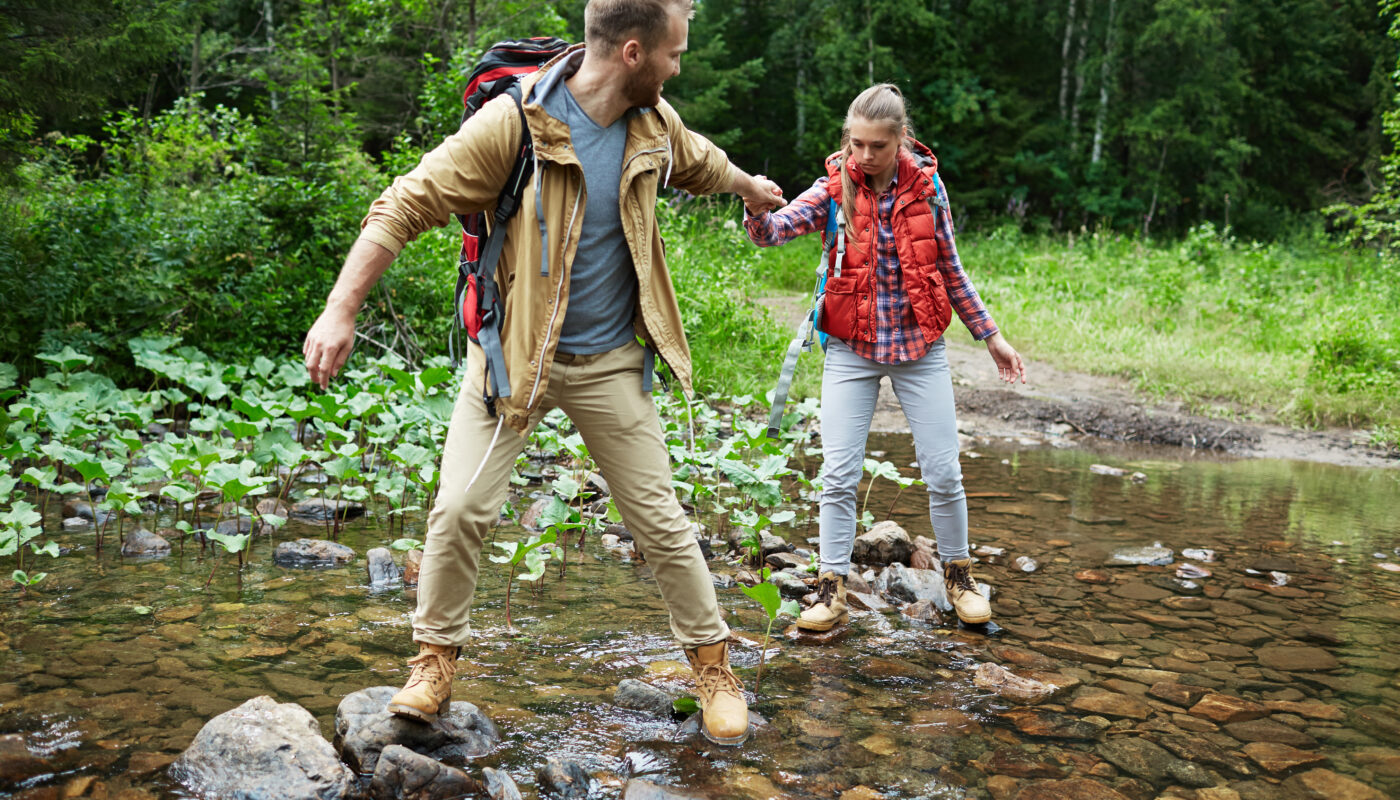
Streams, waterfalls, lakes, fjord edges, and slippery rocks can all present hazards.
Do not assume that shallow-looking water is harmless.
Keep children within a distance where you can react quickly, particularly near fast-moving water or steep shorelines.
The same principle applies to waterfalls.
The best photograph is never worth taking unnecessary risks near an edge.
Avoid Exposed Mountain Trails With Very Young Children
Some Norwegian hikes include narrow paths, steep drops, rocky ridges, or exposed sections.
These can be unsuitable for young children, particularly if they are unable to reliably follow safety instructions.
When researching a trail, look beyond the total distance.
A short route can still be difficult if it contains exposed terrain.
If you’re uncertain, choose a less exposed alternative.
There is no requirement for a family holiday to include a dramatic summit.
Don’t Underestimate Downhill Walking
Parents often focus on how difficult the climb will be.
But descending can be just as challenging for children.
After several hours of walking, tired legs make uneven terrain harder to manage.
Children may also become less attentive when they know the destination is close.
That is exactly when parents should maintain their attention.
Slow down on steep sections and give children time to place their feet carefully.
What If a Child Says, “I Can’t Go Any Further?”
Take the statement seriously.
Don’t automatically assume that the child is simply being difficult.
Ask:
- Are you tired?
- Are your feet hurting?
- Are you cold?
- Are you hungry?
- Are you thirsty?
- Are you scared?
- Does anything hurt?
Sometimes a snack and a short break solve the problem.
Sometimes they don’t.
Norway’s family hiking advice recommends listening to children and adjusting the length of the hike or taking a break when necessary.
If the child genuinely cannot continue safely, turn around.
The mountain will still be there another day.
Have a Backup Plan
One of the smartest things a family can do is prepare an alternative.
Your backup could be:
- A shorter trail
- A waterfall visit
- A scenic viewpoint
- A fjord cruise
- A village walk
- A museum
- A cable-car experience
- A picnic
- A beach or lakeside activity
Norway’s Mountain Code recommends having alternative options and changing plans according to conditions and group ability.
This is particularly valuable when traveling with children because mood and energy can change as quickly as the weather.
Consider Cable Cars and Scenic Transport
Not every family needs to climb a mountain to enjoy a mountain view.
In some parts of Fjord Norway, cable cars, gondolas, scenic roads, and other forms of transport can provide access to spectacular landscapes without requiring a long ascent.
Visit Norway notes that several mountains can be accessed by cable car or gondola for travelers who are not looking for a demanding hike.
This can be a great compromise.
Parents get the mountain scenery, while children avoid several hours of climbing.
You can then add a short walk at the top if conditions and abilities allow.
Are Strollers Practical?
This depends entirely on the trail.
A rugged mountain path is generally not a suitable stroller environment.
However, some family-friendly walking routes are designed for easier access.
Norway’s tourism authority notes that an increasing number of trails are being designed to improve accessibility for wheelchairs, walkers, and strollers.
Always check the specific route rather than assuming a trail described as “family-friendly” is stroller-friendly.
“Suitable for families” can mean very different things.
A Realistic Family Hiking Day
A successful family day in the fjords might look something like this:
Morning:
Choose a short trail after checking the weather.
First section:
Walk slowly and let children explore.
Break:
Have water and snacks.
Middle section:
Continue toward a waterfall, viewpoint, lake, or other interesting feature.
Lunch:
Stop somewhere scenic rather than rushing toward the final destination.
Decision point:
Check everyone’s energy and the weather.
Afternoon:
Either continue a little farther or return while everyone is still comfortable.
Evening:
Choose a relaxed activity rather than adding another demanding hike.
This may sound less ambitious than completing a famous summit.
But for a family holiday, it can be much more successful.
How to Make Kids Excited About Hiking
Before the trip, involve children in the planning.
Let them:
- Choose snacks
- Pick a small backpack
- Select a camera
- Look at pictures of the trail
- Learn about waterfalls
- Identify local animals
- Help read the map
- Choose a picnic spot
- Decide what small toy or book to bring
Norway’s family hiking guidance specifically recommends making the trip a family project and giving children a say in planning.
When children feel involved, hiking becomes something they are participating in rather than something being imposed on them.
Respect the Environment
Fjord landscapes are fragile.
Teach children to:
- Stay on marked trails where appropriate
- Take rubbish home
- Avoid disturbing wildlife
- Leave plants and rocks where they are
- Keep away from dangerous edges
- Respect private property
- Follow local signs
Norway’s visitor guidelines encourage travelers to leave no trace, stay on marked paths, respect wildlife, and travel safely.
These lessons can become part of the adventure.
The Most Important Rule: Know When to Turn Around
For adults, turning around can feel disappointing.
For families, it can be the smartest decision of the day.
If the weather deteriorates, the trail becomes too difficult, a child is exhausted, or the group is running out of daylight, turn back.
The Norwegian Mountain Code explicitly says hikers should not be ashamed to turn around and should continually evaluate whether conditions and group abilities still make the route appropriate.
A successful hike is not necessarily one where you reach the highest point.
A successful hike is one where everyone returns safely and still wants to go hiking again.
Final Thoughts
Hiking in the fjords with kids is absolutely realistic—but the experience works best when parents adjust their expectations.
You do not need to complete a famous summit or walk for six hours to experience the beauty of Fjord Norway.
For younger children, short nature walks, waterfalls, lakesides, villages, beaches, and scenic trails may be ideal. Older children and experienced teenagers can gradually take on longer and steeper routes.
The most important factors are the child’s age, experience, fitness, confidence, weather, trail conditions, and the difficulty of the route.
Keep the journey flexible. Take frequent breaks. Carry suitable clothing and snacks. Check the weather. Choose trails that match the least experienced member of the family. And never hesitate to turn around.
Most importantly, let children discover the landscape at their own pace.
A child who remembers throwing stones into a stream, finding a waterfall, eating chocolate beside a fjord, or watching clouds move across a mountain may have experienced something far more valuable than simply reaching a summit.
In family fjord hiking, the goal isn’t to go the farthest. It’s to make the journey enjoyable enough that everyone wants to explore another trail tomorrow.